
Trail marker trees: 2 in one day
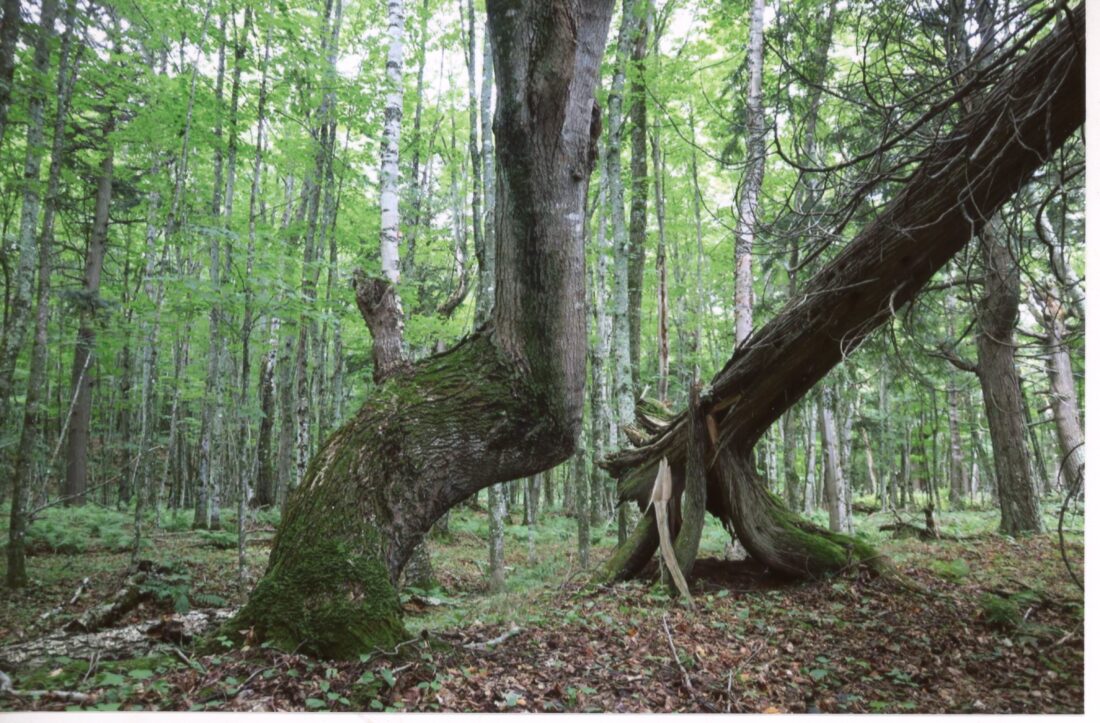
Pictured are the two recently discovered trail marker trees. (Photos courtesy of Bill Van Kosky)
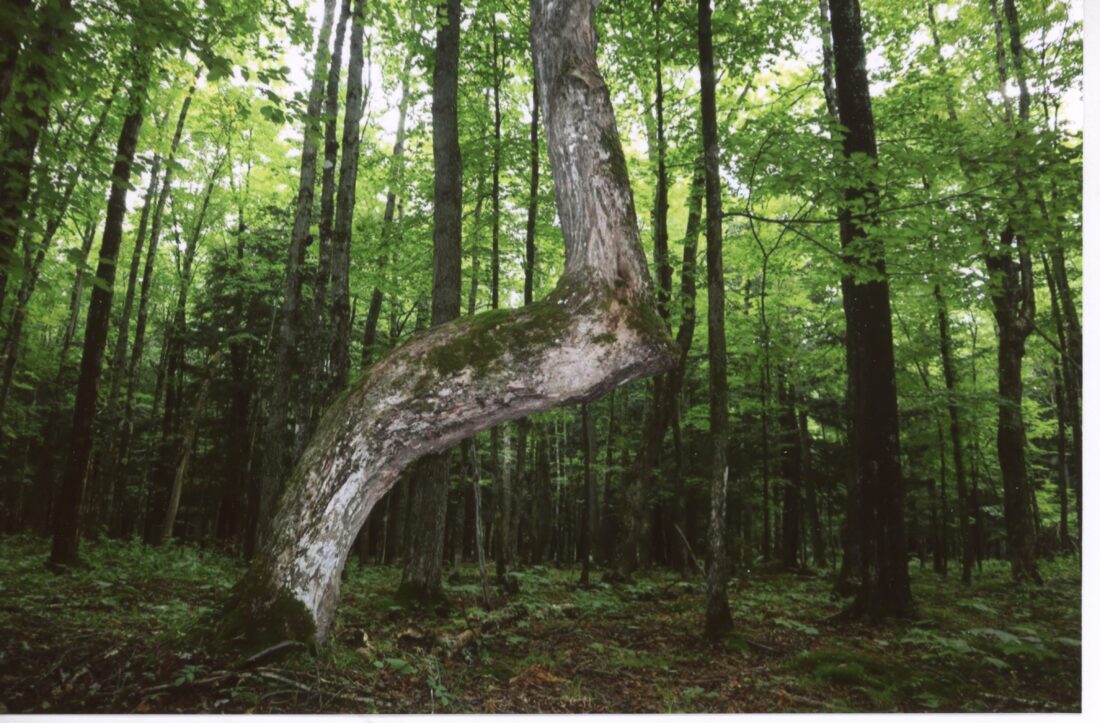
Pictured are the two recently discovered trail marker trees. (Photos courtesy of Bill Van Kosky)
Pictured are the two recently discovered trail marker trees. (Photos courtesy of Bill Van Kosky)
Pictured are the two recently discovered trail marker trees. (Photos courtesy of Bill Van Kosky)
Trending
For the past five years, the Marquette Regional History Center has sponsored a search for Native American trail marker trees in Marquette County. Many Indigenous peoples in North America bent trees into distinctive shapes when they were saplings, to convey specific messages. Most were used to mark trails, but some pointed toward flowing springs, river fords, flint quarries, sites of spiritual significance, or other important locations.
Many of the little, crooked trees of long ago have succumbed to wind, fire, disease, and chainsaws. The few survivors are now large, old, crooked trees which are scattered among the millions of trees in Marquette County forests. We consider ourselves lucky to learn of two or three new finds each year, but last fall we added two previously unrecorded trail markers to our tally in one day.
A Marquette County landowner who prefers to remain anonymous, called me after reading some of our trail tree publicity. He owns considerable forested acreage that hasn't been logged for over a hundred years. It seemed logical to him that, somewhere on his property, there should be at least one trail marker. This is a reasonable assumption, but acting on it is very much like searching for the proverbial needle in a haystack.
The landowner studied several photographs of bent trees, and we talked about their distinguishing characteristics. Thus prepared, he planned to start his search by scanning the woods as he walked some old trails on his land. I didn't hear from him for several weeks, but late last October he called to excitedly tell me, "I'm pretty sure I found one!"
A scientist had been conducting some wildlife studies on the landowner's property. One day when their truck was slowly creeping along over a muddy, rutted woods road to the research site, the landowner spied a large sugar maple with the distinctive up-over-up again profile of a trail marker tree.
Later, when the landowner took me to this tree, I was quickly able to confirm that his find was indeed a nicely formed authentic trail marker tree.
That afternoon we looked at three other "possibles" that he had found, but all these turned out to be trees that had been shaped by natural forces. Trees that have been partially uprooted by high winds or suffered the misfortune of having a heavy limb fall on them when they were small, can grow to look deceptively like trees bent by human hands. Our planned search for the day was over, so we headed back to our starting point feeling pleased that we had added a tree to the Marquette County inventory.
We decided to take a diagonal cross-country course that would shorten our hike. Only a few minutes had elapsed before I heard my guide shout, "Look at that!" I had been concentrating on the rough ground underfoot, trying to avoid stepping into holes or tripping over exposed roots, fallen limbs or rocks. Looking up, I was astounded to see what was undoubtedly a trail marker tree, directly in our path. It had been shielded from our view by the limbs of a nearby broken cedar tree. We had walked right up to the second trail marker of the day, by pure, blind luck! Like the tree we'd looked at that morning, it was a large old sugar maple having the classic up-over-up again configuration that we look for.
There are more Native American trail markers waiting to be found in Marquette County forests, whether by painstaking research, clever reasoning, long hikes on old trails or blind luck. Anyone who sees a large hardwood tree with unusual bends is encouraged to call the Marquette Regional History Center at 906-225-3571 to report it as a potential trail marker tree. A knowledgeable volunteer will get back to you promptly to discuss your find.