Historically speaking
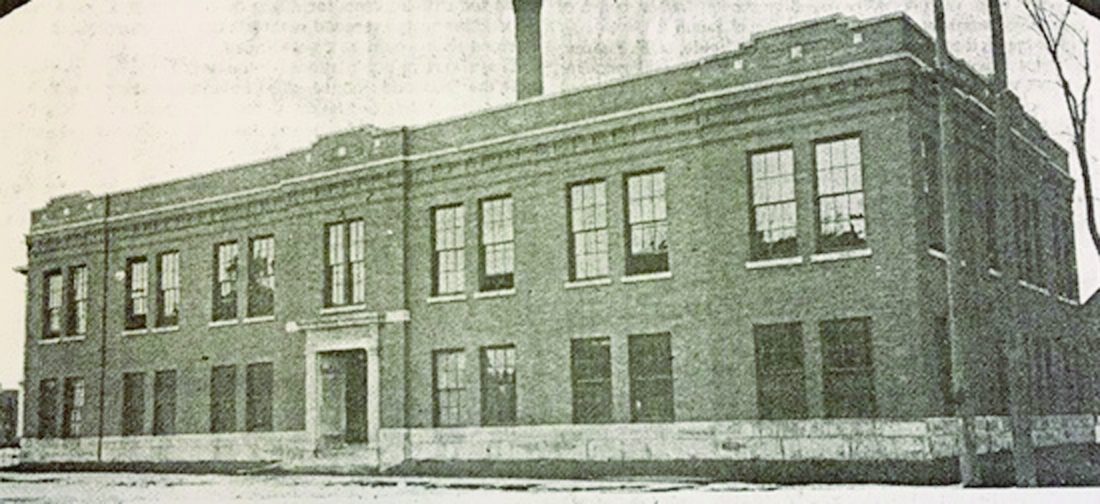
The Negaunee Manual Training Building is pictured. (Photo courtesy of the Negaunee Historical Society)
NEGAUNEE — In the last few years, vocational training has taken center stage as business’ are in demand of skilled laborers. Negaunee Public Schools was a forerunner in this field in the year 1910.
Industrial Education was part of every school system in the nation. It was known in educational circles as, “Industrial Arts.” When Negaunee started offering subjects of this nature in 1910, they were part of the “Manual Training department. Superintendent Orr Shurtz, was responsible for initiation to this program and he hired Mr. Roell as the first instructor, and was succeeded by Mr. Osen. In 1913, E. A Baumgarner was hired. The importance of the program was recognized by the Board of education.
In the lower grades it gave a student a chance to employ some of his surplus energy and to learn the use of tools. In the higher grades, the student gained knowledge of actual work with wood and metals and was equipped to follow trade work of various kinds after leaving school.
Students were enthusiastic about the program after two years it was necessary to add six benches to the shop and six to the mechanical drawing room.
Manuel training started in the sixth grade and continued through the sophomore year. In the grades It consisted almost entirely of wood work, which students took home when they finished the project.
High school students started with a jointing course and when they mastered it they turned to cabinet making. Mechanical drawing started with coursed designed to familiarize students with the use of the instruments. Instruction at the ninth grade level consisted of projection and working drawings.
Sophomores started with a review of working and perspective drawings after which development and simple machine drawings were taken up.
With a steady increasing demand for industrial arts courses there was a lack of space for the program in the new high school. Approval was given to construct a new manual training building, which was occupied at the start of the 1914-15 school year. A Baumgarner, was employed a supervisor of manual training, and T.C. Davis was the instructor in wood work.
The new building contained a grade shop, a high school shop, wood turning room, machine shop and a forge shop, plus extra rooms to be equipped later for printing, a plumbing, brick laying and concrete work area to be used later.
In the wood turning room, there were 12 lathes, each equipped with an individual motor. Boys first worked out a set of exercises to illustrate the use of various chisels.
They made, Indian clubs dumbbells, and useful household articles. Machine work was one of the most useful, with equipment that was the best and most modern. It consisted of five lathes, a shaper, a milling machine, hacksaw, speed drill, radial drill.
The mechanical drawing room had instruments similar to those used by engineers out in the field. Students did work in architectural and machine drawing. Coursed in art metal and concrete work started in 1915-16.
In 1917, Mr. Shurtz reported that the printing shop would be added. Some 18 boys have taken the course and all printed material used by the board of education and the school is printed there.
The school paper “The Nee Hy Nuz was printed. If you wanted to know what was happening in school and who is going with who, the “Nuz” knew.
In 1936, the manual training building was remodeled and a third floor was added to the structure. Drafting and graphic arts were moved to this area and with the remainder of the space being utilized by music groups.
In 1957, the final year of E.W. Born’s administration, a one story building was erected at the corner of Pioneer and Case Street to provide room for an auto shop. Soon industrial arts courses as such were no longer offered.
A student can select this field as his major in working toward a diploma. Courses that needed to be completed Include four years of wood work, three years of machine shop, wjhich includes welding, two years of metal shop, two years of electricity, two of drafting, two of graphic arts, one year of metal shop and one year of auto shop.
Six instructors on the staff are, Emil Gimse, woods and drafting, and head of the department. Leroy Process, machine shop, Bob Tapio, metals and auto shop. Doug Maki, wood work, Gordon Kitta, electricity and drafting, Peter Chevrette, drafting and graphic arts.
When Joseph Dally retired after teaching in the department for 40 years, he noted that Negaunee could claim
the following firsts in the field. First to begin offering manual training subjects, first high school to have a separate building for this purpose., first to have a course in printing, and first o have its own auto shop building.
The manual training building no longer has industrial arts. The first floor is now home to a seventh grade science room. The music programs , choral, band and orchestra are in that building.
The auto shop which collapsed after last winter’s snow has been replaced with a new garage to house school vehicles.
West End
History of the Wassbergs
Remembering old businesses
Historically speaking – classic

Historically Speaking
Christmas was spectacular in one small corner of Marquette County
Peter Pan and Tinker Bell glide along the ceiling rafters. Captain Hook grimaces from a darker corner. Sylvester ...