
Harvey and the Northern Iron Company Furnace
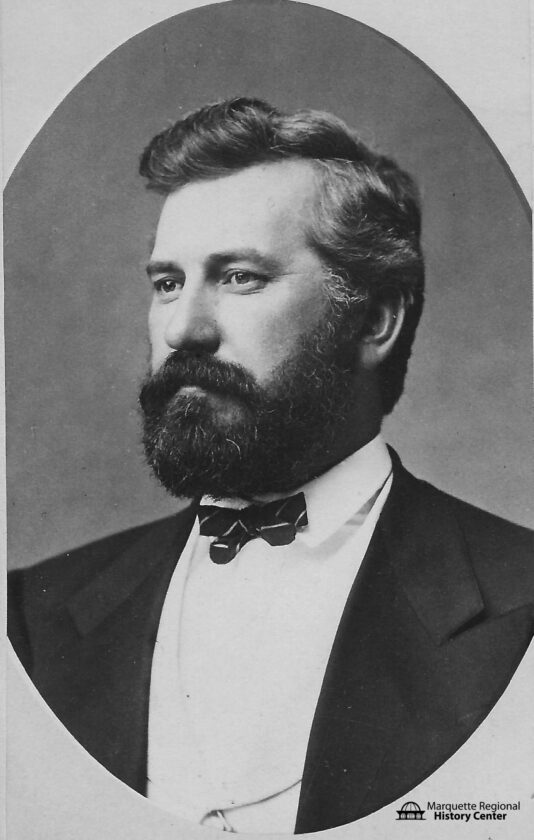
Charles T. Harvey in the 1860s. (Photo courtesy of the Marquette Regional History Center)
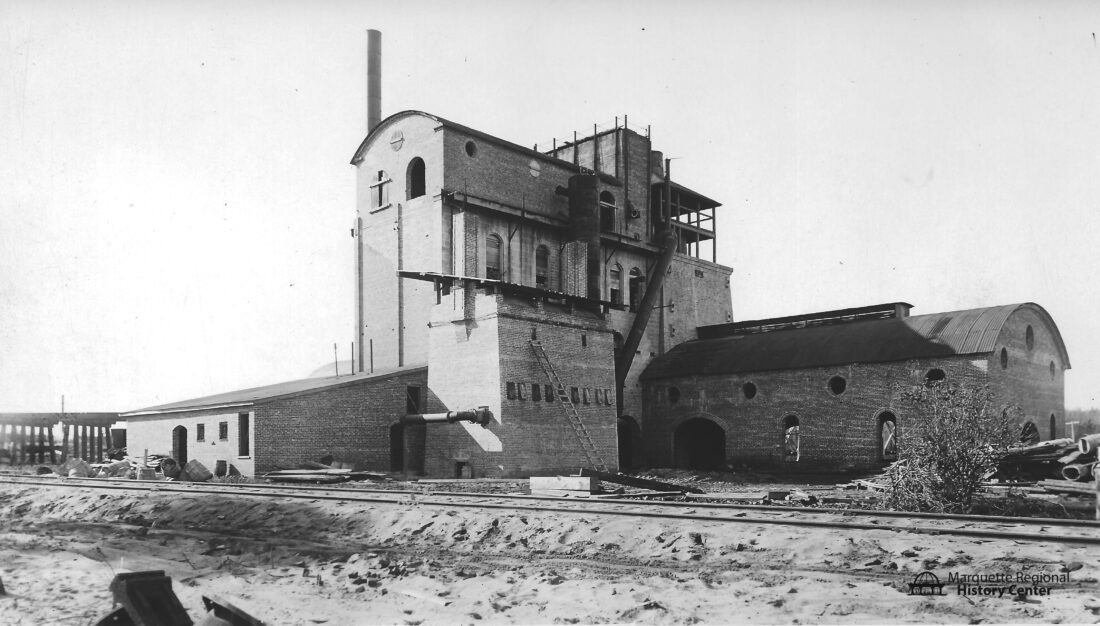
The Northern Furnace near the mouth of the Chocolay River, 1892. (Photo courtesy of the Marquette Regional History Center)
Charles T. Harvey in the 1860s. (Photo courtesy of the Marquette Regional History Center)
The Northern Furnace near the mouth of the Chocolay River, 1892. (Photo courtesy of the Marquette Regional History Center)
Trending
Charles T. Harvey is best known as the builder of the Soo Locks at Sault Sainte Marie which opened in 1855. Harvey made numerous trips through the Upper Peninsula visiting the iron and copper mines and was interested in opening the territory as much as possible with blast furnaces and railroads.
Among his projects was the organization of the Pioneer Iron Company. Charles Harvey and business associate Edward Hungerford went east looking for men to build and operate their furnace. In 1857 they hired Lorenzo D. Harvey (no relation) and Stephen R. Gay, to erect the Pioneer Iron Furnace in Negaunee and to convert the Collinsville Forge along the Dead River into a furnace.
With the construction of the Pioneer, Lorenzo Harvey made the first pig-iron in a blast furnace on Lake Superior. The furnace went on to become one of the most successful blast furnaces in the Upper Peninsula.
Within a few years, Charles Harvey had visions of developing a thriving community at the mouth of the Chocolay River. He intended to dredge a harbor, building a sawmill and townsite, hoping to rival Marquette.
Following through on his vision, in 1859 Charles and two other incorporators raised enough money to form the Northern Iron Company. They brought Lorenzo Harvey down from Negaunee to build the furnace and run it. It was built to operate on hard coal instead of charcoal, so larger blowers and other machinery were necessary.
During construction, the last cargo of stone and brick were being shipped on the propellor Manhattan when she went aground at Grand Marais. It wasn't until the next spring, 1860, that a duplicate cargo was sent, along with sufficient coal for a short run.
The iron ore and coal were sent down from Marquette on scows towed by a little tug, called the Foggie, which could make about four miles an hour in a dead calm. Even a small breeze from the wrong direction would make progress almost impossible, so most of the hauling was done at night after the wind died down.
The furnace at the mouth of the Chocolay River was started in the summer of 1860. They made about 600 gross tons of iron during a run which lasted only six weeks before they depleted their coal supply. Quite a few farmers were settling in the area and were rapidly clearing their land. They pointed out the futility of building a hard coal plant in the woods and offered to give their wood if the furnace would be converted to charcoal.
Over the fall and winter of 1860-1861, the furnace was converted and ten 80-cord charcoal kilns were constructed, but even these were not enough to keep it going steadily. Charles Harvey experimented with sheet iron kilns, lined with brick. Even though they only held 30 cords of wood, they turned out more charcoal than the traditional kilns, so ten of this kind were built.
The furnace ran along well for several years, using wood hauled in from the local area. Production increased with demand due to the Civil War. A report in 1864 said that the furnace operated for 38 weeks and produced over 3,000 gross tons of iron.
The furnace shut down in 1867, and Charles Harvey departed for New York City where he was involved in the early development of the elevated railroad. Harvey returned in 1871 and attempted to get the furnace back in production.
But the furnace went out of use again with the Panic of 1873. After sitting abandoned for nearly two decades, a group of mostly Marquette men, reorganized the company in 1890. Calling it the Northern Furnace Company, they had a capital stock of $100,000.
They closed a deal with the "Charcoal King of the Upper Peninsula," Charles H. Schaffer, to supply charcoal for the furnace. They also spent a considerable amount of money on new machinery. The furnace went back into blast in 1891, but it was shut down again the following year when the price of pig iron dropped below the cost of manufacture.
There was another long wait until the Spring 1907 announcement that the Lake Superior Chemical and Iron Company had taken over the facility and would be making pig iron and by-products, using charcoal. Another $130,000 was spent on rebuilding the plant. This new company, which had furnaces at Newberry, Manistique, Ashland, Gladstone, and Boyne City, finally got started in January 1910.
Hard luck struck again during the first run, when there was a gas explosion in the new stack, killing three men. There was very little damage to the stack, and it was quickly repaired. Northing was reported later about what the production was, but it does not appear to have run long.
The company was reorganized in July 1910, probably due to the usual financial difficulties. Around this time, 50 new brick charcoal kilns had been built but this wood was later shipped to the Newberry furnace, so there appears to have been another shutdown.
By 1912 there was talk of yet another plan to rebuild the plant, this time for wood distillation, but nothing came of it. The businessmen had finally given up on the furnace operation at the mouth of the Chocolay River after over 50 years and hundreds of thousands of dollars invested. The shell of the building remained visible for many years.