Today in history
Today is Friday, September 18, the 261st day of 2015. There are 104 days left in the year.
Today’s Highlight in History:
On September 18, 1793, President George Washington laid the cornerstone of the U.S. Capitol.
On this date:
In A.D. 14, the Roman Senate officially confirmed Tiberius as the second emperor of the Roman Empire, succeeding the late Augustus.
In 1759, the French formally surrendered Quebec to the British.
In 1810, Chile made its initial declaration of independence from Spain with the forming of a national junta.
In 1927, the Columbia Phonograph Broadcasting System (later CBS) made its on-air debut with a basic network of 16 radio stations.
In 1931, an explosion in the Chinese city of Mukden damaged a section of Japanese-owned railway track; Japan, blaming Chinese nationalists, invaded Manchuria the next day.
In 1940, Harper and Brothers published “You Can’t Go Home Again” by Thomas Wolfe, two years after the author’s death.
In 1961, United Nations Secretary-General Dag Hammarskjold (dahg HAWM’-ahr-shoold) was killed in a plane crash in northern Rhodesia.
In 1965, the situation comedies “I Dream of Jeannie” and “Get Smart” premiered on NBC.
In 1970, rock star Jimi Hendrix died in London at age 27.
In 1975, newspaper heiress Patricia Hearst was captured by the FBI in San Francisco, 19 months after being kidnapped by the Symbionese Liberation Army.
In 1984, retired U.S. Air Force Col. Joe Kittinger became the first person to complete a solo balloon flight across the Atlantic Ocean as he landed in Italy, four days after leaving Maine.
In 1990, the city of Atlanta was named the site of the 1996 Summer Olympics. The organized crime drama “GoodFellas,” directed by Martin Scorsese, had its U.S. premiere in New York.
Ten years ago: Tropical Storm Rita formed southeast of the Florida Keys. Millions of Afghans defied a Taliban boycott call and militant attacks to vote for a new parliament. German conservative challenger Angela Merkel’s bloc won the most votes in elections, but fell short of a clear mandate to govern. “Everybody Loves Raymond” won the Emmy for best comedy in its final season; first-year hit “Lost” was named best drama.
Five years ago: Despite Taliban rocket strikes and bombings, Afghans voted for a new parliament in the first election since a fraud-marred ballot cast doubt on the legitimacy of the embattled government. During his visit to Britain, Pope Benedict XVI apologized to five people who’d been molested by priests as children in his latest effort to defuse the sex abuse crisis shaking the Roman Catholic Church.
One year ago: In a show of solidarity with Ukraine, President Barack Obama welcomed the new president of the embattled former Soviet republic, Petro Poroshenko, to the White House. Congress cleared the way for the U.S. military to train and equip Syrian rebels for a war against Islamic Group militants. Home Depot said a data breach that lasted for months at its stores in the U.S. and Canada had affected 56 million debit and credit cards.
Today in history
Today is Wednesday, September 16, the 259th day of 2015. There are 106 days left in the year.
Today’s Highlights in History:
On September 16, 1940, President Franklin D. Roosevelt signed the Selective Training and Service Act. Samuel T. Rayburn of Texas was elected Speaker of the U.S. House of Representatives.
On this date:
In 1498, Tomas de Torquemada, notorious for his role in the Spanish Inquisition, died in Avila, Spain.
In 1810, Mexicans were inspired to begin their successful revolt against Spanish rule by Father Miguel Hidalgo y Costilla and his “Grito de Dolores (Cry of Dolores).”
In 1893, more than 100,000 settlers swarmed onto a section of land in Oklahoma known as the “Cherokee Strip.”
In 1908, General Motors was founded in Flint, Michigan, by William C. Durant.
In 1919, the American Legion received a national charter from Congress.
In 1925, the Irving Berlin song “Always” (written for his future wife, Ellin Mackay) was published.
In 1953, “The Robe,” the first movie presented in the widescreen process CinemaScope, had its world premiere at the Roxy Theater in New York.
In 1965, “The Dean Martin Show” premiered on NBC-TV.
In 1974, President Gerald R. Ford announced a conditional amnesty program for Vietnam war deserters and draft-evaders.
In 1982, the massacre of between 1,200 and 1,400 Palestinian men, women and children at the hands of Israeli-allied Christian Phalange militiamen began in west Beirut’s Sabra and Shatila refugee camps.
In 1994, a federal jury in Anchorage, Alaska, ordered Exxon Corp. to pay $5 billion in punitive damages for the 1989 Exxon Valdez oil spill (the U.S Supreme Court later reduced that amount to $507.5 million). Two astronauts from the space shuttle Discovery went on the first untethered spacewalk in ten years.
In 2007, O.J. Simpson was arrested in the alleged armed robbery of sports memorabilia collectors in Las Vegas. (Simpson was later convicted of kidnapping and armed robbery and sentenced to nine to 33 years in prison.)
Ten years ago: President George W. Bush ruled out raising taxes to pay the massive costs of Gulf Coast reconstruction in the wake of Hurricane Katrina, saying other government spending had to be cut to pay for the recovery effort. Gordon Gould, a pioneer in laser technology, died in New York City at age 85.
Five years ago: Pope Benedict XVI began a controversial state visit to Britain, acknowledging the Catholic Church had failed to act decisively or quickly enough to deal with priests who raped and molested children. The Seattle Storm completed their undefeated march through the postseason, beating the Atlanta Dream 87-84 for a three-game sweep in the WNBA finals.
Today in history
Today is Tuesday, September 15, the 258th day of 2015. There are 107 days left in the year.
Today’s Highlight in History:
On September 15, 1940, during the World War II Battle of Britain, the tide turned as the Royal Air Force inflicted heavy losses upon the Luftwaffe.
On this date:
In 1789, the U.S. Department of Foreign Affairs was renamed the Department of State.
In 1857, William Howard Taft – who served as President of the United States and as U.S. chief justice – was born in Cincinnati, Ohio.
In 1890, English mystery writer Agatha Christie was born in Torquay.
In 1935, the Nuremberg Laws deprived German Jews of their citizenship.
In 1950, during the Korean conflict, United Nations forces landed at Incheon in the south and began their drive toward Seoul.
In 1955, the novel “Lolita,” by Vladimir Nabokov, was first published in Paris.
In 1963, four black girls were killed when a bomb went off during Sunday services at the 16th Street Baptist Church in Birmingham, Alabama. (Three Ku Klux Klansmen were eventually convicted for their roles in the blast.)
In 1965, the TV shows “Lost in Space” and “Green Acres” premiered on CBS.
In 1972, a federal grand jury in Washington indicted seven men in connection with the Watergate break-in.
In 1985, Nike began selling its “Air Jordan 1” sneaker.
In 1994, a tape recording of John Lennon singing with his teen-age band, The Quarrymen, in a Liverpool club on July 6, 1957, was sold at Sotheby’s for $122,500 (it was at this gig that Lennon first met Paul McCartney).
In 2000, the 2000 Summer Olympics opened in Sydney, Australia, with a seemingly endless parade of athletes and coaches and a spectacular display; Aborigine runner Cathy Freeman ignited an Olympic ring of fire.
Ten years ago: President George W. Bush, addressing the nation from storm-ravaged New Orleans, acknowledged the government had failed to respond adequately to Hurricane Katrina, and urged Congress to approve a massive reconstruction program. Hurricane Ophelia continued to lash the Outer Banks of North Carolina with rain and wind. Producer Sid Luft, who was credited with reviving the career of then-wife Judy Garland, died in Santa Monica, California, at age 89.
Five years ago: A mortar attack by Palestinian militants and airstrikes by Israel provided a grim backdrop as Israeli Prime Minister Benjamin Netanyahu and Palestinian President Mahmoud Abbas ended their latest round of peace talks still divided on major issues.
One year ago: U.S. Secretary of State John Kerry, in Paris for an international meeting of diplomats, said he wouldn’t shut the door on the possibility of working with Iran against a common enemy in the Islamic State militant group, but that the two nations would not coordinate on military action. Hurricane Odile blazed a trail of destruction through Mexico’s Baja California Peninsula that leveled everything from ramshackle homes to luxury hotels.
Today in History
Today is Monday, September 14, the 257th day of 2015.
Today’s History Highlight:
On September 14, 1814, Francis Scott Key was inspired to write the poem “Defence of Fort McHenry” after witnessing the American flag flying over the Maryland fort following a night of British bombardment during the War of 1812; the poem later became the words to “The Star-Spangled Banner.”
On this date:
In 1861, the first naval engagement of the Civil War took place as the USS Colorado attacked and sank the Confederate private schooner Judah off Pensacola, Florida.
In 1901, President William McKinley died in Buffalo, New York.
Today in history
Today is Friday, September 4, the 247th day of 2015. There are 118 days left in the year.
Today’s Highlight in History:
On September 4, 1781, Los Angeles was founded by Spanish settlers under the leadership of Governor Felipe de Neve.
On this date:
In 1886, a group of Apache Indians led by Geronimo (also known as Goyathlay, “One Who Yawns”) surrendered to Gen. Nelson Miles at Skeleton Canyon in Arizona.
In 1888, George Eastman received a patent for his roll-film box camera, and registered his trademark: “Kodak.”
In 1917, the American Expeditionary Forces in France suffered their first fatalities during World War I when a German plane attacked a British-run base hospital.
In 1948, Queen Wilhelmina of the Netherlands abdicated after nearly six decades of rule for health reasons.
In 1951, President Harry S. Truman addressed the nation from the Japanese peace treaty conference in San Francisco in the first live, coast-to-coast television broadcast.
In 1957, Arkansas Gov. Orval Faubus used Arkansas National Guardsmen to prevent nine black students from entering all-white Central High School in Little Rock. Ford Motor Co. began selling its ill-fated Edsel.
In 1963, a Swissair Caravelle III carrying 80 people crashed shortly after takeoff from Zurich, killing all on board.
In 1971, an Alaska Airlines jet crashed near Juneau, killing all 111 people on board.
In 1972, U.S. swimmer Mark Spitz won a seventh gold medal at the Munich Olympics, in the 400-meter medley relay.
In 1974, the United States established diplomatic relations with East Germany.
In 1984, Canada’s Progressive Conservatives, led by Brian Mulroney, won a landslide victory in general elections over the Liberal Party of Prime Minister John N. Turner and the New Democrats headed by Ed Broadbent.
In 1995, attorney William Kunstler, who spoke out for the politically unpopular in a controversial career, died in New York at age 76.
Ten years ago: Six days after Hurricane Katrina left a devastated New Orleans in chaos, police stormed the Danziger Bridge, shooting and killing two unarmed people and wounding four others. (Five New Orleans police officers were found guilty of civil rights violations in connection with the shootings; however, a federal judge threw out those convictions in September 2013 and ordered a new trial, concluding the case had been tainted by “grotesque prosecutorial misconduct.”)
Five years ago: Protesters hurled shoes and eggs at Tony Blair in Dublin, Ireland, as he held the first public signing of his memoir as British prime minister amid high security. Pulitzer Prize-winning cartoonist Paul Conrad, 86, died in Rancho Palos Verdes.
One year ago: Joan Rivers, the raucous, acid-tongued comedian who crashed the male-dominated realm of late-night talk shows, died at a New York hospital at age 81, a week after going into cardiac arrest in a doctor’s office following a routine medical procedure. President Barack Obama and British Prime Minister David Cameron pressed fellow NATO allies at the scene of a summit in Wales to confront the “brutal and poisonous” Islamic State militant group wreaking havoc in Iraq and Syria. Former Virginia Gov. Bob McDonnell and his wife, Maureen, were convicted of taking bribes to promote a dietary supplement in a corruption case that derailed the career of the onetime rising Republican star.
Today’s Birthdays: Actress Mitzi Gaynor is 84. Actor Kenneth Kimmins is 74. Singer Merald “Bubba” Knight (Gladys Knight & The Pips) is 73. World Golf Hall of Famer Raymond Floyd is 73. Actress Jennifer Salt is 71. World Golf Hall of Famer Tom Watson is 66. Rhythm-and-blues musician Ronald LaPread is 65. Actress Judith Ivey is 64. Rock musician Martin Chambers (The Pretenders) is 64. Actress Khandi Alexander is 58. Actor-comedian Damon Wayans is 55. Rock musician Kim Thayil is 55. Actor Richard Speight Jr. is 46.
Today in History
By The Associated Press
Today is Wednesday, September 2, the 245th day of 2015. There are 120 days left in the year.
Today’s Highlight in History:
On September 2, 1945, Japan formally surrendered in ceremonies aboard the USS Missouri in Tokyo Bay, ending World War II.
On this date:
In 1666, the Great Fire of London broke out.
In 1789, the United States Treasury Department was established.
In 1864, during the Civil War, Union Gen. William T. Sherman’s forces occupied Atlanta.
In 1901, Vice President Theodore Roosevelt offered the advice, “Speak softly and carry a big stick” in a speech at the Minnesota State Fair.
In 1924, the Rudolf Friml operetta “Rose Marie” opened on Broadway.
In 1935, a Labor Day hurricane slammed into the Florida Keys, claiming more than 400 lives.
In 1945, Ho Chi Minh declared Vietnam an independent republic. (Ho died on this date in 1969.)
In 1963, Alabama Gov. George C. Wallace prevented the integration of Tuskegee High School by encircling the building with state troopers. “The CBS Evening News” with Walter Cronkite was lengthened from 15 to 30 minutes.
Records
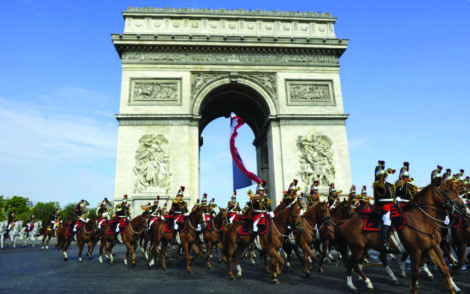
Today in History: July 14, the storming of the Bastille
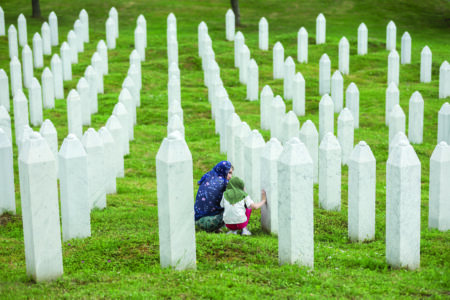
Today in History: 1995, the fall of Srebrenica
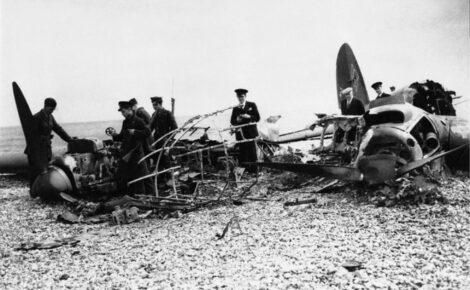
Today in History: July 10, the Battle of Britain begins in World War II
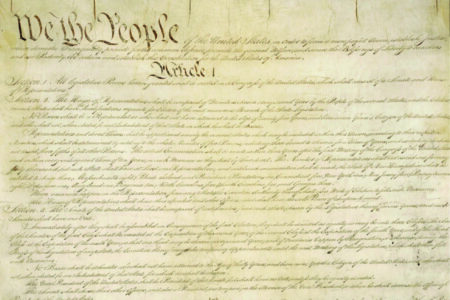
Today in History: July 9, 14th Amendment ratified

Today in History: July 8, Thai cave rescue