
Second day of extreme heat in U.P., wildfire smoke on its way
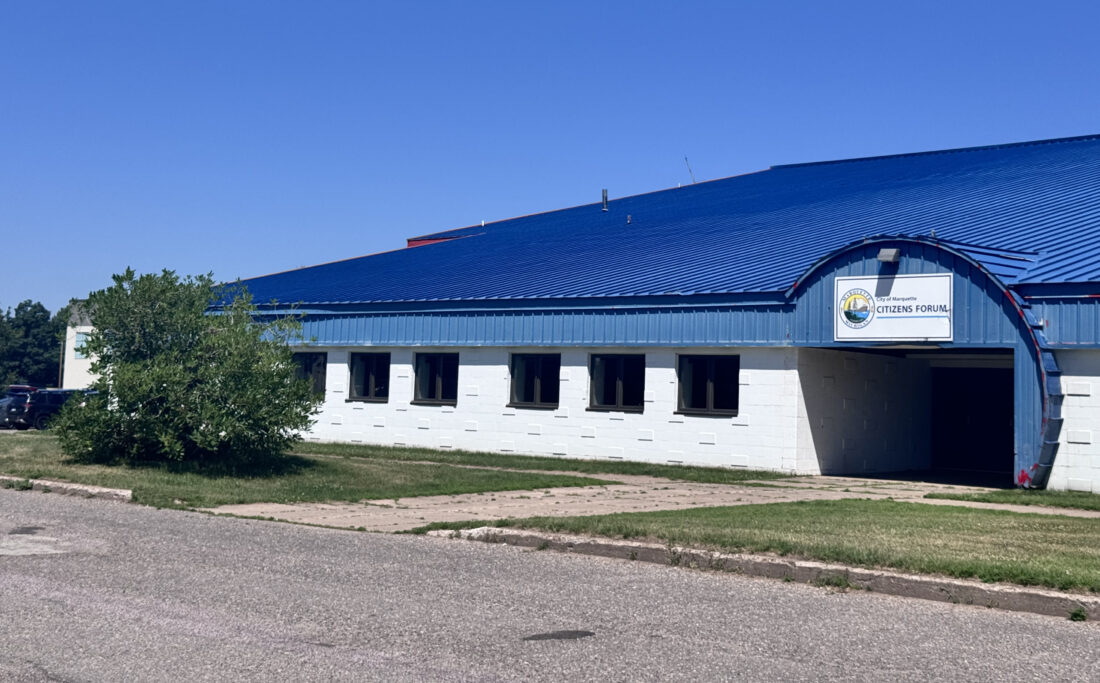
The Marquette Citizen’s Forum at Lakeview Arena was one of the cooling centers established for people weathering the extreme heat without access to air conditioning. (Journal photo by Annie Lippert)
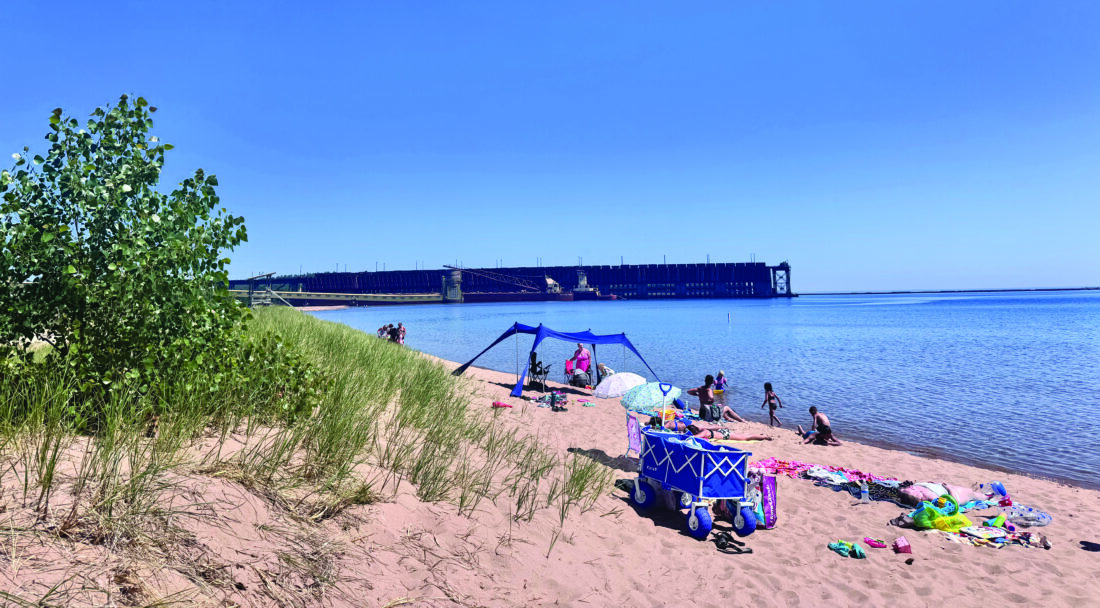
Clark Lambros beach in Marquette was full of people trying to stay cool on Tuesday. (Journal photo by Annie Lippert)
The Marquette Citizen’s Forum at Lakeview Arena was one of the cooling centers established for people weathering the extreme heat without access to air conditioning. (Journal photo by Annie Lippert)
Clark Lambros beach in Marquette was full of people trying to stay cool on Tuesday. (Journal photo by Annie Lippert)
Trending
MARQUETTE -- The National Weather Service issued a second Extreme Heat Warning again for much of the Upper Peninsula on Tuesday, predicting dangerously hot conditions with a heat index between 98 and 105.
The Marquette County Sheriff's Office released a statement with information on how to stay safe as well as a list of area cooling centers. The full statement can be found on the Marquette County Sheriff's Office Facebook page.
Temperatures were forecast to go down on today, but the U.P. isn't out of the woods, as there is wildfire smoke on the way.
On Tuesday, the National Weather Service released a severe weather alert for air quality along with the Michigan Department of Environment, Great Lakes and Energy. EGLE issued a state-wide alert for elevated levels of fine particulate (PM2.5) for Wednesday. Levels are expected to reach "unhealthy" levels across the Upper Peninsula.
"In terms of wildfire smoke, we have been fortunate so far in 2026," said EGLE's statement. "Unfortunately, our luck has run out as fires north of the Minnesota arrowhead have rapidly expanded overnight, and satellite imagery shows large areas of smoke headed our way."
"Tuesday should stay hazy, but relatively smoke free, as the current thick smoke plume is skirting north of Lake Superior. Winds will shift and smoke will start pushing south.
"The Upper Peninsula will be impacted first, starting around midnight and pushing south in the northern Lower Peninsula overnight. Current models are showing that the dense smoke could reach the Michigan / Indiana border late in the day."
The statement went on to say that the smoke will linger through Thursday and potentially longer.
The National Weather Service released a list of recommendations for keeping healthy during the Air Quality Alert, stating that "It is recommended that, when possible, you avoid strenuous outdoor activities, especially those with heart disease and respiratory conditions like asthma. Watch for symptoms including wheezing,coughing, chest tightness, dizziness, or burning in the
nose, throat and eyes. You can help reduce air pollution by limiting activities, such as outdoor burning or use of residential wood burning devices.
"Keep windows closed overnight to prevent smoke from getting indoors and, if possible, run central air conditioning with MERV-13 or higher rated filters."
For those who do not have central air conditioning, of which there are many in the Upper Peninsula, a homemade air filter can be made using a box fan and HVAC filters. This kind of filter, called a Corsi-Rosenthal Box, has proven effective at filtering wildfire smoke particles from the air. A guide on how to make one can be found at https://engineering.ucdavis.edu/news/science-action-how-build-corsi-rosenthal-box.
According to the National Space and Aeronautics Administration, both heat extremes and wildfire events have become more frequent and will continue to increase in frequency due to climate change.
NASA detects wildfires across the globe, and over a 21-year period they found that "extreme wildfires have become more frequent, more intense and larger.
"The largest increase in extreme fire behavior was in the temperate conifer forests of the western U.S. and the boreal forests of northern North America and Russia ... As the planet warms, hotter weather, earlier melting of winter snow, warmer nighttime temperatures and decreasing summer rainfall are all contributing to increased fire activity."
More information can be found at https://science.nasa.gov/earth/explore/wildfires-and-climate-change/.
Annie Lippert can be reached at 906-228-2500, ext. 550. Her email address is alippert@miningjournal.net.