
What’s in store?
New city manager talks history, plans for north end sites
-
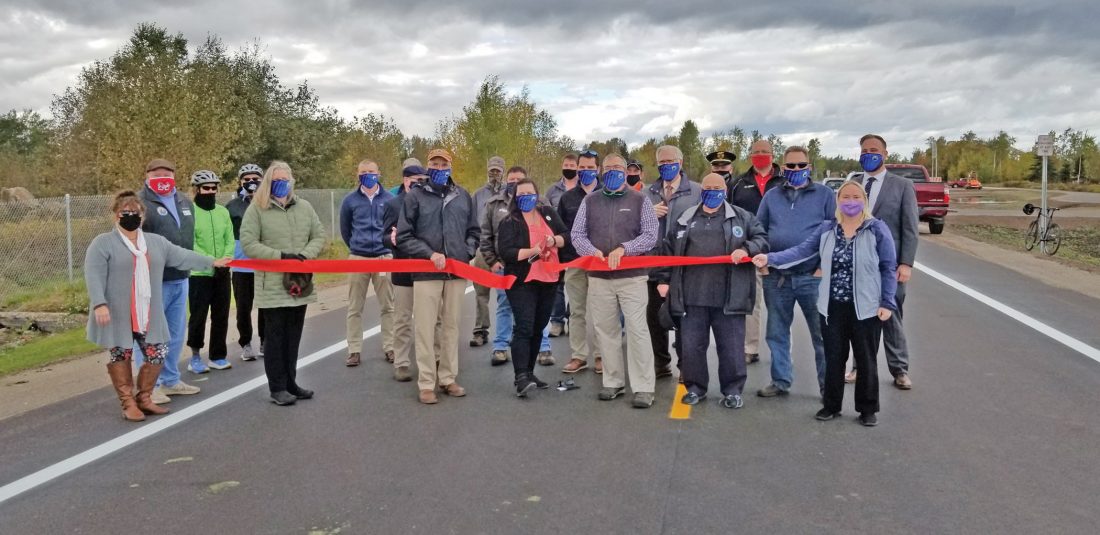
- Marquette Mayor Jenna Smith, center, is joined by city commissioners, staff and other officials to celebrate the reopening of Lakeshore Boulevard in October. (Journal file photo)
-
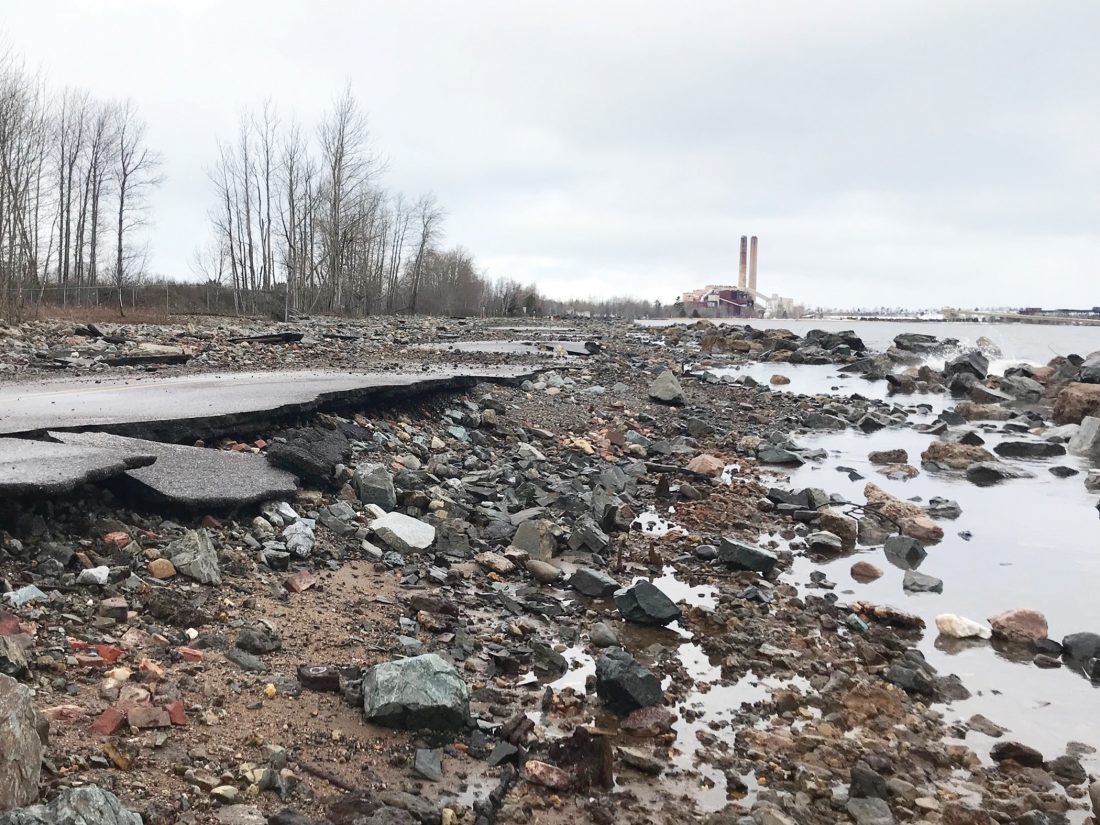
- Lakeshore Boulevard north of Wright Street is shown heavily damaged after being pounded by Lake Superior waves in a November 2019 storm. (Journal file photo)
-
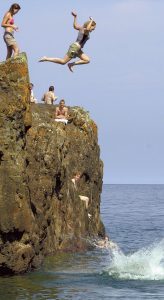
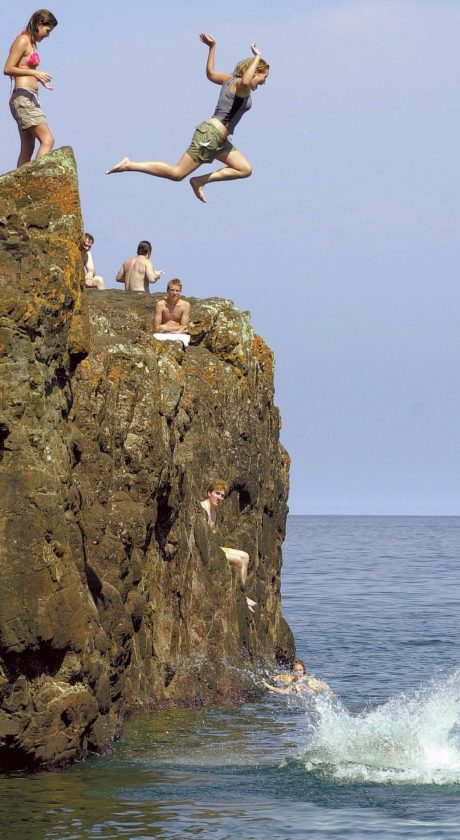
- Courtney Dupras of Marquette takes a plunge into the deep cool water off the Black Rocks at Presque Isle Park as her friend Alaine Olson, also of Marquette, watches at left. (Journal file photo)
-
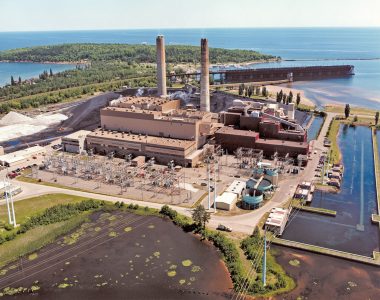
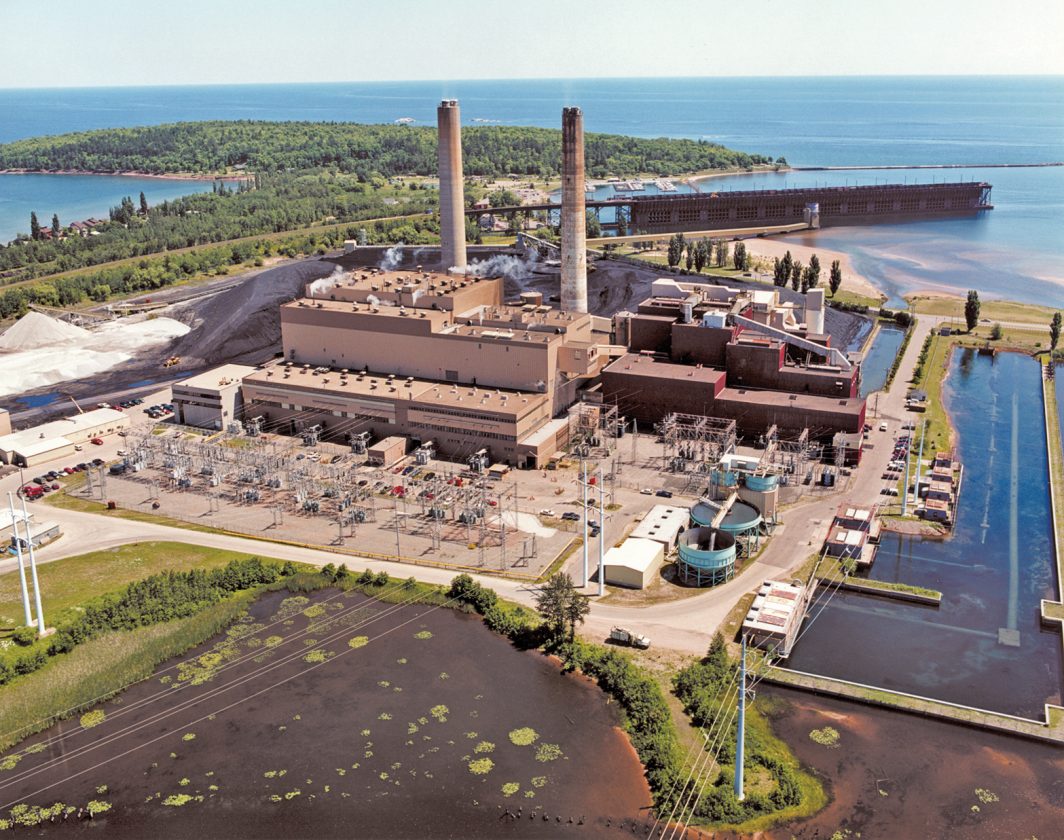
- The Presque Isle Power Plant in Marquette is shown when it was still operational. (Journal file photo)
-
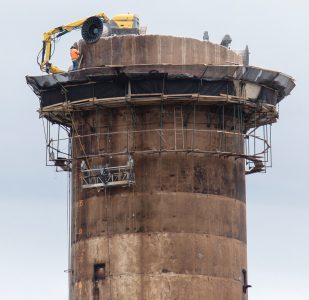
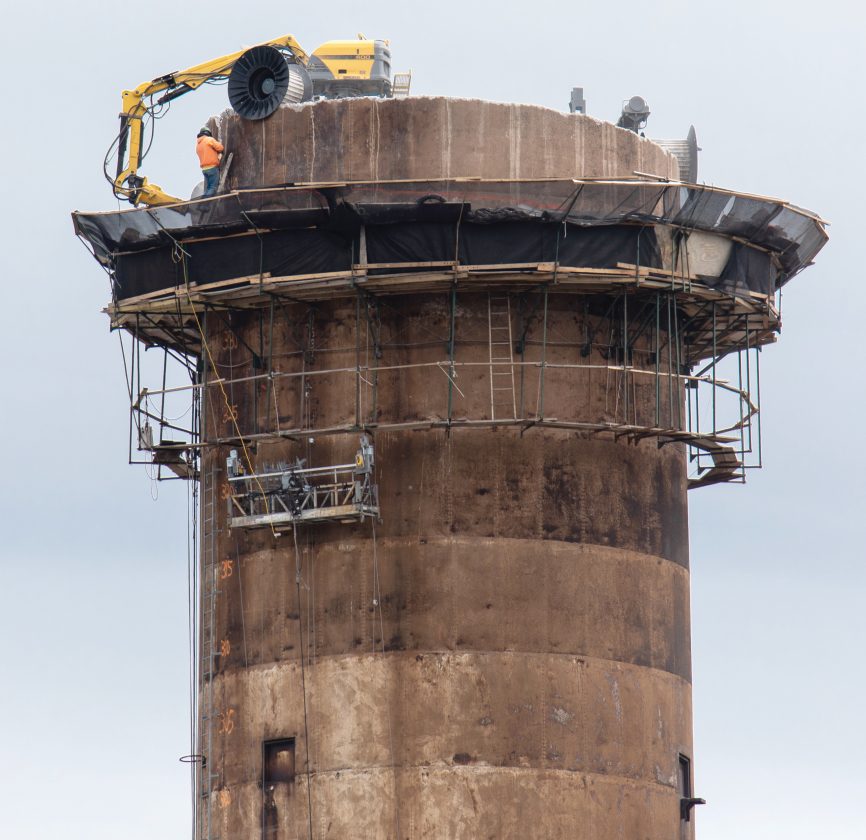
- A construction worker dismantles one of the smokestacks at the Presque Isle Power Plant in June 2020. (Journal file photo)
-
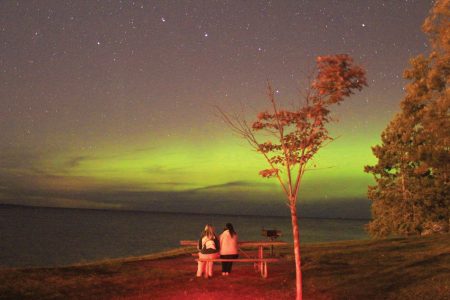
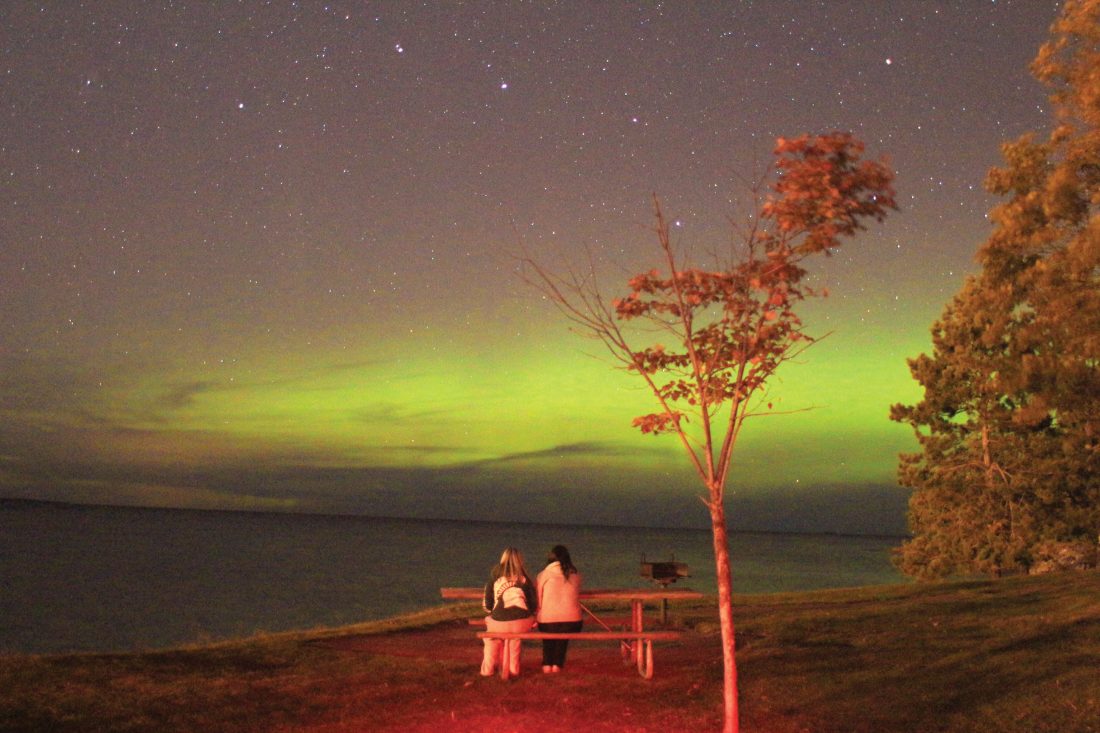
- A view of the northern lights on Presque Isle is shown. (Photo courtesy of Larry Buege)
EDITOR’S NOTE: In Part 1 of this series, Marquette City Manager Karen Kovacs shared her background, goals and hopes for the future of the city. This article, which is Part 2 of the three-part series, covers a tour of the city that the Journal took with Kovacs and Assistant City Manager Sean Hobbins to discuss some of the major projects that lay ahead. Eight projects and/or areas were selected for discussion. In this portion of the series, Kovacs and Hobbins discuss four spots on the north end of town.
MARQUETTE — Presque Isle Park, the Presque Isle Power Plant, the former Cliffs-Dow industrial site and Lakeshore Boulevard are all notable areas in the north end of Marquette that have been the source of discussion — and in some cases, controversy — in the city for decades.
These areas and their historical uses — ranging from industry to recreation — have shaped the landscape of the north end of the city for years. Now, the choices made at a municipal level about forest management and public use at Presque Isle, the relocation of Lakeshore Boulevard, the potential reuse of the Cliffs-Dow site for a mixed-use residential development, and financial matters regarding lost tax revenue due to the demolition of the Presque Isle Power Plant, will set the stage for the next era of Marquette’s north end.
Presque Isle Park
While most don’t think of Marquette’s crown jewel — Presque Isle Park — as an area that faces challenges or threats, the city’s 2019 forest management plan determined that fire and wind damage on the island are the main concern. It was stated by Marquette Director of Community Services Jon Swenson at the time that Presque Isle has experienced fuel buildup in the form of dead and downed trees. Cigarette butts, lightning strikes and campfires are all potential fire hazards.
“We’ve kind of discussed the fact that our fire department has been working with the (Michigan Department of Natural Resources) on coming up with an evaluation, fire mitigation strategy and a prevention plan,” Kovacs said. “While there’s some things we can take care of, there was nothing that was a major concern where the park is right now. Things like loose brush on the ground, getting rid of some dead trees, things like that are easy to take care of and maintain. But I’m happy that they’ve come up with a plan and they’re going to be probably, I think, formalizing that into some sort of report. So it’s something that we’re working with with the DNR, and maintaining that and looking at it and evaluating it regularly.
“And then there’s other things that we do and put in place, like defining where you can have open burns and not allowing those on the island and limiting those to city-provided equipment such as the charcoal grills.
“More of the things we were looking at with Presque Isle is the management of the people and the traffic that comes through. That’s a bigger concern and danger I think than some of the fire hazards that we hear about.”
And there is one positive about the area’s geography and physical features in terms of fire prevention.
“One thing that’s kind of lucky is it is a peninsula, and it is completely surrounded by water,” Hobbins added. “So there is a lot of water content and spray and moisture over here that might not be further inland, so it does reduce the fire danger.”
Kovacs believes the bigger issue at the island is trying to maintain a balance among concerns about preservation, visitors and safety.
“One thing that I’ve been impressed with is the general feel for Presque Isle and the importance of maintaining that natural feel and that natural sight and view,” Kovacs continued. “The city has taken it very seriously but also with the (Presque Isle Park) Advisory Board, listening to their concerns in keeping this natural feel. When I say that, you don’t see ‘no parking’ sign, ‘no parking’ sign, ‘no parking’ sign, and that’s to maintain a feel. However, we also have to balance the enforcement of some of these things like the no parking (ordinance). Having ‘no parking’ (signs) is not meant to deter people from stopping, it’s meant to really maintain safety in the park and really kind of keep the condition of the park family-friendly and safe.”
Presque Isle Power Plant
The Presque Isle Power Plant was taken offline in March 2019 and replaced with two natural gas plants located in Baraga and Negaunee Township. Progress on the demolition of the plant is being made each day, and is on schedule to be completed in 2022.
Two months ago, the city acquired 1,000 feet of lakeshore frontage included in the property currently owned by We Energies. The land came at no cost to the city with the agreement that the city manager waive the requirement that We Energies remove all subsurface materials and infrastructure on the property due to an increase in demolition costs and site restoration work without adding commensurate value to the site.
“My understanding is that’s a multiphase process carefully done, obviously for environmental reasons,” Kovacs said. “Looking at what that vision is — that’s something I can’t really say (is) ‘my vision’ — we do have some ideas and some plans, but I can’t say anything about my vision until it’s done.”
There’s a lot to consider when thinking about future uses of the site.
“I think it’s pretty unexplored at this point,” Hobbins added. “It’s an interesting spot, we own this beach now, and in return, they (We Energies) gets to leave the footings of the buildings. So whoever comes in and develops the site will have to deal with the footings there which is something they’ll have to be aware of. But what you do with this property, it’s really up to the private sector, because it’s privately owned and it’ll be a private development.”
And options for four-legged friends may even be explored.
“But any opportunity that we can be facilitating in that process is really what we’re going to be exploring,” Kovacs continued. “And obviously, we do have the benefit of now inheriting (the beach) for a park, and I know there’s been some discussions about making it a dog park or a dog-friendly beach, and there’s many factors that need to be taken into consideration such as sanitary conditions of the beach and any other beaches down the line, and also the safety of humans and also the dogs. This is a busier road, so containing the area for the dogs is something you’d have to explore.
“There are beaches that are ‘dog-friendly’ throughout the state, but there are very few city-owned beaches for dogs. So we are working with a couple of our peers on this and kind of picking up on their challenges and trying not to re-create the wheel, but trying to learn from their mistakes and their achievements and select the best location for a dog beach if that’s a possible idea.”
Cliffs-Dow property
The city had previously been in negotiations with Marquette-based developer Veridea Group to purchase the former industrial site in 2019. The project has not had any updates since, and sale negotiations are ongoing. Veridea previously stated that it planned to build up to 500 residences on the site.
So where do things stand now?
“To allow some negotiating to happen for the sale of this property,” Kovacs said, “that is where we’re still actively negotiating on this parcel. I do think that we’re making some progress on this. We do have some things that we have to cover, especially as you know with any sale of a property, certain standards have to be met with appraising the property and selling it at the price that goes along with our policy.”
Environmental conditions and concerns are a major factor in the situation, Hobbins said.
“Just to be specific, the (city) commission authorized the city manager or their designee to negotiate with Veridea Group for the sale of the property,” he said. “That is that entity that we’ve been working with for the past few years. Obviously, the site has a lot of issues. The city of Marquette is actually responsible for the environmental condition of it and perpetuity, so even if we sell it and it’s developed, we still have to be monitoring and working on environmental controls with the site.”
As with anything, communication and solid relationships will be key moving forward, Kovacs said.
“And I think that’s important to say that the relationship with any developer that comes into the city,” she said. “Having that working relationship and finding the right developer for this and the right person to purchase it, it’s my hope at least that it adds a level of trust in the safety and environmental aspect of this for our residents and for our visitors.”
Lakeshore Boulevard restoration
Lakeshore Boulevard previously was a major problem area in the city for years. Plagued by shoreline erosion from intense fall and winter weather events, the city took action and moved the road 300 feet inland and four to six feet higher, created a new multiuse path, added accessible parking areas and completed shoreline and beach stabilization work. That was phase one of the project, which was completed last October at an estimated cost of $3 million to $4 million.
The city is now looking ahead to phase two, which involves additional shoreline stabilization, dune and beach restoration and the creation of an underwater habitat.
The entire project is expected to cost upward of $10 million, according to a previous Journal article. Funding for phase one was secured through grants from the National Fish and Wildlife Foundation, the National Coastal Resilience Fund and the Federal Emergency Management Agency, among other entities.
“Lakeshore Boulevard, obviously we know that there’s a couple of different phases on this,” Kovacs said. “We are in the middle of budget(ing), and we are in the middle of discussing this, but there was a commitment made once the city started on that project to see the project through to completion, so this would be considered phase two next. It’s interesting because they are working through the project scope on that and are really trying to keep a lot of this … specifically keeping those boulders and reusing those for the benefit of the lake and for preserving the lakeshore on that and maintaining the general feel for it as well. We’re well on our way for that, but that will require some bonding.”
EDITOR’S NOTE: In part three, the discussion will focus on the former UP Health System – Marquette property, 702 N. Lakeshore Blvd., the Lower Harbor pier repiling project and Founders Landing.
Ryan Spitza can be reached at 906-228-2500, ext. 248. His email address is rspitza@miningjournal.net.
Front Page News
Whitmer expands state of emergency to Marquette, Iron counties
Dog park coming to Negaunee
NEGAUNEE — The Negaunee City Council approved a land use agreement at their last regular meeting in April, for ...
Most MDOT roadside parks reopening April 28
Crash kills one in Marinette County
CRIVITZ, Wisc. — A one-vehicle crash in Crivitz, Wisconsin, on April 8 claimed the life of one man. According to ...
UP Land Conservancy to hold Earth Day fundraising concert
MARQUETTE — Starting at 6 p.m. Friday, the Upper Peninsula Land Conservancy will hold an Earth Day fundraising ...
Annual spring weight restrictions continue to be lifted on Michigan’s state roads
MARQUETTE - The Michigan Department of Transportation continues to adjust spring weight restriction areas in an ...