
Temperatures good for the birds
Trending
"The secret of your future is hidden in your daily routine." -- Mike Murdock
Routines have been making the end of February and the start of March quite predictable for birding in the Marquette area. Evening grosbeaks continue in at least one place in western Marquette County. At the previously mentioned feeding station north of Ishpeming between 70 and 120 grosbeaks have continued to visit a large set of feeders with sunflower seeds. New snowfall and seasonable temperatures should continue to encourage the bright yellow, black, and white males and the yellow and olive females to continue feeding there.
Snowy owls and rough-legged hawks continue in the fields between Sault Ste. Marie and the Pickford-Rudyard area. They care still drawing a good number of birders to the area hoping to see some of the owls, especially a good mix of both highly marked females and juveniles, and the nearly pure white, older males.
This may have been the very best winter to seen American robins in Marquette. Robins have been seen from time to time in mountain ash and crab apple trees across town, often with pine grosbeaks and or bohemian waxwings. Temperature wise, it has been a relatively mild winter. That, with the large number of trees bearing fruit through the winter have created optimum conditions for several dozen of them to continue on. Up to 45 were seen last month, probably a record number for the area through the winter.
There appears to be a solid number continuing on as 21 were found on the east side of town last Monday, and a single one reported in Chocolay Township the same day. With warmer weather on its way as the days grow longer and the sun rises higher, most will probably continue on here to spring unless the supply of foods for them disappears.
Duck diversity in Marquette seems to be climbing a tad as several new species have appeared or at least have been finally spotted in town this past week. Hundreds of mallards continue to stick around all winter in Marquette though the winter, depending on the open waters of Lake Superior, a few areas like the Chocolay and Dead Rivers, and the generosity of birders feeding them along the river edges.
Common mergansers, common goldeneyes, a few hardy long-tailed ducks, and American black ducks have also continued here all winter.
New species reported this week include a hooded merganser on the Dead River downstream from County Road 550 and a bufflehead on Lake Superior. Sometimes these smaller ducks can be seen from the edge of the Dead River upstream from Lakeshore Blvd. at Schneider Mill Court off Wright Street.
Also, back in the area are two other species of waterbirds, Canada geese and trumpeter swans. The geese have been seen on the Chocolay River in Harvey and possibly on Superior in Marquette. The trumpeter swans are more of a mystery. They show up from time to time during the year on the Dead River above the Tourist Park. Last week four showed up there, feeding with mallards and goldeneyes. Swans have been in and out of the area there for several years. They are tame birds, often swimming up to the shore near people, apparently used to being fed. Because they are not marked or banded, it is unclear where they go when they move off, or even the same birds, but some do seem to be back every couple of months.
The harbors of Lake Superior have had ice cover on and off now for the past couple of weeks. Several still days will encourage some new ice, only to see it pushed off with stormy, windy days. The lake has seen some more ice build farther out on the Lake, only to see it blown in as these storms move through. The result is ever changing areas of open water utilized by the ducks and by bald eagles that continue to be regular sightings in the city.
More early signs of spring are also becoming more apparent even though many winter routines are still on. Mornings reveal the sounds of several species of birds starting to establish their summer territories. Mourning doves and northern cardinals have begun singing in different parts of Marquette in the morning hours. A dove was heard singing near McCarty Cove under clear skies on Tuesday in Marquette, and a cardinal was heard singing in south Marquette later in the morning.
Male house finches are showing signs of brighter reddish plumage and male American goldfinches are developing brighter yellow heads as they spring breeding plumage begins to show. Male northern cardinals are working on another strategy to get their game on for the spring courting season. They go through a single molt in the fall but have grayish-brown tipped fall feathers. As winter wears on these tips wear off revealing those brilliant red feathers to their fullest, readying them for the spring mating season.
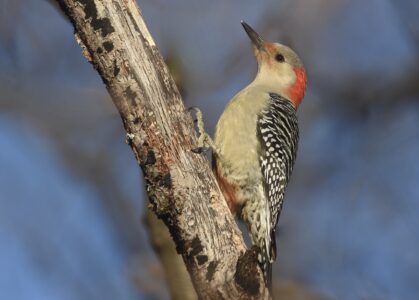
At Presque Isle, hairy and red-bellied woodpeckers have begun drumming and calling as they too ready for developing their territories and courting mates. Regulars at the feeders there too they are staying well fed as the winds and cold of recent storms encourage more frequent.
Visiting with pileated and downy woodpeckers, nuthatches, chickadees, blue jays, crows, and American goldfinches, they keep the place busy, along with red and gray squirrels and occasional mallards. These winter routines will be sure to continue for at least a month, but then it is on to the changes spring will bring.
EDITOR'S NOTE: Scot Stewart is a teacher at Bothwell Middle School in Marquette and a freelance photographer.