
Trending
"Storms draw something out of us that calm seas don't." – Bill Hybels
Winter seems to be back on track. It has definitely been another roller coaster season like many recent season through the past couple of years. It always seems a contradiction to see a huge storm come, like the one this week, after a long stretch of warm weather, especially when it comes with rain and a clear reduction of the snow cover.
It is also a wonder to see how wildlife must adapt and readapt their daily behavior to those changes. Many birds begin to move away from feeders when the weather warms, as they need less food to deal with the cold. As snow cover drops it can also be easier for some birds to find seeds and warmer temperatures will bring out winter insects to provide more of the foods they seek in the wild.
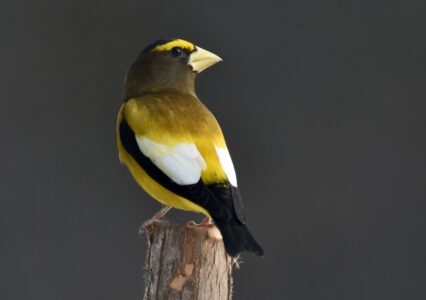
As low-pressure systems move closer to the area, it seems as though some species pick up some clues and may begin moving back closer to feeder stations to feed more actively. A large feeding station in western Marquette County has continued hosting an impressively large flock of evening grosbeaks along with good numbers of woodpeckers, chickadees, and nuthatches. Last weekend the numbers of grosbeaks dropped off and visits were short during the early morning hours. On Monday though, the birds returned to the tune of over 200 and stayed all morning. The numbers have continued like that all week. Yesterday morning, in the throes of more than 16 inches of snow the birds anxiously wait in the tree tops until the snow was cleared and cleared again from the large platforms where the seed is places to drop down and feed. At east 60 at a time would pack into the platform and gorge on black-oil sunflower seeds before resting briefly back again in the treetops.
A secondary feeding area was set up there with and old birch stump, full of pileated woodpecker holes, now filled with peanut butter. That station has hosted five or more woodpeckers and a nuthatch at a time pecking away there at the same time the grosbeaks have been at the sunflower seeds.
One of the odd notes about this feeding station is the number and composition of the birds there. The owner reports contacting a friend living less than half a mile away as the crow flies (or in this case as the grosbeaks fly) who sees just a few evening grosbeaks at his feeders and at times a couple dozen pine grosbeaks. Both species of grosbeaks are extremely social and often travel in larger groups during the winter months. Many groups of birds like this, siskins, redpolls, and American goldfinches to name a few, prefer feeding stations where there are a number of feeders and lots of food, so they don't have to wait to eat. Larger flocks also provide more eye to watch for predators. As winter slowly drifts into spring now, there will be an increase in accipiters, sharp-shinned and Cooper's hawks, and northern goshawks, and in the numbers of falcons, merlins and peregrines, all birds that prey on songbirds birds.
These large social groups will also attract smaller numbers of other resident species like the nuthatches and chickadees, and even some of the smaller woodpeckers like the downies. That continues to be the case with the large group of feeders at MooseWood Nature Center at Presque Isle Park. There the chickadees are the biggest group of visitors, but there are also good numbers of goldfinches, house finches, nuthatches, and woodpeckers coming in with the chickadees. Often all the groups are there at the same time feeding. When the temperatures are near zero, the birds will frequently rest between feeding sessions in the nearby spruce trees where there is cover from the wind, then drop back down to grab more food.
Busiest feeding times are often early in the morning as birds recharge after a cold night of huddling in a tree cavity, and again late in the day -- now usually after 4 p.m. as they fill up for the night. Some of the other feeders, like blue jays and crows will come in and out during the day and northern cardinals, because of their bright colors will often be in right at dawn and back at dusk when the light is dimmer, and they are more difficult to see.
Similar kinds of behavior were seen yesterday in Republic as large numbers of ruffed grouse and blue jays were seen at a feeding station there too. Seventeen grouse and a dozen blue jays were counted there Wednesday as they also may have sensed the coming storm.
Northern cardinals, house finches and mourning doves should begin singing very soon, probably as the temperatures start to warm again and the sun shows up again in the morning hours. It becomes a true sign of the beginning of spring when those songs welcome the light of the morning.
Elsewhere, birding has continued at a more even keel. Gull numbers continue to build in Marquette as more move back in for the summer ahead. Because of the continuing open waters of the lake, a small group of long-tailed ducks has remained all winter in Marquette, joining the mallards, American black ducks, and mergansers. Elsewhere in the Upper Peninsula snowy owls, red crossbills and snow buntings continue in the Rudyard-Pickford area again proving winter is still in charge.
EDITOR'S NOTE: Scot Stewart is a teacher at Bothwell Middle School in Marquette and a freelance photographer.