
Mexico City’s sinking can be detected from space
Trending
MEXICO CITY -- Mexico City is sinking by nearly 10 inches a year, according to new satellite imagery released this week by NASA, making it one of the world’s fastest-subsiding metropolises.
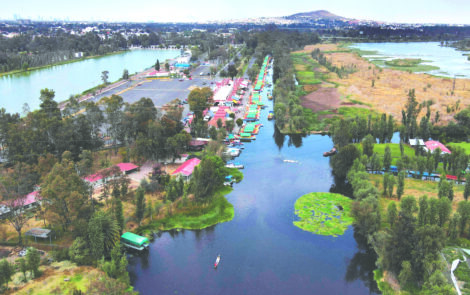
One of the world’s most sprawling and populated urban areas, at 3,000 square miles and some 22 million people, the Mexican capital and surrounding cities were built atop an ancient lake bed. Many downtown streets were once canals, a tradition that continues in the rural fringes.
Extensive groundwater pumping and urban development have dramatically shrunk the aquifer, meaning that Mexico City has been sinking for more than a century, leaving many monuments and older buildings -- like the Metropolitan Cathedral, where construction began in 1573 -- visibly tilted to the side. The contracting aquifer has also contributed to a chronic water crisis that is only expected to worsen.
“It damages part of the critical infrastructure of Mexico City, such as the subway, the drainage system, the water, the potable water system, housing and streets,” said Enrique Cabral, a researcher studying geophysics at the National Autonomous University of Mexico. “It’s a very big problem.”
Mexico City is sinking so fast that the subsidence can be spotted from space.
In some parts it is happening at an average rate of 0.78 inches a month, according to NASA’s newly released report, such as at the main airport and the iconic monument commonly known as the Angel of Independence.
Overall that means a yearly subsidence rate of about 9.5 inches. Over the course of less than a century, the drop has been more than 39 feet, according to Cabral.
“We have one of the fastest velocities of land subsidence in the whole world,” he said.
The NASA estimates are based on measurements taken between October 2025 and January 2026 by a powerful satellite known as NISAR, which can track real-time changes on the Earth’s surface and is a joint initiative between NASA and the Indian Space Research Organization.
___
Follow AP’s coverage of Latin America and the Caribbean at https://apnews.com/hub/latin-america
An aerial view of the Xochimilcol canals in Mexico City as seen on Feb. 16, 2022. (AP file photo)