
November: The month birders should expect the unexpected
Trending
"You have to take risks. We will only understand the miracle of life fully when we allow the unexpected to happen." - Paul Coelho
November is a great month to get out and look for the unexpected. This past week several days dipped between sunshine, wind, rain, and snow. It became a gamble to head out with plans to stay dry or out of the wind but there have been plenty of rewards for taking that gamble.
One delightful character to show up in Marquette this past week was a western kingbird, another wayward species, in the Upper Peninsula's history of errant flycatchers to show up in November. Western kingbirds usually don't get any closer to the U.P. during the summer months than central Minnesota. More striking in color than their relatives, eastern kingbirds, they have grayish heads and bright lemon-colored chests.
Other species of flycatchers visiting in fall have included scissor-tailed flycatchers, vermillion flycatchers, and even a fork-tailed flycatcher. The flycatcher was hunting from the structures at South Beach between through some of the early afternoon showers. The temperature dropped in the late afternoon and by nightfall began snowing. It was not seen on Tuesday.
As their names imply, the flycatchers are insect eaters. November days with temperatures in the fifties do draw out a surprising number of insects, from small midges, to flies and even some larger bugs like stinkbugs. But snow usually does not. Insects on warm days can keep a flycatcher going but it is not the reason they got to the Upper Peninsula in the first place. Some flycatchers are able to shift to a diet of fruits, like red osier dogwood during this forays to maintain metabolic processes.
While ornithologists are not entirely sure how these birds end up here in the late fall, there are theories. Some birds may get switches in their internal compasses send immature birds the wrong way in fall. Western kingbirds do seem to be more common wanders, occasionally making it all the way to the east coast in fall. They may be thrown off course a bit as they make their way south, as some now winter in Florida - imagine that! These kingbirds have extended their range eastward as tree planting in some open areas have provided spots for flycatchers to use when foraging improving hunting positions making it a better nesting habitat.
Nearly 54,000 pine siskins have now made it to the counts at Whitefish Point this fall. They continue to make their way into the U.P. Many are now in the Marquette area. 300+ were found in the trees in the middle of Presque Isle Park last week. Look for birch seeds and broken catkins on the ground for signs of feeding by redpolls, siskins, and goldfinches in the area birches currently providing a good source of food for these large flocks. While some larger flocks of goldfinches have made it to feeders in Marquette - one flock of around 70 was seen on the east side several days ago, 100 were counted at Peninsula Point on November 7th along with 23 common grackles and 115 common goldeneyes out on Lake Michigan. just a few redpolls and siskins have dropped down from the trees to area feeders.
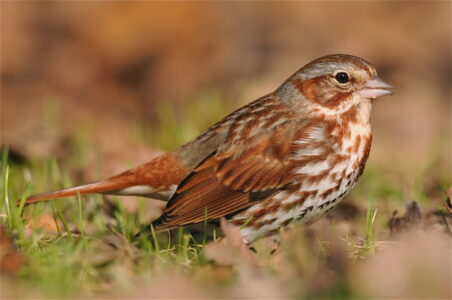
A few sparrows are still turning up across the area. A Lincoln's sparrow was seen at Peninsula Point Tuesday, and following the overnight snow a very late juvenile, white-crowned sparrow and a fox sparrow turned up at a feeding station near McCarty Cove on the 8th.
Back at Whitefish Point another unexpected bird showed up last Tuesday as a cattle egret was seen there. This is a smaller version of a great egret and is about the same size as a green heron. While they were a bit more common a few years back with some nesting in Wisconsin and wandering north in the fall there have not been many sightings recently. One did turn up on the golf course greens off Grove Street seven years ago, central U.P. sightings have been rare since.
Early predictions did not place many bohemian waxwings in the U.P. this winter with a good crop of mountain ash fruits in the Canadian provinces north of Lake Superior this fall. However, several flocks have arrived in Marquette this week. One flock of 30 was found at the Harlow Lake area this past Tuesday and a larger group of 110 was noted at Presque Isle the same day. There is a group of crab apple trees at the entrance to the park that often attracts waxwings to their fruits at the early end of their arrival to the area in late fall. A large flock made it into the trees last year on around December 17th.
The last four species of birds that usually make it into the U.P. come from the High Arctic in late fall or winter are northern shrikes, rough-legged hawks, gyrfalcons, and snowy owls. The shrikes are here, in some pretty good numbers for them, showing up from Marquette to Whitefish Point already.
The rough-legged hawks were seen a Whitefish Point on November 5 with five, and one each day on the 6th and 7th. They will hunt open fields, especially in the eastern U.P. The gyrfalcons were once fairly regular in winter along the St. Marys River in the Soo, but not in recent years.
One did turn up in Marquette in early January of 2021 but was only around for a day or two. Snowy owl, not yet, but time will tell, as their first arrival is unexpected.
Scot Stewart is naturalist at the MooseWood Nature Center, a writer and photographer.