
Summer in the U.P.
Trending
" Rest is not idleness, and to lie sometimes on the grass on a summer day listening to the murmur of water, or watching the clouds float across the sky, is hardly a waste of time." – John Lubbock
This week may have been what many Upper Peninsula residents have been waiting for - summer. While much of the country has sweltered with temperatures in some places often hovering over 100 degrees F for weeks at a time, it has not been that way here. The U.P. has hovered in the 60 degrees F many days, and for some, that is just fine, grateful to not being worrying about water, crumbling roads, flash floods, or heat exhaustion. The summer rain has kept most everything green in the U.P. this summer. The sun has brought out a rainbow of colors in summer's pink wild roses, golden yellow coreopsis, and the blues of the indigo buntings. There are a few northern catalpa trees in Marquette too and they have had loads of amazing orchid-like white blooms with yellow and purple runways, ready to welcome insects drawn to their sweet, rich fragrance. Even the moist, inviting soil has made life easier for thirteen-lined ground squirrels and other denizens of the dirt to dig in.
This part of summer is the time to meet many of the newest neighbors. The edges of green trees in Marquette seem to be filled with the noisy calls of newly fledged blue jays and even older crow babies, begging food, even though they seem totally big enough to strike out on their own to look for slow moving seeds! This past week the air just seemed to magically fill with birds just able to fly beyond their nests and into the world. Young cardinals, black-capped chickadees, starlings, robins, mourning doves, and house finches appeared in the grass, in the feeders, and at mud puddles learning about life and trying to find sustenance alongside patient parents.
Whitefish Point is beginning to see shorebird activity pick up there. Recently six piping plovers were seen on the beach. Over the past few years this endangered species has successfully bred on the beaches here at Crispin Point, Grand Marais, and several Great Lakes sites on Lake Superior and Lake Michigan. Nests are fenced each year to protect them. There are several small areas of the beach that have become extended wetlands at Whitefish Point over the past few years and they have become important feeding areas for a wide variety of shorebirds. A whimbrel was seen in one of these beach pools resting and feeding this week. Waterbird migration is just getting started and the Fall Waterbird Count will start on August 15. Live reports during the day will provide updates on the birds being seen the point, both stopping and passing through.
American white pelicans continue to make visits to the Marquette area. This past Tuesday afternoon nine more were seen on Lake Superior near Picnic Rocks. There have been few reports on the U.P. shore of Lake Michigan recently coming up on Portage Point and Ogontz Bay though. Great egrets have been seen a bit less in the same area too. An egret was seen at that latter site last Saturday. Three great egrets were found at Seney National Wildlife Refuge south of Seney last Sunday. An American bittern, six common terns, lesser scaup, a marsh wren, 20 common loons, and 40 trumpeter swans were also seen.
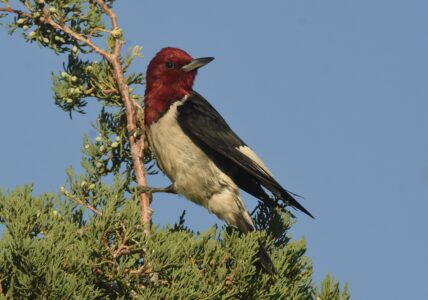
A report from Portage Bay July 24 did include a great sighting of what appeared to be a family of red-headed woodpeckers, two adults and two juveniles. Breeding red-headeds have become extremely rare in the U.P. with the steadiest reports in recent years from the Gladstone area. Trumpeter swans also produced a brood at the Point being seen there this summer too.
Another species with dwindling summer numbers in the U.P. is the common nighthawk. Late summer has become the most common time to see them across the entirety of the area during their migration south. The Maxton Plains on Drummond Island in the far eastern U.P. did produce a report last Tuesday though of five nighthawks, indicating the possibility of production there this summer.
The Peshekee Grade continues to impress with its diversity this summer. One four-and-a-half-hour excursion last Tuesday yielded 65 species including 13 warbler species, four bluebirds, an upland sandpiper, a merlin, peregrine falcon, yellow-bellied flycatchers, indigo buntings, bald eagles, osprey, and broad-winged hawks. The five-mile search near the entrance to the McCormick Wilderness trailhead located around nine miles north of U.S. 41. Lake Arfelin is close and homes there can provide habitat bluebirds and red-bellied woodpeckers also seen in the area. Two species seen not seen there were black-backed woodpecker and white-winged crossbills.
Peregrine sightings have continued in Marquette this summer along the Lake Superior shoreline. One was seen in the Lower Harbor earlier this week and periodic reports come from the Upper Harbor-Presque Isle area too. There were some reports of a failed nest in north Marquette earlier this summer leading to a second nesting that may have had difficulties too. With a spate of cool weather and several severe storms conditions have been challenging for some nesting birds this summer here.
The recent rains and warmer weather have helped eastern toads, spring peepers and gray tree frogs successfully make the transition from tadpoles to dime and nickel-sized young adults recently as all have been seen at Presque Isle. So, hop out for a look, it won't be a waste of time!
EDITOR'S NOTE: Scot Stewart is naturalist at the MooseWood Nature Center, a writer and a photographer.