
Eagle Mine weighs in on CEMP
Living Green
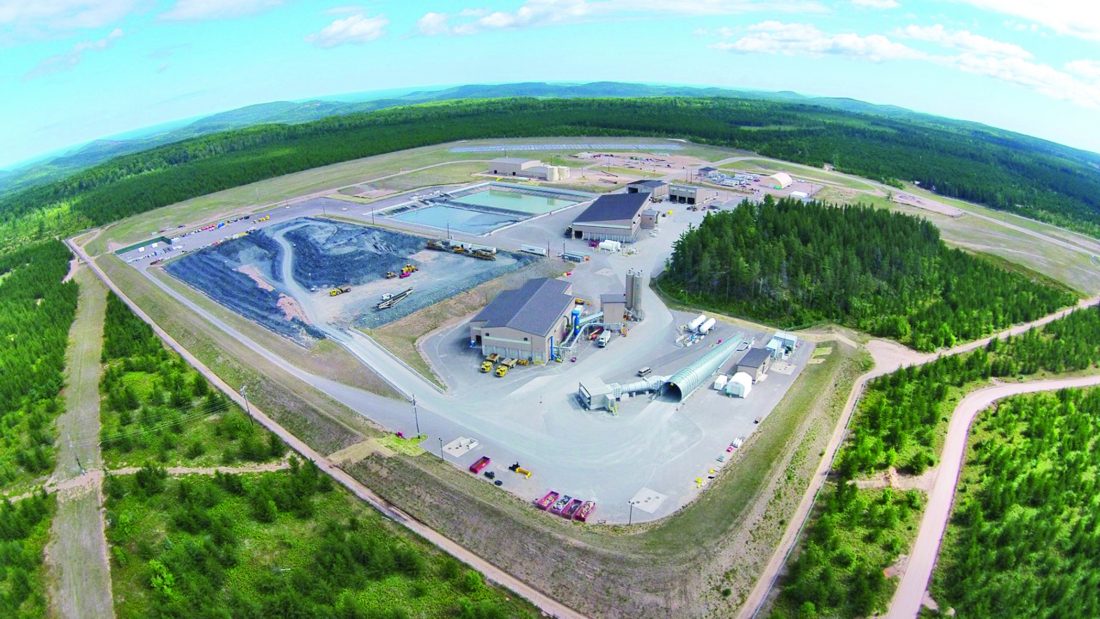
An aerial view of the Eagle Mine in 2014 is pictured. Eagle Mine, in conjunction with the Superior Watershed Partnership, the Community Foundation of Marquette County and the Keweenaw Bay Indian Community, recently signed a new agreement for the Community Environmental Monitoring Program. The CEMP program involves third-party environmental monitoring at the mine to ensure transparency. (Journal file photo)
EDITOR’S NOTE: This is part two of a Living Green series on the Community Environmental Monitoring Program for Eagle Mine. In this story, Eagle Mine’s role in the process is outlined. Part one provided an overview of the program and the recent signing of a new CEMP agreement. The remaining articles in the series will highlight the roles of each entity involved in the CEMP.
MICHIGAMME — When a mining operation comes to town, the opinions of area residents may be greatly divided, with some feeling grave reservations about the potential environmental impacts, others feeling that it represents a priceless economic development opportunity, and others feeling somewhere in between.
In the case of Marquette County, a situation like this isn’t far removed from recent memory, with the controversy about Eagle Mine in Michigamme Township playing out for years after the ore body was discovered, partially due to its location in the Yellow Dog Plains, which contains the headwaters of the Yellow Dog and Salmon Trout rivers.
“When the ore body was discovered in 2002 and the company proposed building a mine, there was significant community controversy due to concerns around potential impact from the proposed mining operations to the environment, specifically water,” Matt Johnson, manager of external relations at Eagle Mine, said in an email.
Beyond this, the “community didn’t trust environmental monitoring data produced by the mining company and also didn’t have trust with government regulators,” he said.
But a solution was on the horizon.
In 2008, Johnson learned about the idea of third-party monitoring by a group of scientists from Michigan State University who were performing bird studies for logging companies in the Upper Peninsula. He also learned about community monitoring of fisheries by local Native American communities at the Canadian Diavik Diamond mine.
Around eight years after the ore body was discovered, siting and construction work began in 2010 at Eagle Mine, which is the nation’s only primary nickel mine.
“As the Eagle Mine project continued to develop, so did community protest,” Johnson said. “In response, we refined the idea of third-party monitoring and approached both the Superior Watershed Partnership and the Community Foundation of Marquette County and developed the concept of independent community monitoring into the model we have today.”
The first Community Environmental Monitoring Program agreement was signed by Eagle Mine, the Community Foundation of Marquette County and the Superior Watershed Partnership as the participating entities. The foundation served as a convener and fiduciary pass-through agency for the project, meaning Eagle Mine pays up to $300,000 annually for the independent monitoring work to be conducted by the Superior Watershed Partnership, now in conjunction with the Keweenaw Bay Indian Community as of the most recent agreement.
With the third-party monitoring being conducted through the CEMP, this data is compared to the environmental data collected by Eagle Mine itself, then reported publicly through the CEMP website.
“From a transparency perspective, it means that our operations are like an open book … For Eagle’s operations, we feel the CEMP program helps to ease concern from those in the community who are not supportive of mining operations by being open and transparent about what environmental impact Eagle’s operations have,” Johnson said. “Eagle’s role is to help manage the program in accordance to the monitoring agreement, report any issues to the CEMP program, and help simplify technical language into plain English.”
The formal addition of KBIC to CEMP was one of two major changes that occurred with the singing of a new six-year CEMP agreement on Dec. 12.
“KBIC’s involvement is critical in better understanding Native American culture concerns and how they can be addressed in the CEMP,” Johnson said.
The other major change, Johnson said, was in the dispute resolution process, which can be used if SWP or Eagle Mine disagree on data or interpretations. The new agreement “incorporates a mediation process that utilizes a training mediator to help both parties identify a path forward,” he said.
The dispute resolution process is “critical for the success of the program, even though the process had never been triggered by either party,” Johnson said.
The mining company now offers a presentation about “successes and challenges in creating and managing the CEMP” to help others, as they have received “inquiries from both national and international companies, communities and governments about the program with the hopes of implementing community monitoring in their part of the world.”
“The primary piece of advice we offer other companies and communities is to start by really asking the question if they need a CEMP, if so, start small,” Johnson said. “Start by creating an agreement that focuses on what the primary concern might be from the community, such as a river or a lake. Learn from that monitoring, fine tune the program and agreement, and add more monitoring if it’s needed.”
Overall, Johnson hopes to see the community engage with the monitoring results, which can be found at www.swpcemp.org, he said.
“We would love additional feedback about how we interpret and explain results to see if there are areas we can improve on,” he said. “Currently, the monitoring data results show that Eagle’s operations are protective of the environment and meet regulatory standards, these results are something Eagle employees are proud of.”
Cecilia Brown can be reached at 906-228-2500, ext. 248. Her email address is cbrown@miningjournal.net.
Front Page News

Marquette doctor retires after 57 years
Jacobetti veterans home to be considered for housing

Marquette City Commission responds to concerns from renters

Scientists find proof of invasive shrimp in Lake Superior
Tahquamenon Area Schools teacher resigns after investigation
NEWBERRY — Tahquamenon Area Schools superintendent Shawn Tebo has released a statement on the recent resignation ...