
Learning about a legend
‘Kawbawgam’ book focus of U.P. Notable Book Club event
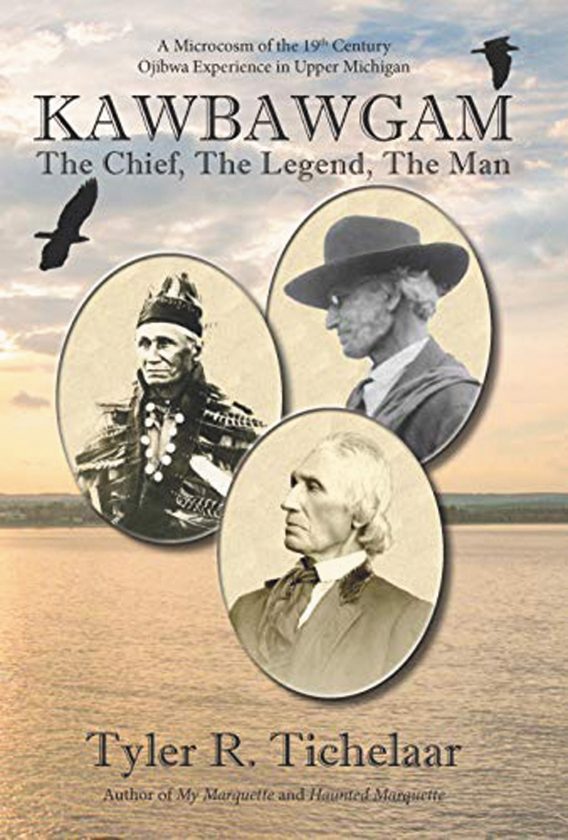
“Kawbawgam: The Chief, The Legend, the Man,” written by Marquette resident Tyler R. Tichelaar, is the subject of the Oct. 14 meeting of the U.P. Notable Book Club. The event will be held via Zoom. (Photo courtesy of the Upper Peninsula Publishers & Authors Association)
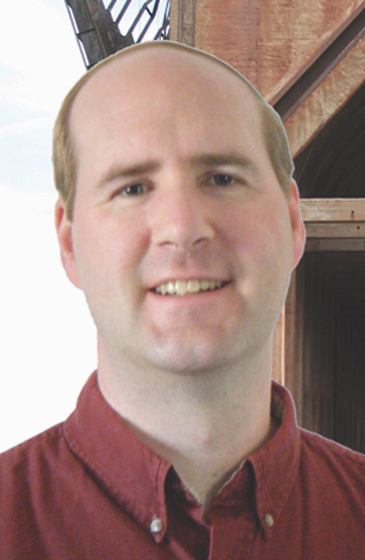
TICHELAAR
“Kawbawgam: The Chief, The Legend, the Man,” written by Marquette resident Tyler R. Tichelaar, is the subject of the Oct. 14 meeting of the U.P. Notable Book Club. The event will be held via Zoom. (Photo courtesy of the Upper Peninsula Publishers & Authors Association)
TICHELAAR
Trending
MARQUETTE -- Marquette author Tyler R. Tichelaar will present his book, "Kawbawgam: The Chief, The Legend, The Man," at the next meeting of the U.P. Notable Book Club on Oct. 14.
The Crystal Falls Community District Library, in partnership with the Upper Peninsula Publishers & Authors Association, has scheduled author events with winners of the U.P. Notable Book List. The 10th event with seventh-generation Marquette resident Tichelaar is scheduled for 7 p.m. Oct. 14 via Zoom. Participants are urged to contact Evelyn Gathu in advance at gathu@uproc.lib.mi.us or 906-875-3344.
The UPPAA recommends individuals borrow a copy of the book from their local libraries or purchase them from their local booksellers in advance to get the most out of these events. The event is open to all U.P. residents free of charge.
"I am honored and very pleased that 'Kawbawgam: The Chief, The Legend, The Man' has been named a U.P. Notable Book because the important role of Kawbawgam and other Ojibwa in the 19th Century in helping to build Upper Michigan, as well as how they were marginalized and coerced to give up their land, has long been overlooked," Tichelaar said in a message. "It's time to insert this aspect of U.P. history back into the history books, and I have been glad to bring Kawbawgam's role into the limelight and see people respond so well to it."
UPPAA President Victor Volkman wrote a review of the book in The U.P. Book Review.
"'Kawbawgam: The Chief, The Legend, The Man' is a great start for anyone willing to confront the true history of the colonization of the U.P. and the ruthless exploitation of its indigenous peoples," Volkman wrote. "This is not Tichelaar's first outing into U.P. history; he is broadly recognized for writing accessible histories such as 'My Marquette' and 'When Teddy Came to Town' as well as the sprawling 'Marquette Trilogy,' a Micheneresque rendition of 150 years in historical fiction."
He said Tichelaar mentions Marquette pioneer Peter White, who became a liaison between "white people and the Ojibwa in general" and to Kawbawgam in particular.
"It is the cutting through this smoky haze of imperial nostalgia that Tichelaar does yeoman work, going back to original sources where most contemporaries have simply regurgitated newspaper reporting of prior decades and the embellished yarns of Peter White's well-meaning if hopelessly biased accounts," Volkman said. "The sources fully documented and footnoted include census records, church baptism, marriage and death records, original court documents, as well as letters and contemporaneous newspaper reporting. Tichelaar concedes that this work won't be the last word on Kawbawgam and instead hopes that it will perhaps revive scholarship and bring new sources to light."
Tichelaar, according to the UPPAA, has a Ph.D. in literature from Western Michigan University and holds bachelor's and master's degrees in English from Northern Michigan University. He is the owner of Marquette Fiction, his own publishing company, and of Superior Book Productions, a professional editing, proofreading and book layout company. He is also the former president (2008-2019) of the UPPAA.
Tyler began writing his first novel at age 15 in 1987. In 2006, he published his first novel, "Iron Pioneers: The Marquette Trilogy, Book One." More than 20 books have followed. In 2009, he took first place in the historical fiction category in the Reader Views Literary Awards for his novel "Narrow Lives." He has since sponsored that contest, offering the Tyler R. Tichelaar Award for Historical Fiction. In 2011, Tyler was awarded the Marquette County Outstanding Writer Award, and the same year, he received the Barb Kelly Award for Historical Preservation for his efforts to promote Marquette's history.
For more information about Tichelaar, visit www.MarquetteFiction.com.
Kawbawgam part of Marquette history
Charles Kawbawgam, "The Last Chief of the Chippewa," is a legend in the U.P. for allegedly living to age 103 (1799-1902), but the UPPAA noted that few people are familiar with him beyond his being buried in Marquette's Presque Isle Park. Kawbawgam witnessed a period of intense industrial growth and unheralded change for Native Americans.
Growing up at Sault Ste. Marie when the area was still claimed by Great Britain, his first memory was of armed Americans coercing his people into ceding their lands to the U.S. government, the UPPAA said.
"As the son, nephew, stepson and later son-in-law of Ojibwa chiefs, and in time a chief in his own right, Kawbawgam learned early that he would have to walk a fine line to keep the peace for his people," the UPPAA said in a news release. "After temporarily migrating to Canada with other Ojibwa in disagreement with the American government, he returned to the Sault where he was recruited to help found the town of Marquette. Kawbawgam would preside over an Ojibwa and metis community that ensured the white community's survival during Marquette's early years, only to be pushed to the community's margins as the city grew and prospered.
"Yet the admiration and affection he won from whites as well as the Ojibwa ensured peace and a legacy that lives on today. Kawbawgam is a story of cross-cultural friendships, survival amid upheaval, and the importance of community and heritage."
More information about the U.P. Notable Book list, U.P. Book Review and UPPAA can be found on www.UPNotable.com. For more details about the UPPAA, visit www.uppaa.org.