
What’s Flying: Birds welcoming the sunrise

STEWART
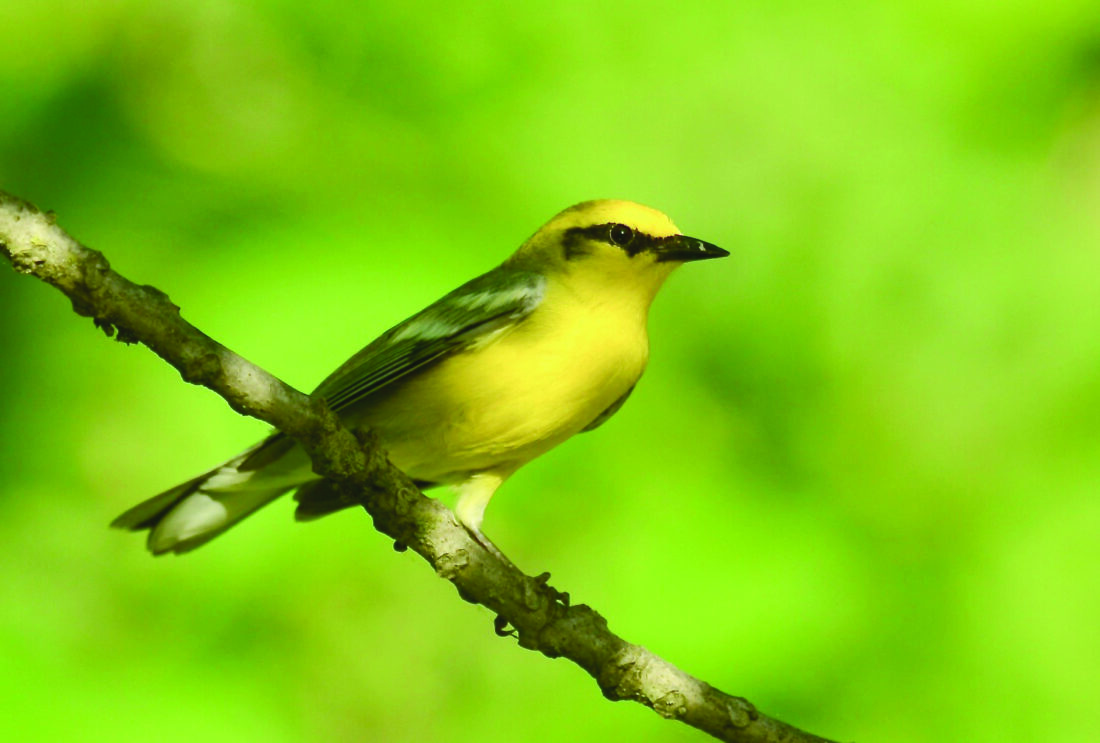
A blue-winged warbler looks on. (Scot Stewart photo)
STEWART
A blue-winged warbler looks on. (Scot Stewart photo)
Trending
"Summer afternoon – summer afternoon: to me those have always been the two most beautiful words in the English language." - Henry James
Summer has been interesting to say the least. The aroma of newly blooming wild roses might definitely make even the coolest days better. Although the woods are thick and green, there are still some gaps between seasonal temperatures and actual temperature readings. At times the mosquitoes have been more than friendly, but the cooler temperatures have tamped down a bit on some days.
Mid-summer also provides a few birding surprises just to make things even more interesting and exciting. Several warblers have been great surprises this past month. A Kirtland's warbler showed up in Chocolay last month. There have not been a lot of them in Marquette area in recent years, but this one probably should not be a big surprise. A male has been heard and seen singing in a clearcut of jack pines near Lake LeVasseur.
This bird was federally an endangered species until 2019 and is quite specific in its choice of habitat in jack pines. They prefer pines 5-15 years old, but because they nest on the ground, nesting areas are often restricted to make sure nests are not stepped on as birders look to see these rare birds. Once trees mature past that age the warblers move to other areas. As a result, habitat is managed through lumbering and fires to continually make suitable habitat available to them in Michigan. Also, because their winter range is in the Bahamas, they are affected by occasional hurricanes hitting the area.
Last week a blue-winged warbler was found at Van Riper State Park. This warbler is not a regular species found in the Upper Peninsula but rather is more commonly found farther south with a normal northern edge in mid-Wisconsin and the southern half of the Lower Peninsula. They are beautiful, sleek warblers, mostly lemon yellow with gray wings and tails, and off-white wing bars. Their call is very buzzy, similar to that of a clay-colored sparrow. One stopped briefly at Peninsula Point back in May during migration too.
A bigger surprise for the area this summer has been several appearances of red-headed woodpeckers in the northern U.P. Some of those more unusual reports have come from the city limits of Marquette. One was heard calling in a red pine grove in south Marquette and like most stayed in the area just a day or two.
Once nesters in Marquette, they looked to aging sugar maples in town to create their cavities. Two of the last nests in town were on the east side and near the Park Cemetery, both on Ridge Street more than 35 years ago.
Three of the challenges the woodpeckers have faced have been loss of habitat, loss of nesting trees - dead trees and branches, and European starlings. Red-headed woodpeckers prefer areas with a combination of mature trees and some open areas like fields. Dead and mature trees are preferred for nesting cavities. European starlings are a major problem for many nesting woodpeckers as they often wait as red-headed woodpeckers and other species excavate nests, watch until they leave to get food or water, then take over the nests, leaving the woodpeckers to start over as they look for new sites to develop or move away from.
Red-headed woodpeckers are feisty birds, with some intriguing habits. They often catch insects and wedge them, still alive, into cracks of bark in trees and cover them to eat later. They occasionally "fly-catch" insects on the wing to eat. They do respond to die-offs of trees like American chestnut, American elms, and ashes, and will begin nesting in them due to the increase in nesting habitat and insect numbers.
Several common nighthawks have also been seen this summer in the central U.P. too. The latest have come from a pair seen in Rapid River, in Delta County. They have been known as "goat suckers", and as the nightjars, a group that includes the whip-poor-wills and are not hawks. Both species are nocturnal and catch moths, beetles, and other flying insects on the wing. They are not restricted to night-time hunting though and can be seen hunting at dusk and dawn.
They have small beaks and very large mouths and were thought to go out into fields at night and suckle sheep and goats. This was first described by the Greek philosopher and scientist Aristotle in the 300s BCE. It was noted again by the Roman scientist Pliny in 77 CE. It is not certain how many actually believed this, but the term stuck until the 1900s just the same. Nighthawk fossils as old as 400,000 years have been found across the U.S.
Common nighthawks were once more common in the U.P. and could be heard hunting even in Marquette, into the 1970s. They are seen from time to time, especially in the past in places like the Sands Plains. They can turn up from time to time in the nets used to trap owls at Whitefish Point in Chippewas County during spring migration. They are also seen most autumns in the central U.P. as they migrate south from Canada, especially along the Lake Michigan shoreline. They do tend to wander and have been found from Iceland, Greenland and the United Kingdom to the Azores and Faroe Islands according to the Cornell Lab of Ornithology.
One of the local success stories in the U.P. continue this summer. Habitat improvements brought purple martins back to Escanaba several years ago following hard work to improve a site in Ludington Park. They have returned again this summer. Famous for their hearty consumption of mosquitoes and other flying insects, they are a welcomed addition to the landscape. Pesticides and habitat lose have contributed heavily to their disappearance.
Mourning doves and northern cardinals continue to welcome the sunrise each day in Marquette making morning and afternoons just beautiful.