
What’s Flying: A great time to be out

STEWART
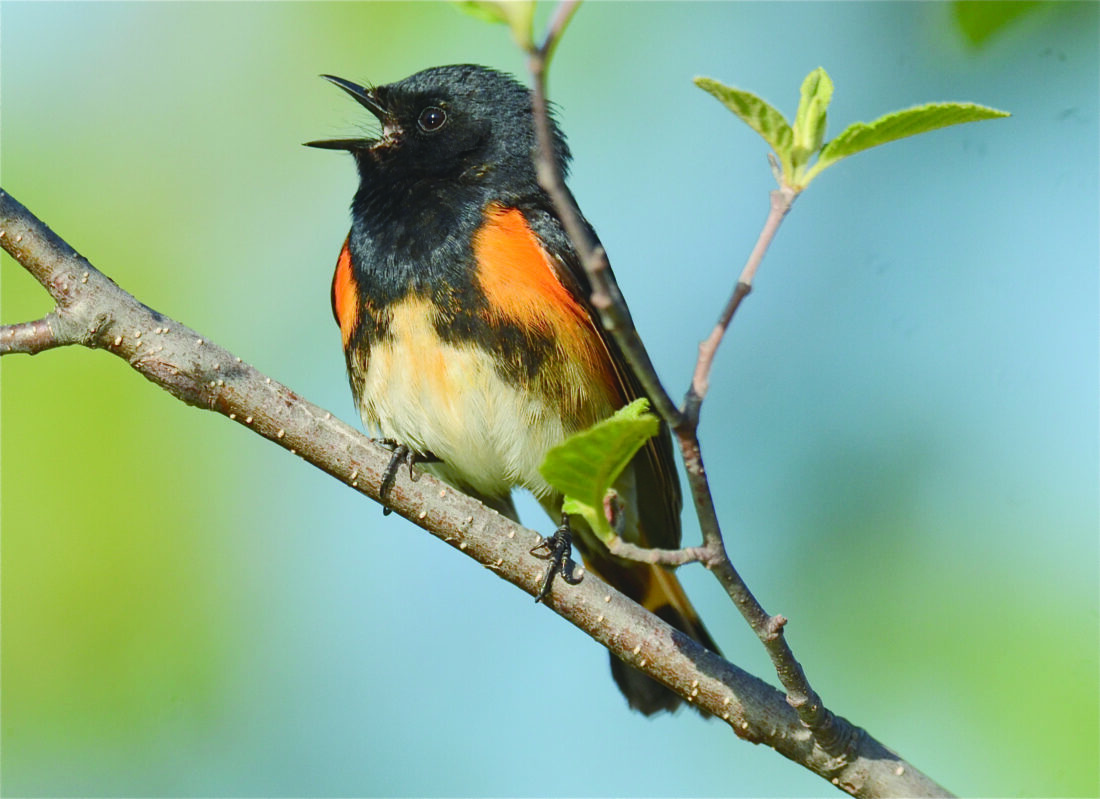
An American redstart sings. (Scot Stewart photo)
STEWART
An American redstart sings. (Scot Stewart photo)
Trending
"One must maintain a little bit of summer, even in the middle of winter." - Henery David Thoreau
Well, we should get a bit of summer in the middle of ... oh, wait, it is summer! This is one of those summer types the Upper Peninsula occasionally experiences, creating a clearly different cast. It is the temperatures creating the difference. It still beat the forest fires, extreme heat, tornadoes and tropic storms being experienced elsewhere this summer.
Many regular arts of the season are happening, although maybe with the regular timing expected. The ground has been litter in parts by a myriad of small, pinkish red maple seeds this past week. Common snapping turtles have been making their way across roadways in search of suitable places to lay their eggs on dry, sandy hillsides. In the woods, clintonia (bluebead), pink lady's slippers, and wild lily-of-the-valley are nearly finished blooming, and the thimbleberries are busy with their blossoms. Blackberries are hard at work, happy with the rain to begin their late summer fruits.
Birds are busily engaged in their summer routines, With the leaves fully out in the trees, many of the smaller birds have now all but disappeared but are still singing. Two warblers providing a steady stream of music across much of the forested portions of the U.P. are American redstarts and black-throated green warblers. Presque Isle and the BLP Trails on the north side of town are two good places to find them. Red-eyed vireos, northern cardinals, and mourning doves are three other species being commonly heard currently.
One of the best ways to learn a wide variety of bird songs and increase bird watching enjoyment is to simply aim those binoculars into the trees where the songs are coming from and watch for some movement to zero in to get a good look and with luck, make an identification.
Warblers and vireos are often quite high up in the maple and poplar trees though and don't always offer even one good view. There is another way to identify the singing birds and learn their calls too. The Cornell Lab of Ornithology has a phone app call Merlin. This app has become a quick way to find out what birds might be singing nearby and can somethings pick up songsters out of earshot. It records all the sounds it picks up and as the birdsongs are recorded, it begins printing out the birds' names. As calls are recorded the bird's name appears and is highlighted each time it sings. When there are several birds singing at the same time this becomes an important way to tell which is which. Merlin can pop a video up of the bird on the screen as well so listeners can see what it looks like.
The app is free and must be added to the phone to set up an account. After the account is set Merlin will ask what region of the country or which country's regional birds' information and calls should be added. For some foreign countries, like Costa Rica, not all the region's birds may not be available to add because their data has not been complete inputted.
The app is not perfect. Sometimes it does not identify single or short calls and may not "hear" distant calls. It may occasionally misidentify calls too, leading to short term excitement at the possibility of hearing a really rare bird that is not correctly identified. Also of note, Merlin does not identify other calls, like frogs, mammals, and insects. The recordings are saved and can be used later to review the calls heard and list the birds heard at that site.
Many birds being seen now in the area are either foraging for food to feed nestlings or are showing young birds how to find food for themselves. This seems to have been a good summer for brown thrashers in the Marquette area. They have been seen looking for good or feeding young near the Superior Dome, Picnic Rocks and on the East Side. Larger handsome songbirds, there are distinguished by their rusty brown backs and long tails and spotted chests. They nest in thick bushes and small trees and forage almost exclusively on the ground.
Robins have also become common yard birds looking for insects in the grass during drier days and worms following rains. House finches and black-capped chickadees are both touring the area with young fledglings to help these birds find local food sources.
Those singing northern cardinals and mourning doves are both year-round residents. Because they did not have to endure long tiring migration flights here this spring, they have been able to start nesting early and in relatively good physical condition. And because they will not have to prepare for long flights south this autumn, they will have extra time to help a second, or even third clutch of eggs prepare for winter late in the summer nesting season.
At the Portage Marsh on Lake Michigan south of Escanaba a great diversity of birds, including many with young or still singing has been reported this week. Nine trumpeter swans were seen there last Saturday. A pair of great egrets was seen in the wetlands too. Singing marsh wrens and willow flycatchers were heard. Both are difficult to find, and the song is the most certain way to identify both the wren and the willow flycatcher as other closely related species like the sedge wren and the least and alder flycatchers. All five wrens and flycatchers are found in the area, but the calls are all quite different. Flycatchers are somewhat unique in that they do not have regular, learned songs, just calls they are genetically programed to make without hearing them first.
With weather conditions continuing to be mild and with plenty of birds out to be seen and heard it is a great time to be out. They may even be a few mosquitoes there to keep you company too.