
What’s Flying: Birds beginning to head our way

STEWART
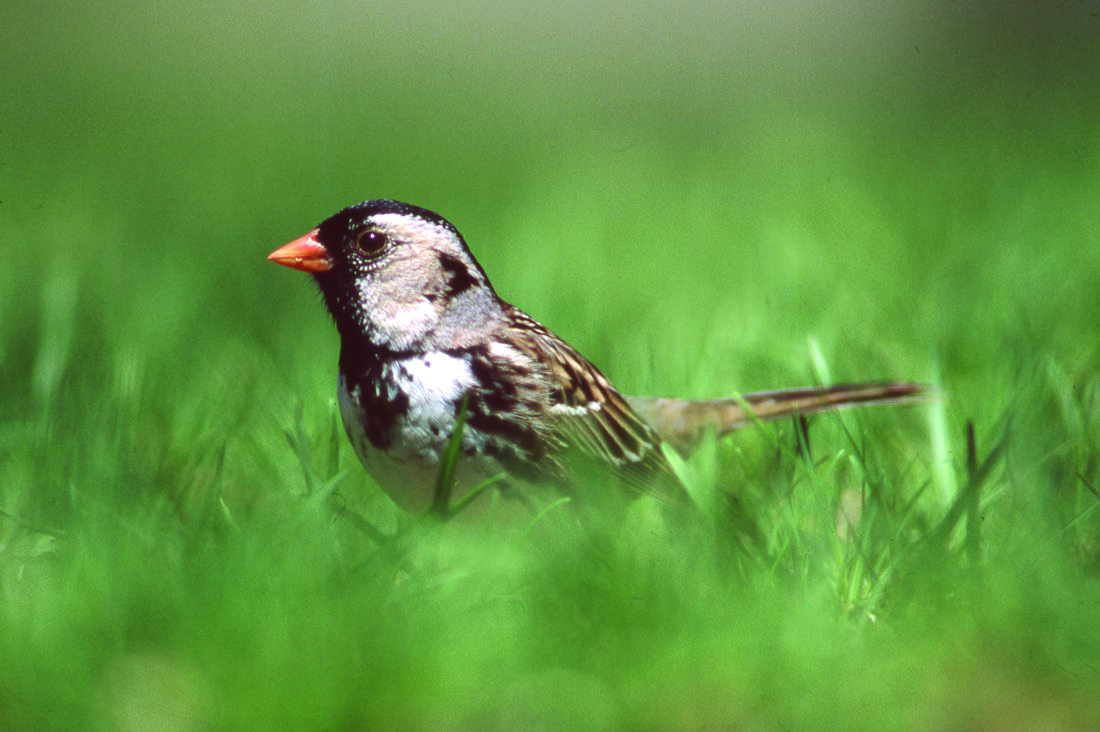
A Harris's sparrow looks on. (Scot Stewart photo)
STEWART
A Harris's sparrow looks on. (Scot Stewart photo)
Trending
"When May is not Spring, and to heavy coats clothes we still cling, yes warm weather will come, but winter, you're a bum." – Anonymous
With occasional snowflakes still in the air, it's difficult to believe its mid-May. Difficult to know what is more challenging -- to still be wrapping up in heavy clothes or hearing everyone complaining about it! It is a true treat to see the stubborn continuing on regardless. At some of the smaller ponds around Marquette it's possible to see painted turtles trying to catch some of the sun's rays and warm up enough to metabolize a bit of the food they have eaten. Along the Board of Light and Power trails on the Dead River the wonderfully aromatic trailing arbutus is blooming, providing a heavy, sweet fragrance for those willing to kneel down for a breath of spring.
Last year, there was one day when the temperature reached 90. It opened the flood gates for the migrants waiting for the right signs to head north. The results were impressive with huge numbers of blue jays, warblers, and sandpipers heading through the Upper Peninsula. There has not been a day like that yet this spring, just been lower numbers and smaller diversity totals at most locations.
Whitefish Point continues to see some of the most impressive numbers of migrants. Sharp-shinned hawks continue to stream through -- with triple digits numbers still coming through on some days. Blue jay migration is in full swing, with daily numbers over one-hundred there some days and a few double digits at Peninsula Point in Delta County too.
White-crowned sparrows have had a good run in the U.P. this past week too. Twenty were reported at Whitefish Point on Wednesday as one of the higher numbers seen, but small flocks have been reported at many feeder, especially in Marquette. Often there are other species in the mix, with white-throated sparrows, especially the more subtle "brown" form alongside them. Other sparrows seen with them have included song, chipping, Lincoln's, vesper, a few late American tree, and at least one Harris's sparrow. The Harris's sparrow was followed for several days at a home on the east side of Marquette.
The Harris's is the toughest one to find in the U.P. in the spring. Usually traveling with small flocks of white-crowned sparrows. In spring they are heading north from a narrow band of wintering states between Texas and Nebraska, and some Harris's seem to get pushed eastward a few states. Harris's will all spend the summer in Canada, between the Northwest Territories and the western shore of Judson's Bay. The white-crowned sparrows summer across a much broad summer range from the northern Rockies northward to a band stretching from Alaska across the northern tier of Canadian provinces and territories.
Harris's sparrows are larger species, with gray patches across the backs of their heads and necks, and bold black caps, faces and throats. More are seen in the U.P. in the fall migration. By then, they have gained their winter plumage, losing all their gray, replacing it and back feathers with buff- brown backs and speckled black caps and throats. In some fall flocks, a group of five or more Harris's may be seen here.
Sandpipers are still just dribbling into the area. Lesser and greater yellowlegs continue to dominate the arrivals. A single lesser was found on the Lower Harbor Breakwall this week near a late snow bunting. As the weather warms up, the breakwall should see a big jump in the shorebird activity there as midge hatches populate the rocks and concrete with plenty of food for the hungry birds making some of the longest flights from South America to the Arctic. Flocks of over 100 sandpipers have been seen on the breakwall in late May and early June. At least 14 total species of sandpipers and plovers might stop. A few spotted sandpipers, and one report, on the Dead River, of a solitary sandpiper have also been seen recently in Marquette.
The mix of waterfowl on the U.P. portions of the Great Lakes is slowly changing too. The three species of scoters, buffleheads, redheads, and scaups have begun appearing in greater numbers, as the waterfowl number begin to wind down.
Warbler flocks have been small so far too. At Peninsula Point five to seven species have been usually listed with Wilson's, blackburnian, black-and-white, and Nashville the most recent arrivals. Numbers are usually one or two of each. Other splashes of color have come from just a few other species - a couple of indigo buntings and one or two Baltimore orioles.
In the next week or two, depending on upcoming weather conditions, especially wind, the points of land on the north shores of Lakes Michigan and Huron should see some spectacular waves of migrants, especially warblers and Neotropicals like the orioles and tanagers. The best parts of these waves are some of the other species like northern mockingbirds, summer (and even western) tanagers, orchard orioles, more blue-gray gnatcatchers (some have already been seen), drawn northward with the bigger flocks. Nighttime watches of Doppler radar scans can provide valuable information about the larger movements of birds heading northward at night. Because many of these birds will drop down to rest once they reach landfall on these points, good mornings for birding can be reasonably well predicted.
One factor playing into the arrival of the warblers, vireos, and other insect eaters is the before-mentioned midge hatches. Along the shores of the Great Lakes hatching midges will mass in large clouds and rest on overhanging branches of trees like white cedar as they mate and prepare to lay their eggs. For these migrants too the insects make up an important stop for a critical source of food as they may work to summer ranges in Canada.