
What’s Flying: A great time to be outdoors

STEWART
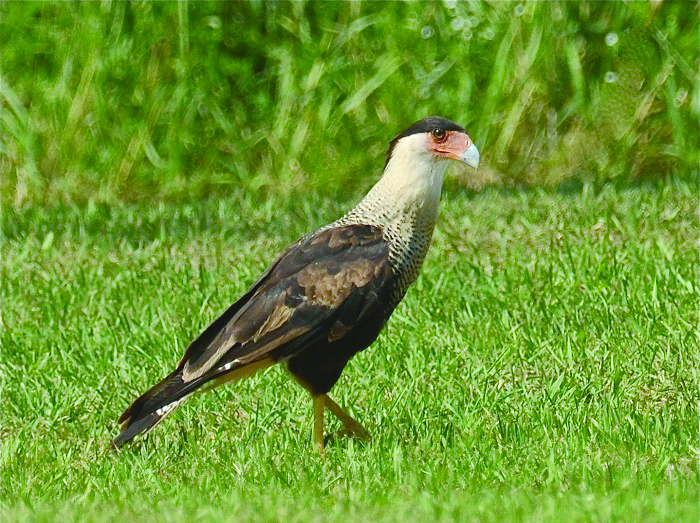
A northern crested caracara looks on. (Scot Stewart photo)
STEWART
A northern crested caracara looks on. (Scot Stewart photo)
Trending
"Warm summer sun, shine kindly here." - Mark Twain
Every once in a while, the sun does come out, and it does make an incredible difference in the entire "feel" of the day. Spring has continued to fashion many of its days around clouds - lots of clouds, but the occasional days of sunshine, and warmer temperatures have made indelible impressions on the entire landscape of the Upper Peninsula.
In just a few short days with "average" temperatures and a bit of sunlight, red maple and birch flowers have almost completed their blooms, aspen, willow, and mountain ash leaves are quickly opening up to create the beginning of the hillside spring pastel pallet seen across many parts of the local woods. Last Saturday signs of some blackflies waking up were seen, despite the fact random accumulations of snow still remain in the woods.
Birds also were greatly affected by the sun, warm weather, and southerly winds all brought big changes to migrants, especially individual, waiting to head farther north. Water birds like redheads and scaups hanging in the Lower Harbor of Marquette, lingering loners, such as the snow bunting seen on the Lower Harbor breakwall, and a multitude of white-crown sparrows and others hanging out around area feeder stations.
Even greater was the wide diversity of summer residents headed to the U.P. and other locations farther north. Some ducks, like scoters, plus common loons, and many more sandpipers and plovers made some of most recent appearances of the season. As has been so often the case, counters at Whitefish Point to the east, were the beneficiaries of many of these sightings. Last Saturday, after the sunny day Thursday with warmer temperatures, and Friday with warmth and more importantly, southerly winds, dramatic changes occurred.
At Whitefish Point on Saturday, with the southwest winds, 117 species were recorded during the eight hour period of the daily census. That entailed 4,526 individual birds and included 16 species of warblers, with Tennessee and the more colorful Cape May and blackburnian in the mix, 236 sharp-shinned hawks, a golden eagle, 107 evening grosbeaks, 2,085 blue jays, eight bobolinks, a dickcissel, and a northern crested caracara. Also observed were three species of butterflies, two migrants, an American lady and a monarch, and a local mourning cloak, plus one eastern red bat.
The northern crested caracara was probably the most unusual of the birds of the day. It is a member of the falcon family with a normal range through parts of Central and South America and northern fringes dipping into southerly Arizona and southern Texas. Sometimes called the Mexican eagle, it has a varied diet, primarily consisting of carrion, but also includes small animals, insects, and even fish.
A number of years ago one found its way into Munising in July and remained in the area until November, feeding mostly on insects in a mowed field. It disappeared as the weather turned colder, but may have strayed even farther north, as one was seen in Wawa, Ontario on the northeast corner of Lake Superior a few days later. Those sightings lasted just a couple of days before it disappeared. To further complicate things, there were a number of later sightings of it in the Escanaba area through March leaving many to wonder about just what happened.
A caracara was seen again at Whitefish Point on Tuesday, so for many hoping to see this rare visitor, there still may be time. Caracaras are slightly larger than crows with dark brown backs and caps, banded throats, yellow, whitish, and sometimes red bills and faces. Bills are extremely large. They are impressive looking birds!
Peninsula Point in Delta County, at the tip of the Stonington, also saw some impressive days last weekend as the warm winds turned out of the south. Some birders saw near 80 different birds with additional species from more southerly ranges. Included in eBird reports were blue-gray gnatcatchers, orchard orioles, at least three red-headed woodpeckers, bobolinks, and three Eurasian tree sparrows. American white pelicans and flocks of up to 200 blue jays were also on the ticket for the day there.
Birding other locations also provided some great opportunities. At the boardwalk in Manistique on Lake Michigan birders have had two days to see another U.P. ruff. This sandpiper is a Eurasian species and is quite rare for the U.P. Preciously this spring a male was seen at Portage Point Marsh in Escanaba. This ruff at Manistique was a female, called a reeve. A summer tanager was also seen there.
At Raco, in Chippewa County warblers watching recently was great. Included in birds seen there were seven endangered Kirtland's warblers. Nearby in Pickford, a flock of 275 American pipits was watched as they picked through an agricultural field.
In Marquette, the Bog Walk at Presque Isle is always a good bet for warblers during spring migration. Early mornings are usually the best with many birds still in flight along the shore. One morning recently more than 500 were seen over the bog. On one late afternoon there though, a rare Connecticut warbler was seen there.
The mouth of the AuTrain River in Alger County is another great spot for migration, especially for shorebirds. This past Wednesday morning a red knot and a whimbrel were seen there. These are both really great birds for the central U.P. A ruddy turnstone was also in the area that morning. With midge hatches now ramping up in Lake Superior, a better array of sandpipers and plovers should be turning up on the Lower Harbor Breakwall in Marquette too. It's just a great time to be out!