
What’s Flying: Great birding now

STEWART
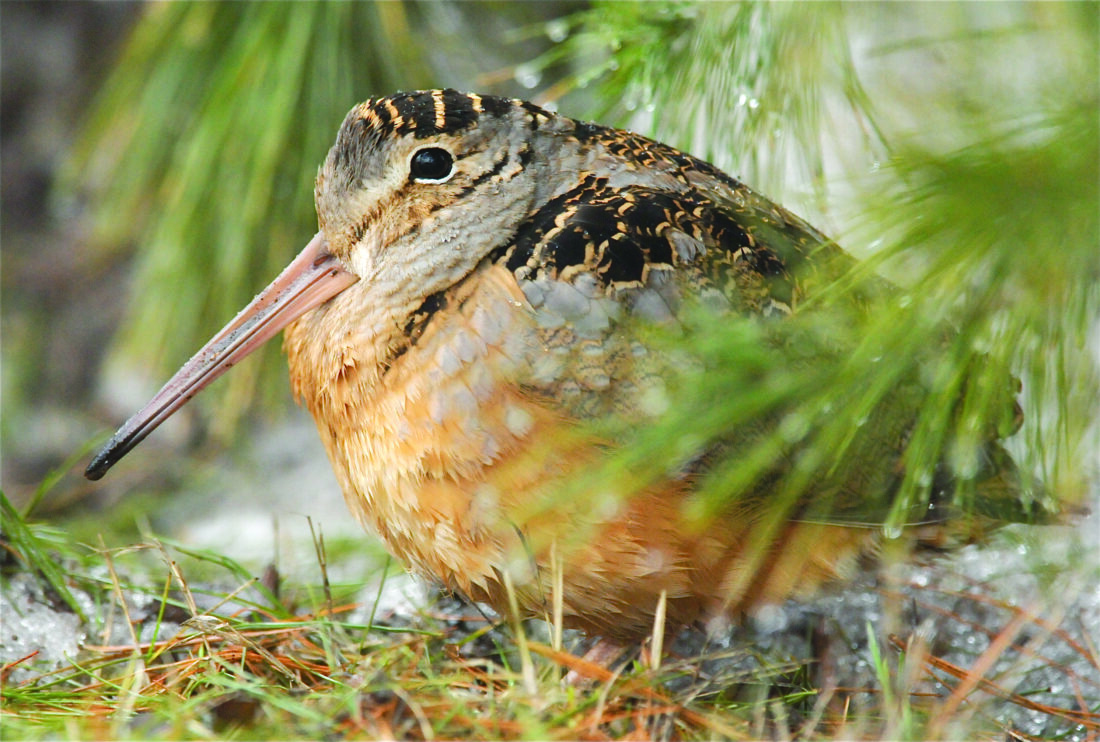
An American woodcock looks on. (Scot Stewart photo)
STEWART
An American woodcock looks on. (Scot Stewart photo)
Trending
"The Earth laughs in flowers." - Ralph Waldo Emerson
A great deal of surprise has accompanied the reaction to the Upper Peninsula's snow details. Despite the record snowfall this winter, lack of sunny days and daily temperatures barely above normal most days, there has been a delightfully noticeably significant meltdown of the huge piles of snow in many spots. That is not to say it has happened everywhere, as some drifts, plow piles and snow in shaded spots are still impressive but melting! Unfortunately, even the slower melting has still created some serious flooding in some areas, and on some of the Upper Peninsula's rivers.
Wildlife is noticing too! Eastern chipmunks are out and busily trying to find the available food in the bare ground areas, and there is evidence a few raccoons and striped skunks have been out on evening forays also in search of a fresh meal. Perhaps one of the biggest surprises this month has been the relative normal timing of blue-spotted salamander migration at Presque Isle this spring.
Last weekend on the night when temperatures got up briefly into the 50s, hundreds of salamanders were seen climbing over snowbanks and across the roadway to get to their mating and egg-laying sites in the ponds near the Bog Walk. At one point, 150 were counted crossing the park road during a one-hour stretch.
Migrant birds have been deterred only bit. On areas of open water most divers, and many dabbling ducks are arriving. Large numbers of common grackles have arrived, sometimes with brown-headed cowbirds in tow. On the Lower Harbor of Lake Superior, the Dead and Chocolay Rivers divers there have included all three mergansers, both scaup species, ring-necked ducks, redheads, buffleheads, and common goldeneyes. Dabbling ducks, more northern pintails, gadwalls, American wigeons, northern shovelers, blue-winged and green-winged teals have joined the resident mallards, ducks and other ducks that have overwintered here.
Newer Marquette arrivals have included more white-throated sparrows, fox sparrows, yellow-bellied sapsuckers, northern flickers, and Eastern phoebes, winter wrens, American woodcocks, killdeer, greater yellowlegs and in the Chocolay bayou an American coot.
Woodcocks are rarely seen during the daytime. Their cryptic brown colors help them blend in beautifully with the dried leaves on the ground. Spending much of their time in wetlands with mushy, muddy ground also helps them stay out of the way of most humans, most woodcocks are found in the evening, particularly in the spring-time during they courtship displays. Males fly to 200 feet above wet areas where they will eventually nest, using a twittering call as they spiral upwards. Once their reach the top of their display flight they dive quickly downwards and land at nearly the same spot, even after it grows completely dark. They make ten or more display flights a night, After landing they will vocalize, with a creaky "peent" call. Some will call in evenings, as they migrate northward, possibly as they search for a mate to join them in migration
Birders in the Marquette area have benefited greatly from the extensive surveying a sizeable number of really great birders has been doing around town and nearby. This has been particularly for gulls. Often large flocks, patience and great optics have combined with patience to find some really good gulls Skandia near the intersection of U.S. 41 and Ingalls Road birders located a large flock of American herring gulls. There is a small pond there currently surrounded by patches of snowless ground. Foraging in the bare grass last Monday with them was a lesser black-backed gull, a really tough gull to find in the U.P., and an iceland gull.
Lesser black-backed gulls are East Coast birds overwintering from Texas to Canada. They nest farther east - from Iceland to Siberia. They have only been found nesting in the U.S. on one island off the coast of Maine.
Also, this week, a pair of Franklin's gulls was discovered in the Lower Harbor Wednesday. These are medium-sized black-headed gulls, similar in size and appearance to Boneparte's gulls. The Franklin's often have a hint of pink to their bellies. While these latter gulls migrate through the U.P. in some numbers, the Franklin's gulls are quite different, after wintering on the West Coast - of South America, they migrate through a good share of the central U.S. to nest in the Dakotas, Montana and the Prairie Provinces of Canada. Because they do wander, a few are seen each year here. They also have been found in the western Pacific as far away as Australia and Taiwan.
Ruby-throated hummingbirds continue northward too. As of Wednesday, they have made it as far north as Wisconsin Dells in Wisconsin and Muskegon in the Lower Peninsula according to Hummingbird Central. Historically they arrive in the southern U.P. during the latter part of the first week or beginning of the second week of May. Time to get those feeders ready. Once hummingbirds make it to the U.P. they may feed on insects, nectar and sap of early blooming willow flowers and yellow-bellied sapsucker wells in the trunks of maple and birch trees, Since the sapsuckers are already arriving here, it is a good time to look for their wells, with sap dripping down the small holes they have drilled in the bark. The sap will run for several more weeks and they can be watched for early hummingbirds.
This is also a good time to look for wandering vagrants - birds that have come farther north than their normal range and usually turn around and head back south. A northern mockingbird, recently seen near the old Shiras Power Plant on Lake Street was the location of the latest. Great birding now - don't wait for a sunny day to make some great finds!