
What’s Flying: Many birds in the area are already on the watch

STEWART
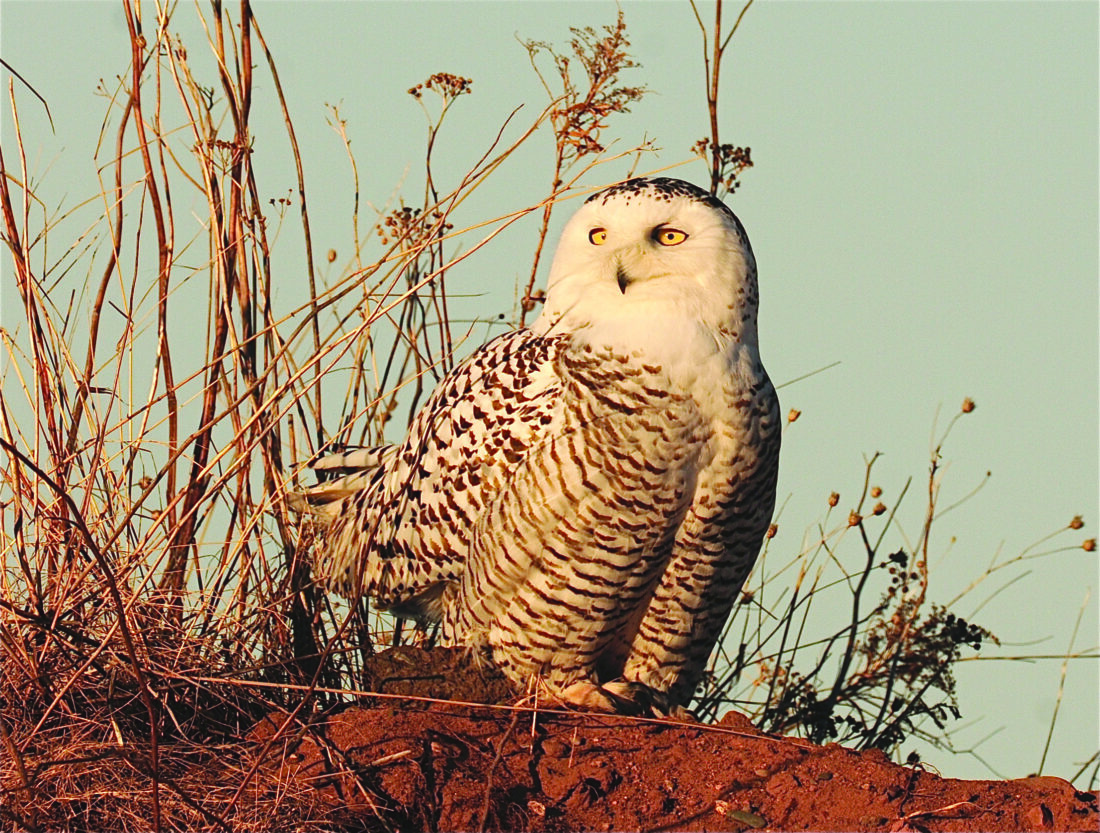
A snowy owl looks on. (Scot Stewart photo)
STEWART
A snowy owl looks on. (Scot Stewart photo)
Trending
"By March, the worst of winter is over. And so hope springs once more and calls on us to make real the dreams of winter." - Unknown
And so, the first week of March is already winding down! It's been a week filled with hope. Hope to see over the tops of snow drifts. Hope that the snow won't all melt at once. Hope a few crocuses with their purples and oranges, the colors dreamed about might make their appearances soon. And hope the early migrant birds will continue to drop in and join the songs and calls of the year-round residents soon.
Sunday was the first day of meteorological spring. This setting was developed to create four consistently divided seasons for accurate weather statistics. This is unlike seasons designated by equinoxes and solstices where the beginning of each does not start on the exact same calendar day every year.
The early migrants are starting to arrive in the Upper Peninsula, despite the significant cover of snow. Hundreds of gulls appeared again this week on the Picnic Rocks in Marquette as close to 1000 were counted, including at least a few ring-billed gulls returning to the area. They are the smaller gulls here for the warmer months and they will be setting up territories to nest on those rocks this summer. In the mix a glaucous gull and an iceland gull were also seen there this past Tuesday. These two species are winter wanders moving through the Great Lakes before returning to northern Canada and parts of Alaksa for the summer.
Similar gull numbers were noted this past Wednesday at the Dafter Dump in Chippewa County, where 1000 herring gulls were also counted along with over a dozen bald eagles and 300 European starlings. Recently herring gulls were divided into two species, American and European, but the divisions of similar gulls are still controversial as the genetics for several different gulls to determine species and subspecies classifications. Currently the gulls nesting here in Michigan are identified as the American herring gull.
A few Canada geese are also beginning to poke around on the Dead and Chocolay Rivers. These early birds will begin staking out the first territories for nesting later this spring. With the development of retention ponds and large manicured lawns around large office complexes south of the U.P. many flocks of Canada geese only travel as far south as they need to go in winter to find suitable habitat until the weather warms. Once temperatures rise again, and waters begin to open it will allow them to make quicker returns in spring to claim favorable nesting sites.
There are still some winter residents remaining in the U.P., patiently awaiting the changes to come. A northern shrike was seen along the Dead River just upstream from the Lakeshore Blvd. bridge near the shallows called the Dead River Marshes by local birders. Near Rudyard, in Chippewa County, a rough-legged hawk and a northern shrike were noted this past Wednesday too. Both of these predators will head northward soon to northern Canada and Alaska for the summer.
Also in the Rudyard area, a snowy owl was seen this past Wednesday. By this time of year, it is sometimes difficult to know much about some of the snowy owls being seen. Some are beginning to work their way northward now as they head back to the tundra of Canada and Alaska. Some continue on here, especially if hunting success is good. Snowy owls in the Marquette area may adapt their hunting to the times between dusk and dawn to avoid harassment by crows. In staying out of sight it's difficult to know when some leave the area and have a good hunting area filled by another owl heading northward from a wintering site farther south.
In Chippewa County there are some spots where snowy owls are seen regularly all winter and can be recognized by their markings. Adult male snowy owls can be nearly pure white with few black markings and are rare and distinctive. Females are often well-marked with black spots, but some young owls are heavily marked. Birders tracking snowy owls during the winter months, photographing them and are often able to log the stays of some birds and be relatively certain how long they are in the area.
A few other winter guests are still showing up in scattered locations across the U.P. Pine siskin numbers are dropping but a few are mixing with goldfinches at feeders in many spots. Small flocks of white-winged crossbills are being heard and seen mostly flying overhead by birders in the field. The crossbills are searching out spruce trees still bearing full cones of seeds. There is still some hope from some birders they will descend in trees in U.P. towns as more and more cones are emptied in the woods. Evening grosbeaks are also continuing at some area feeders and are being seen in the woods, especially in western Marquette County. One feeding station there recently boasted 30 grosbeaks.
No signs of peregrine falcons returning yet to Marquette County. They are another early migrator to the area, hoping to find suitable nesting sites. If early clutches are successfully fledged, they can time well with the emergence of other young birds to provide food they need and develop their hunting skills. There have been regular sightings of both sharp-shinned and Cooper's hawks in the Marquette area and a few reports of maybe one merlin as well, so many birds in the area are already on the watch. Here's hoping your birding will get better every day too!