
More and more migrants, summer birds making their way here

Scot Stewart
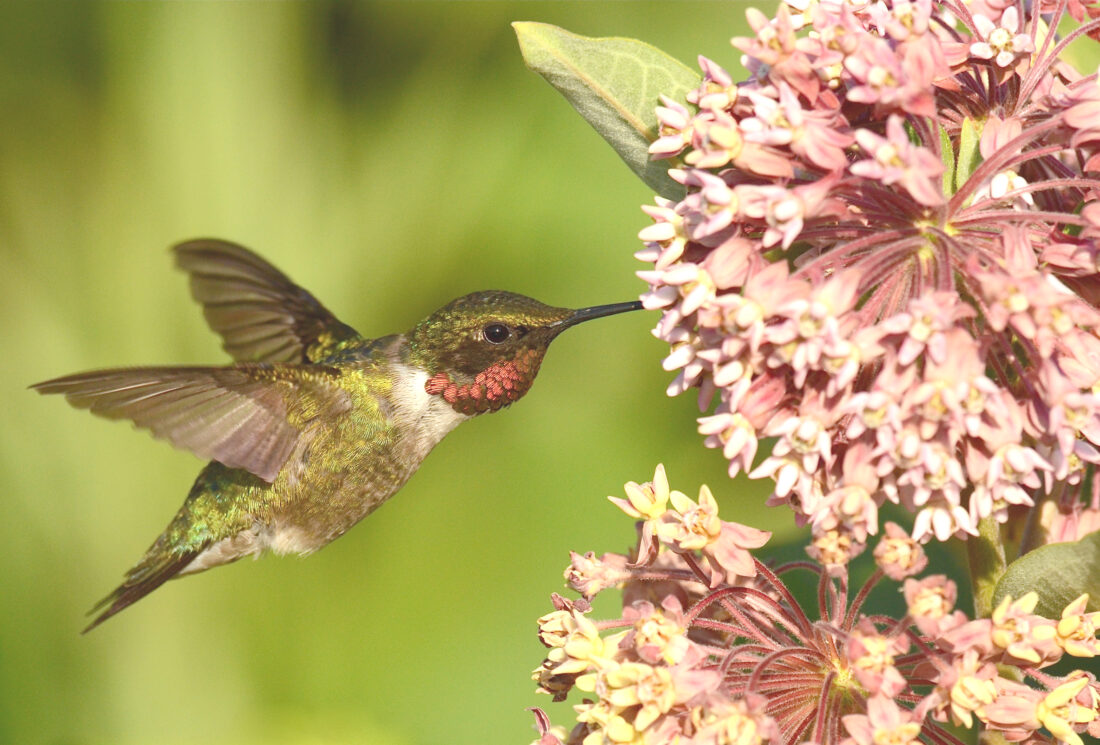
A male ruby-throated hummingbird is seen doing what he does best — holding himself in place in midair. (Photo courtesy Scot Stewart)
Scot Stewart
A male ruby-throated hummingbird is seen doing what he does best — holding himself in place in midair. (Photo courtesy Scot Stewart)
Trending
"Those who contemplate the beauty of the earth find reserves of strength that will endures as long as life lasts. There is something infinitely healing in the repeated refrains of nature -- the assurance that dawns come after the night, and spring after winter." -- Rachel Carson
Seems like spring wants to start over every few days, after a continuing array of chilly days even punctuated with a flurry or two along the way like the one last week on Wednesday night in Marquette County. The cooler temperatures were definitely welcome as it slowed the melt of the massive amounts of this winter's snow, but made it hard on wildlife and humans alike ready for the next page.
Ongoing signs of spring continue despite the uneven temperatures of the final days in April. Robins, grackles and crows have all been seen collecting nesting materials.
Perhaps one of the most exciting signs have come from a pair of great blue herons collecting materials for a nest along the Dead River just upstream from the mouth in Marquette. Last Monday on eBird, an observer related their observations of the herons collecting and carrying off twigs for nest building.
Great blue herons nest high in treetops often near or over water in colonial rookeries. There has been evidence in recent years of recently fledged young herons in Marquette and some signs of nesting, so to note this behavior continuing is truly exciting.
Late April was also the time to observe some major migrations of raptors in the Upper Peninsula. One of the most impressive was the passing of sharp-shinned hawks through Whitefish Point in Chippewa County. During the latter part of April, more than 3,000 "sharpies" were counted by the Whitefish Point raptor counters on the dunes at the point.
Fifteen hundred of them were tallied on a single day last Monday. This is during an 8 1/2-hour period during five days this week starting on April 23. Obviously, there were many more than that during those days farther east and west out of view of the counter, and earlier and later on those days. Broad-wing hawks and American kestrels have also had some big days.
Flickers have had some significant days, too, but not quite as prolific as the hawks. On April 22, there were 140 counted and 44 the following day. Common ravens had days when 21 and 70 were counted. Last Monday, 277 purple finches and 803 common grackles were also counted at Whitefish.
Because of the cold conditions, warblers are still just dribbling in with palm, yellow and black-throated green warblers some of the more recent arrivals in the north-central U.P.
Sparrows, on the other hand, are pouring into the U.P. in a more significant fashion. White-throated and white-crowned sparrows are the most common ones seen, especially at feeding stations.
Song, swamp, chipping, American tree and dark-eye juncos are all appearing at many sites. Sometimes stopping to feed in large flocks, their chipping and song fragments can fill the air with a wonderful mix of morning music to brighten up even a cloudy morning.
Shorebirds are another group just getting started. Greater and lesser yellowlegs are appearing in very small numbers. Killdeers are also early arrivals. They have been seen regularly at the mouth of the Dead River.
Many of the sandpipers and smaller plovers will return later when there are larger hatches of midges along the shorelines of the Great Lakes to provide the fuel they need to continue northward to the Arctic. Once those hatches begin, the lakeshores and the breakwalls will be some of the best places to see these small wonders, some flying more than 3,000 miles to reach their summer ranges.
Out at Lake LeVasseur east of Harvey, ospreys have returned to a nest site there over the water. They usually choose treetop nests on platforms provided for them. They are nearly all black and white and survive on a diet exclusively of fish. Unlike bald eagles, they fish most often on lakes and obviously need ice-free water to catch food and don't turn to roadkill and other similar food sources.
Despite the less-than-seasonal temperatures, hummingbirds have made it to the U.P. The first report to the Hummingbird Central website was in Mathias Township, near Trenary, in Alger County on April 23. The second was in Manistique on April 28. Yoopers can be ready for the next arrivals by getting their feeders up. Some may have to have the sugar water thawed in the morning, though!
Hummingbirds should be able to find some insects to eat as they come this way. There are good numbers of midges in Wisconsin and in the southern U.P. and willow blossom are opening across the same areas to attract other insects the hummingbirds will look for as they forage.
Here in this part of the U.P., though, the willows have not really started blooming yet. There are flies, midges and a few butterflies actively looking for food on warmer days, but the hummingbirds will be looking for more reliable foods.
They will be checking birch and maple trees for the work of sapsuckers' holes made to collect the sap welling from the holes they drilled through the bark. The yellow-bellied sapsuckers arrived in the U.P. several weeks ago, and some have begun preparing to nest here this spring.
Some have continued on during the warmer days farther north into Canada, and it is their wells, now unguarded, that are more easily accessed by the hummingbirds, and three dozen other species of birds, including warblers and kinglets looking to obtain extra-energy foods, particularly on these cooler days.
Those hummingbirds make the season truly come into full view.