
What’s Flying: Lots of opportunities and time for seeing unusual birds
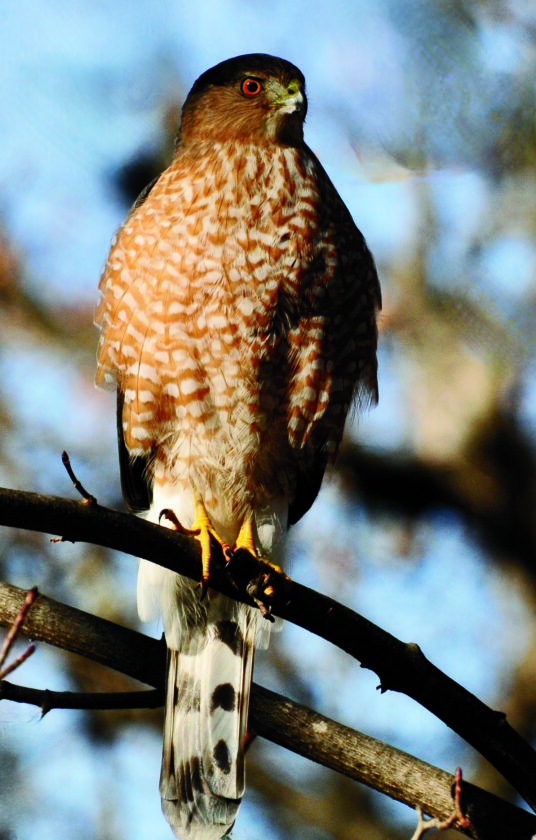
A sharp-shinned hawk looks on. (Scot Stewart photo)

STEWART
A sharp-shinned hawk looks on. (Scot Stewart photo)
STEWART
Trending
"There's one good thing about snow - it makes your lawn look as good as your neighbors." - Clyde Moore
Much of the Upper Peninsula is beginning to wonder just how far the lawn, and the ground below actually are. Even after shoveling, plowing or blowing it is still difficult to know how far down the snow actually goes. The thoughts of spring rise higher and higher as February "melts" into March, but it looks like it is still a ways away. The concept truly takes focus when birders look beyond the U.P. and peek southward. In the Chicago area, “just" 400 miles south there are reports of American woodcocks, white-throated sparrows, and lots of red-winged blackbirds and robins! One peregrine falcon was also reported there this week.
And closer, the waterbird counts are even more encouraging. In Green Bay the duck numbers are building significantly. Last Tuesday, 1,200 great scaups were counted at the mouth of the Fox River, along with 75 lesser scaup, 150 common goldeneyes, 200 common mergansers, 125 red-breasted mergansers, and 700 more scaup, too distant to be id'ed to species were also tallied. Canada geese, a ring-necked duck, a canvasback, and redheads were also seen. An exclamation note there was the 60 bald eagles also counted.
Spring in the Upper Peninsula is definitely going to be a waiting game. Snow melt with a warm stretch will definitely speed things along, but the transition will hopefully be slow with so much snow to melt! Even if Lake Superior clears quickly, ducks will head northward slowly, needing snow melt to be farther along before they reach the northern ends of their breeding range to be clear to start nesting, still months ahead.
Back here in the U.P. it is definitely still winter. Definitely. Snow depths are in the 3-5 feet range in many places as the snow totals for the year top 200 inches in Marquette County and soar to near 300 inches in the Keweenaw Peninsula. It has been noted the totals still are below the record for the winter of 2001-02 of 319 inches for Marquette County, but there has not been a detail of the mid-winter thaws from that year and the part they played on lowering the depth of snow on the ground. And it is tough to state totals since it has been snowing almost every day and the numbers continue to change, regularly. This year looks to set records not just for the amount of snow fall, but for the depth on the ground.
The cover provided by the snow is pressing ground feeders like cardinals to head to sunflower feeders more and more, not just early and late in the day but even at mid-day times, to get what they need to eat during the colder days.
At the feeders the number of birds continues to grow across the U.P. with appearances by the woodpeckers, nuthatches, and even starlings more common, especially at suet. American goldfinches and pine siskins are still coming to area feeders in prodigious numbers in double digits at many sites. With most of the birch catkins depleted in the area they have turned to black-oil sunflower seeds to survive the recent challenging weather conditions. Another species turning to bird feeders to make it through this current stretch is the mourning dove. Several feeder stations have seen up to 16 doves hanging out around stations, resting between feeding on nearby porches, power lines, snowy branches and other nearby roosts.
One of the recent feeder highlight in the central U.P. has been a varied thrush in Cornell. This small thrush is a western species that rarely roams eastward during the winter months. These small thrushes are one of the more extreme vagrant wanders. Their summer range runs west of the Rockies from Alaska to Idaho. In winter their range lies closer to the Pacific Coast from the Alaska Panhandle to Baja California, but again almost entirely west of the Rockies. Most are only short distance migrants and some stay on territory all year. However, many do wander, with vagrant reports across nearly all the Lower 48 states. Sibley's Guide to Birds does not show any reports in Arkansas. Their sightings are rare in most of the southeastern U.S. Cornell states the birds do run on two-year oscillating cycles of higher and lower numbers in the west.
Varied thrushes feed mostly on insects and other invertebrates in summer, but turn to seeds, fruits and nuts in winter. They frequently end up at feeders searching for fallen seed on the ground while wandering. In the west they will feed on smaller acorns too and can clear areas by raking ground cover while hopping backward, similar to the way fox sparrows forage. Unfortunately, that strategy does not work in many places here in the U.P. currently - just a little too much snow right now.
Raptors continue to make appearances around Marquette with sharp-shinned hawks being seen at feeder stations in Harvey and Marquette and a merlin in Marquette. The merlin was seen catching a pine siskin in Trowbridge Park. A few rough-legged hawks still being seen in the Pickford-Rudyard area.
The snowy owl seen in Marquette last week was observed for two days along Lake Superior. It has not been reported since but may have resorted to nocturnal activity to avoid harassment by crows. Gull numbers have continued along the lakeshore too but have moved around considerably due to changes in the ice cover. Sighting for rare species should improve as the ice begins to break-up. Still, - little lawn care needed yet.