Early Labor Day celebrations recalled
By ANN HILTON FISHER
The Marquette Reginal
History Center
Special to the Journal
Although much of the labor history of Marquette County focuses on the struggle between unions and management, particularly in the mines, the history is not all about struggle. There is also a long, long history of joyous local Labor Day celebrations going back more than 130 years.
The long-time director of the Marquette County Historical Society, Kenyon Boyer, had a weekly radio show, “Historical Highlights,” on WDMJ from 1954 to 1963. On September 2, 1956, he told the story of some of the first Labor Day celebrations. This article is drawn from those remarks.
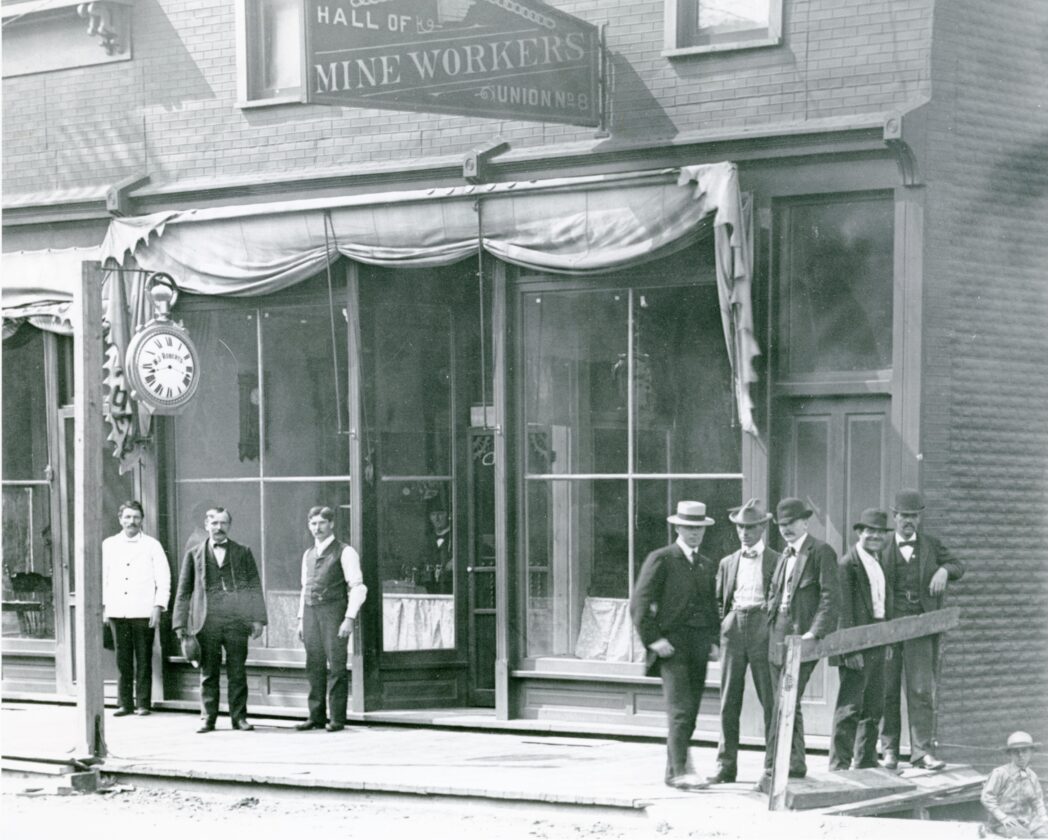
Marquette’s first recorded Labor Day celebration was in 1888, six years before the first Monday in September became a national holiday in 1894. The 1888 parade was led by the Marquette City Band, followed by 66 members of the Marquette Stonecutters and Masons Union and 79 members of Marquette Union of Carpenters and Joiners. Other unions in the parade included members of the local cigar makers union.
The rest of the day included speeches, a soccer game won by the stonecutters, a tug of war won by the carpenters, a baseball game, and an outdoor concert by the city band. The day ended with the largest dance ever held at the armory on South Front Street. The Mining Journal reported that “the sets were crowded so closely together during the quadrille that it was impossible to count them.”
Boyer reports that over the next decade the parades became more elaborate, as more unions were formed, and floats were added. Stores throughout the county began closing for the day at noon so everyone could join the festivities. The noon picnics in Marquette began to be held in Meseke’s Grove, conveniently located adjacent to the brewery on West Washington Street (now the location of Jilbert’s Dairy on Meeske Avenue), though the newspaper reported that “the general good order and freedom from excess showed well the deservedly high character of Marquette’s working men.”
In 1896, after the Mine Workers Union had become active in the area, Ishpeming had a parade led by the Lake Superior Band with over 400 marchers. It was followed by an afternoon of events on Main Street, where bleachers had been erected for the spectators. Although more than 2000 people listened to the speeches by various local dignitaries, the real highlight was the wrestling matches, which ran from one to six p.m., with each wrestler participating in two or three bouts over the course of the afternoon.
The last celebrations Boyer described were those in the year 1900. The Marquette Central Labor Union oversaw the festivities, which began with a parade led by the Cadet Grays band. The marchers included machinists, carpenters, longshoremen, coal heavers, trimmers, clerks, and cigar makers. The marchers from the Iron Molders Union were in uniform, wearing white caps, blue shirts, and white belts. At Meeske’s Grove, “dancing and athletic games entertained large crowds, while the older and more sedate folk visited.”
Meanwhile, also in Marquette, the Negaunee Woodmen were having a big celebration at Presque Isle Park. They came down by train, bringing a band with them, and then took the streetcar out to the park. Because there were so many of them, the streetcars started from Front and Ridge, so they wouldn’t have to go up the Front Street hill with their heavy loads.
There was another parade in Ishpeming. In Negaunee, for those who did not go to either Marquette or Ishpeming, there was still entertainment to be had. The mines and most businesses were shut down and Professor Gentry’s Dog and Pony Show “put on a diminutive parade downtown, which included the ponies pulling gilded carts and three baby elephants.”
Whether you are celebrating with dancing and athletic games, or simply visiting with other older and more sedate folk, the Marquette Regional History Center wishes you a very happy Labor Day.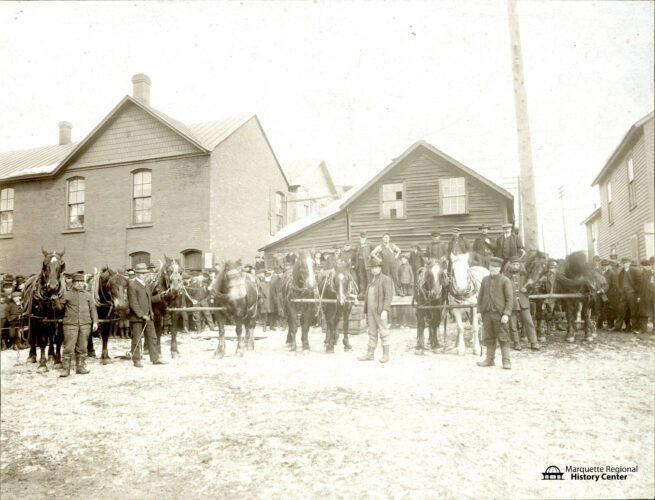

Superior History
Prehistory of Presque Isle Park reviewed
History quiz
QUESTION: Mackinac National Park was the second U.S. national park, established in 1875. When was it transferred to ...
U.P. Moments in History
History quiz
The spirit of ‘76