
Jehovah’s Witnesses ease policy on transfusions a bit

A woman shares Jehovah's Witnesses' literature with a passerby in downtown Pittsburgh on Nov. 13, 2023. (AP file photo)
Leaders of Jehovah’s Witnesses are modifying their prohibition on receiving blood transfusions on religious grounds, now allowing members to decide whether to allow their own blood to be drawn and stored in advance for such things as a scheduled surgery with a risk of significant blood loss.
But the organization is retaining its wider prohibition against receiving transfusions of others’ blood — a procedure routinely used with patients after accidents, violence or other blood loss. This long-held prohibition is one of the most distinctive and controversial teachings of the movement, which is headquartered in New York state and well-known for its assertive public proselytizing.
The Governing Body of Jehovah’s Witnesses announced what it called a “clarification” of its teaching on Friday, saying it came after extensive prayer and consideration.
“Each Christian must decide for himself how his own blood will be used in all medical and surgical care,” Governing Body member Gerrit Losch said in a video statement posted Friday on the denomination’s website. “This includes whether to allow his own blood to be removed, stored, and then given back to him. What does this mean? Some Christians may decide that they would allow their blood to be stored and then be given back to them, others may object.”
Jehovah’s Witnesses, who emerged in 19th century America, share many Christian beliefs but diverge from most other churches on key theological issues, such as the nature of Jesus and biblical prophecy. They are almost alone in their beliefs about blood transfusions. Jehovah’s Witnesses reported a U.S. membership of 1.3 million in 2025, with a worldwide membership of 9.2 million in more than 200 countries and territories.
Ex-members react
News of the imminent policy change leaked out in recent days on Reddit and other social media forums for former Jehovah’s Witnesses.
Some ex-members — who are critical of the religious organization’s policies and assert it is insular and authoritarian — say the policy shift has some value but is inadequate. Many commenters questioned why the ban on transfusions wasn’t lifted entirely for one of the same reasons cited by Losch regarding the use of one’s own blood, that the Bible doesn’t comment on it.
“I don’t think it goes far enough, but it’s a significant change,” said Mitch Melin of Washington state, a former member who has worked to bring awareness to what he calls the “darker side” of the organization. The longstanding blood policy has led to “senseless loss of life,” he said.
Melin said those who defy such a policy “could be shunned” by the church.
___
AP medicine and science reporter Laura Ungar contributed.
___
Associated Press religion coverage receives support through the AP’s collaboration with The Conversation US, with funding from Lilly Endowment Inc. The AP is solely responsible for this content.
Morning UP

Jehovah’s Witnesses ease policy on transfusions a bit

NASA brings moon rocket back to launching pad
Upcoming activities at your library
These are activities scheduled at the Peter White Public Library in Marquette through Thursday: • Art with Ella ...

We’re celebrating Women’s History Month at the library
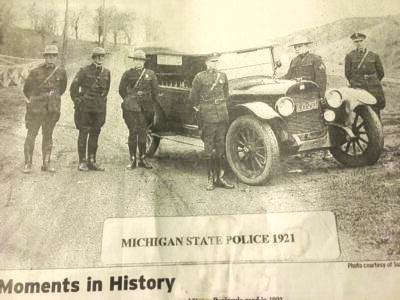
State police in U.P. have origins in World War I, miners’ unrest