
Even long ago, U.P. weather could be rather fickle
Trending
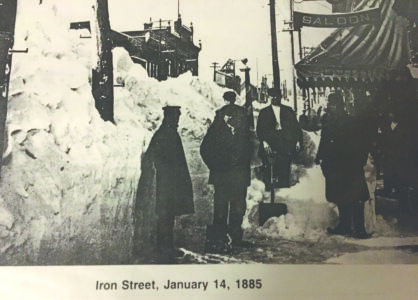
A view of Iron Street in Negaunee in January 1885, the second year of historic extreme weather conditions in Marquette County. (Photo courtesy Virginia Paulson)
In February, the thermometer registered a bone-chilling 34 below zero on Feb. 28 in Ishpeming.
March started out a bit warmer and it rained all day on March 11. The rain turned roads into mud and water and sleighs could not be used. The warmth brought out wheeled vehicles.
Everything was running on wheels in Negaunee from March 20 to April 14, 1884. Then a two-day snowstorm brought out the sleighs until the last week of April.
After the storm it was a disagreeable spring. More notable cold events were recorded in Negaunee in the spring of 1884 -- April 28, cold and snow; May 2, slight snow flurries; May 13 and May 15, more snow flurries; May 27, it was pretty cold and ice formed and overcoats were worn with comfort.
The summer of 1884 was generally cool, with June a little warmer than average.
A cold drizzly rain ruined Fourth of July activities. The next morning a visible snow flurry was seen in Negaunee.
Fall brought a lot of wet weather, and in Ishpeming, they were concerned that the potato crop would rot in the fields.
Winter set in early and on Nov. 7 in Negaunee, the first sleigh bells of the season were heard. The fragile infrastructure of the telephone company had ice forming on the wires and the wind blew them together. A company employee went by horse and sleigh to Eagle Mills and broke the ice off the wires.
By the end of the year, the temperature was 40 below zero in Michigamme.
Early in 1885, Negaunee recorded 27 below zero. It stormed with a full-blown blizzard. Excessive snow accompanied the cold. The sidewalks were shoveled by hand.
The winter cold affected the maple sap run in the spring of 1885. Maple sugar farmers headed out to the bush about March 20. Several camps around Negaunee reported a poor sap run due to the cold.
In mid-April, no maple syrup had shown up on the store shelves in Ishpeming as the spring of 1885 came slowly.
In Marquette, one could see ice on Lake Superior. Gamblers were putting money on May 15 as the arrival day of the first boat. Maybe for those who are gambling on the sinking of the shaft on Teal Lake might look at that as the winning ticket.
The legend of the St. Patrick's Day storm was already alive by 1870. And when the subject of Upper Peninsula weather comes up, it is one of our local weather myths. Over more than 50 years starting in 1949, there has only been one St. Patrick's Day with a bona fide snowstorm -- maybe this year will be in the books.
According to former weatherman and current state representative Karl Bohnak, we first have to define "snowstorm." It is characterized as a heavy snowfall over a short period of time, a 24-hour period. Our data comes from the National Weather Service.
A heavy snowfall is described in this way -- 9 inches or more of snow in a 24-hour period in the city of Marquette at lake level. Twelve inches or more in a 24-hour period at Negaunee Township at the higher elevation where snowfall is usually heavier. The NWS moved its offices and observation point from downtown Marquette to Negaunee Township in 1979.
Virginia Paulson has been a trustee with the Negaunee Historical Society for more than two decades, previously having been on the Negaunee Public Schools board of education for 23 years and MARESA board for 17 years.