
The U.P. cricket league
Trending
1892 was a baseball mad year. While everyone loved "America's Game," conditions were fluid - from top to bottom. At the top, the previous year had seen the professional American Association folding, and its survivors seeking refuge in the twelve team National League.
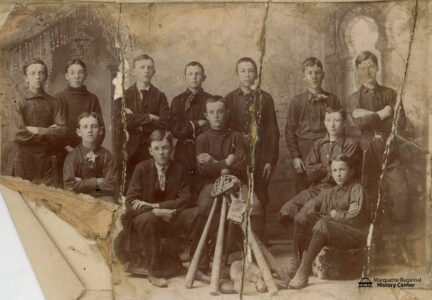
At the bottom, in places like the U.P., the situation was just as chaotic. In Marquette County everyone had a team. It was hard not to. Teams of doctors and druggists played teams of clothiers and tailors. The Ishpeming barbers played the Negaunee barbers. Bachelors played Benedicts (recently married men). A big annual charity event was a game between The Fats and The Leans! The county was spotted with amateur baseball teams: the Union Stars, Shamrocks, White Caps, Out-Of-Sights, U.P. Stars, South Ends, Crocodiles, Bullheads, Letcher Colts, Homesteaders, Standards, White Stars, and, of course, the Rag Chewers.
In May, professional teams, basically nine players and a manager, were organized in Marquette and Ishpeming/Negaunee. They, along with Menominee, Marinette, Oshkosh, and Green Bay formed the Wisconsin-Michigan League. Ball players from all over the Midwest came to play. But these men were strictly play-for-pay, with no local loyalties.
Marquette started fast but couldn't draw attendance. After its catcher jumped his contract, and went back home to Indiana, it found itself in last place. The lowest point came in early August, at the field at the County Fairgrounds (site of the National Guard Armory) against Green Bay. In a tight contest, the home team's Pedros came into score - but the next batter up, Ryan, was nowhere to be found.
In the uproar that followed, both Pedros and Ryan hotfooted it down to the railroad station, where they hopped a fast freight train for Ironwood. Back at the ball field, Marquette had no substitutes, and the game could not continue. The manager had no choice but to forfeit the contest. And then he disbanded the team on the spot. Four days later the Union Parks, the Ishpeming/Negaunee team, was dropped from the League.
Cricket stepped into the gap left by baseball's collapse.
In the nineteenth century cricket's image was a genteel one, a pastime characterized by sportsmanship, decorum, and fair play. On the East Coast, there was even an intercollegiate cricket league composed of several "ivy league" colleges.
Locally, prior to 1892, cricket matches were few and far between. Ishpeming's Sons of St. George, the Sir Humprey Davy Lodge, had played at the grounds "behind the hill north of Lake Bancroft," which was as "level as could be desired besides being unusually free of stumps and shrubbery." The Sons were but one of the many different ethnic organizations in the area. Named after the Patron Saint of England, its numerous lodges were spread across the mining ranges of the Upper Peninsula, Wisconsin, and Minnesota.
Ishpeming's cricket team was composed, with a few exceptions, entirely of miners, with "a mining boss," Jim Trebilcock, as president. Negaunee's English Oak Lodge had a team too. Again, it was composed mostly of miners and included an assistant superintendent of lands for Iron Cliffs Mining Company. In fact, Negaunee, where "a large proportion of the population is of English birth," was able to muster a second team: the American Star Cricket Club." Negaunee, hot bed of county cricket.
Most of the members of Marquette's Oak Leaf Lodge were railroad employees. Although the president, Henry Gorman, was a carpenter, the four other officers, three machinists and a timekeeper, were all employed by the DSS&A Railroad.
The first inter-team match played in the county was at the fairgrounds that July, between Marquette and the nattily attired Ishpeming club. Spectator turnout was small; and many were puzzled by what they saw. Some "baseball cranks" were present too. And they loudly proffered totally inappropriate, but never-the-less good-humored comments and advice throughout the match.
One of the umpires for this match was renowned architect Frederick Charlton of Marquette, a native of the county of Kent in England.
Very shortly after the local collapse of professional baseball, the four cricket teams, along with Calumet, united to form the U.P. Cricket League. U.P. in name only, however, because Calumet was never able to muster a complete team.
A distinct atmospheric difference is noticeable in the pages of the Mining Journal when it describes action at the different venues. Baseball was fast-paced, rowdy and abrasive. On the other hand, several cricket matches, which began in the morning, were called unfinished, because of impending darkness.
At Ishpeming's Union Park over Labor Day Weekend, Marquette batted so long in its first innings, that a halt was called. A band began to play and both teams and their supporters gathered "amongst the trees to partake of a leisurely luncheon." And it was noted approvingly that many ladies were present. After lunch, however, loaded down by the repast, the pace slowed down even further...
The League's final match was played at the fairgrounds in mid-September. Marquette won and carried off the League championship with a 5-0 record.
In 1893 there was only sporadic cricket activity in the county. Baseball had rallied over the winter; and Negaunee, Ishpeming and Marquette now all had teams composed of local boys, battling for the U.P. Championship.
What caused the demise of county cricket? Certainly, revival of baseball was partly responsible. But a different explanation seems most likely. The Mining Journal reported: "Many of the young Englishmen who have been thrown out of employment by the closing of the Cleveland Cliffs mines have already left for England, the greater number of them going to Cornwall." In August there was even an "Off to England" column in the paper, naming those who had departed. So, perhaps, it was the lack of manpower which did county cricket in. The young men left and took their game with them.