
What’s Flying: Mornings still hold songs for early birds
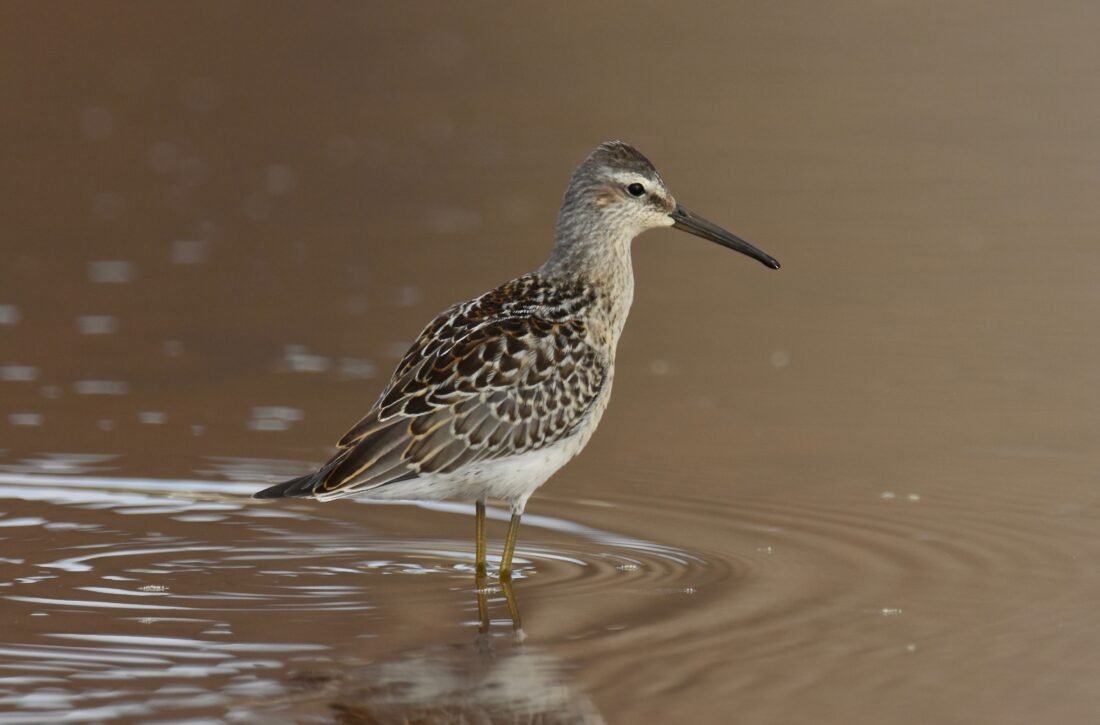
A stilt sandpiper looks on. (Scot Stewart photo)
“The hollows are heavy and dank with the stream of the Goldenrods.” – Bayard Taylor
Well, the goldenrod in the Upper Peninsula is not usually found in dank hollows, but it is bright and shining along road ways and a clear sign summer is moving along. Yellow is a sure sign summer is moving, heading in to the heart of August and a peak at summer’s end. With August cruising into its second week, the yellow flowers have joined in the procession. While the goldenrods have begun, other yellow flowers, mostly introduced European tansy and cat’s-ear dominate lawns and disturbed areas around Marquette.
The eruption of yellow and gold brings wraps up the glorious pinks of fireweed along Upper Peninsula roadside, especially in Baraga and Houghton Counties. There are a few good patches left this week, like a great one next to the parking area at the U.S. 41roadside park at Canyon Falls in Baraga County.
Colorful roadsides decorate the way to some of the best early migrant showings. Shorebird migration continues across the area. The best selection of sandpipers this past week came from Lake Linden and Calumet sewage lagoon areas. Last Saturday birders at the Lake Linden site saw ten of the 39 species there to be plovers and sandpipers, one killdeer and semipalmated plovers along with six sandpipers. Lesser yellowlegs, spotted, Baird’s, solitary, least, semipalmated, and a stilt sandpiper were the sandpipers. Other highlights include gadwalls and wood ducks. A bald eagle and a merlin were there on Monday. Getting to these ponds is a bit tricky, driving east on Third Street, past the Lake Linden Campground to the wetlands.
The Calumet sewage lagoons produced similar results with 27 bird species and ten species of shorebirds, including greater yellowlegs and pectoral sandpipers along with 35 redhead ducks. A bald eagle, an osprey and 13 Wilson’s snipes were there on Monday. This area is on the south side of M-203 just west of Calumet.
Last Saturday had a birder down at the Gwinn sewage lagoons too, finding 27 species. Only a pair of shorebirds were there but a merlin and a barred owl were found there as well. At Whitefish Point, shorebirds were down to three one day this past week, with the odd species seen there, a sanderling. Perhaps the best array of diversity in the U.P. recently was at Peninsula Point at the tip of the Stonington in Delta County last Tuesday. A total of 40 species with eight shorebird species was seen. Highlights included another stilt sandpiper and a trio of Bonaparte’s gulls.
The stilt sandpiper is usually one of the rarer shorebirds seen during fall migration. Their summers are spent across the High Arctic in Canada and in a few small locations along the shore of Hudson’s Bay. They migrate to stretches of Central and South America through the central U.S., but nearly all fly through areas west of the Mississippi River, making them rare here. Stilt sandpipers seen in the U.P. are almost always single birds.
Bonaparte’s gulls are example of migrants passing through the U.P. in both migrations between their summer range in central Canada and Alaska and their winter range of the Pacific Coast, the southeastern U.S., and Cuba. They are black-headed gulls, the most common of this group seen in Michigan. In fall juveniles and adults that have already molted into winter plumage have white heads with two small black spots on each side of their heads.
Three more Bonaparte’s were seen on Lake Superior near Little Presque this past week. When these gulls do pass through the Marquette area, they usually stop only briefly, if at all, and frequently it is at river mouths like Harlow Creek, Dead River, or the AuTrain over in Alger County. Most just continue straight through the area on their way South.
With the latest Hurricane, Debbie, running up the coast from Florida, through Georgia and the Carolinas, there is again the chance to see rare ocean-going birds and some other southern rarities showing up in the U.P. as they are blown off their normal flight courses, some only very short, and pushed far away from home. That can include some reaching this area and even parts of Canada. It is always worth it to give unusual birds a second look this time of year as they may wander into these parts. Great Lakes shorelines, smaller lakes and ponds are all possible places to look for many of these.
Other migrants are also making appearances here from northern Canada and Alaska as they head south. Lots of warblers in the current mix, many juveniles and some adults already molting into winter plumage. Scarlet tanagers and Baltimore orioles have been seen nibbing on ripening mountain ash berries as well as insects in the treetops. Hummingbirds are also being reported at most sites.
Mornings can also hold songs for the early birds. Northern cardinals and mourning doves are still singing at dawn indicating they still may be tending late nests in the area. American crows and blue jays can also be heard, but they are more likely family groups simply communicating. Along the regional highways like U.S. 41 and M-28 LOTS of crows and a few ravens may be regularly seen on “road patrol” looking for road kills and insects. Flowers and birds still a big part of the month of August.
Scot Stewart is naturalist at the MooseWood Nature Center, a writer and photographer.
Local
EPA grant will focus on brownfield redevelopment
HOUGHTON — InvestUP, in partnership with the Western Upper Peninsula Planning and Development Region, Houghton ...
United Way of Marquette County to distribute 10,000 pairs of Bombas socks
MARQUETTE – Socks are among the most needed item for people experiencing homelessness or are otherwise at-risk or ...
Velvet antlers observed
UP Health System-Marquette nationally recognized for excellence in stroke care
MARQUETTE — UP Health System-Marquette has received three American Heart Association Get With The Guidelines ...
Business has ribbon cutting
Caregivers workshop planned
ISHPEMING — Powerful Tools for Caregivers, a six-week in-person workshop, designed for the non-professional, ...