U.P. veterans remember D-Day
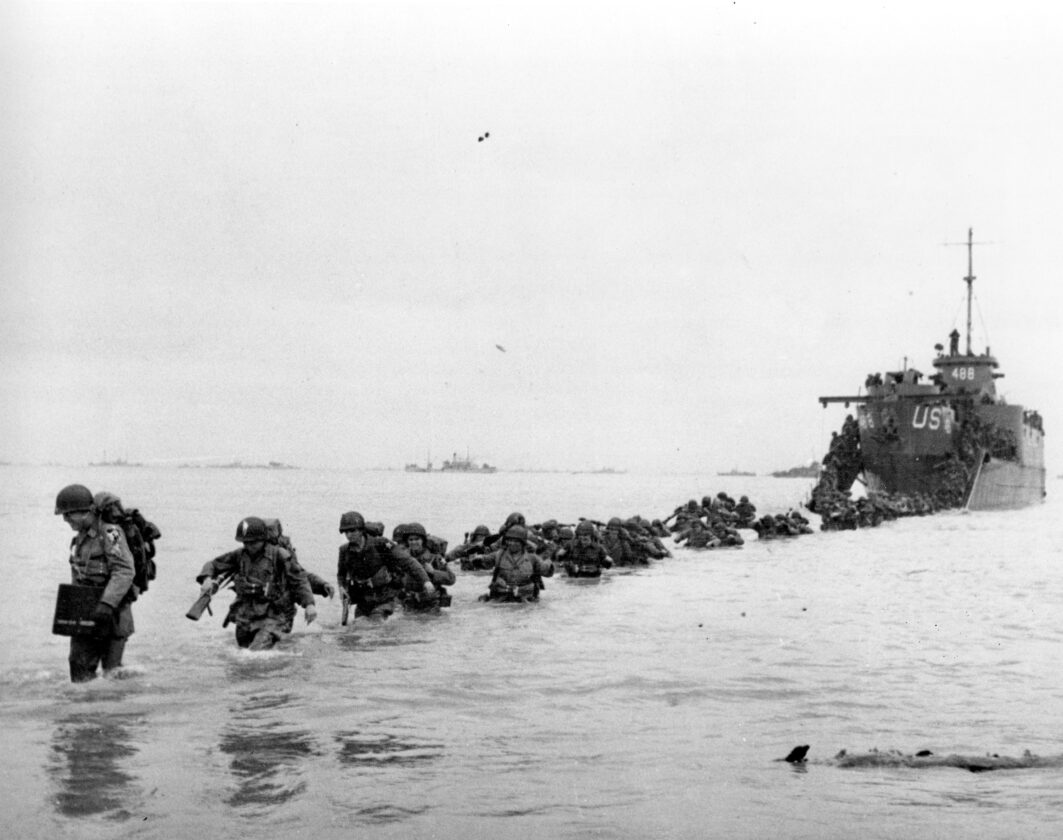
U.S. reinforcements wade through the surf from a landing craft in the days following D-Day and the Allied invasion of Nazi-occupied France at Normandy in June 1944 during World War II. (Bert Brandt/Pool via AP)
-
- U.S. reinforcements wade through the surf from a landing craft in the days following D-Day and the Allied invasion of Nazi-occupied France at Normandy in June 1944 during World War II. (Bert Brandt/Pool via AP)
-
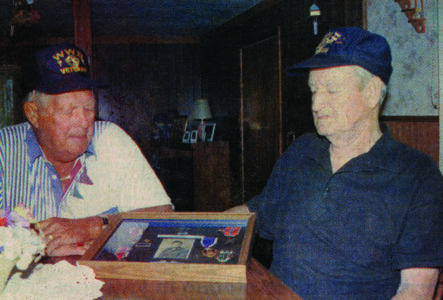
- Don O’Neill, right, sits with the fellow soldier who saved his life on D-Day, Charley Tonemacher, left. This was featured in a 1999 Mining Journal article. (Journal file photo)
-
- O’NEILL
This day was the culmination of the Allies’ combined efforts to invade and liberate Nazi-controlled France during World War II. Landing at Normandy, France, and storming five beaches — code named Utah, Omaha, Gold, Juno and Sword — marked the beginning of the Allied forces’ push to liberate northern France.
The first troops of the U.S. Army’s 4th Infantry Division landed at 6:30 a.m. on Utah Beach, the least-defended beach. Of the 23,000 men who landed there, only 197 were killed.
Farther east, the Americans were devastated at the site they would christen “Bloody Omaha.” By the end of the first day, the 34,000 troops there had overtaken a beachhead six miles wide and two miles deep but at a cost of 4,649 men.
In total, D-Day landings involved 1,200 warships, more than 4,100 auxiliary landing crafts, 1,600 auxiliary vessels, 11,600 warplanes and around 300,000 soldiers from 12 nations.
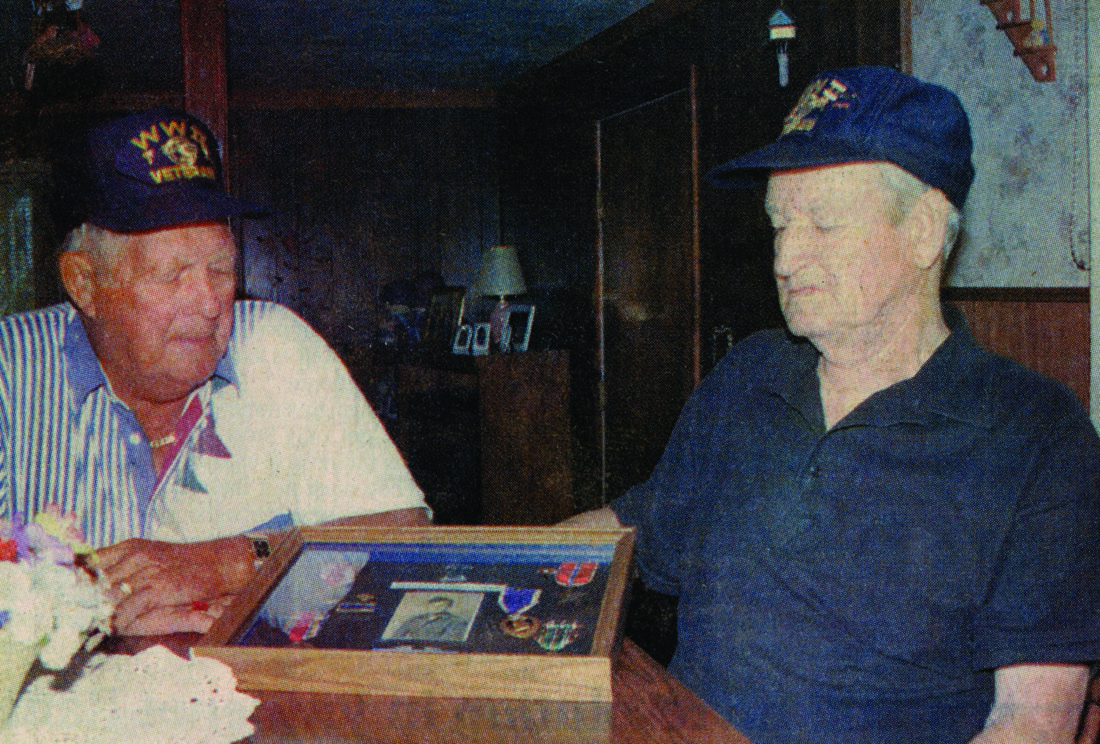
Don O’Neill, right, sits with the fellow soldier who saved his life on D-Day, Charley Tonemacher, left. This was featured in a 1999 Mining Journal article. (Journal file photo)
It’s important to remember that these soldiers were individuals with their own stories, lives and memories. Though there are precious few of these brave veterans left, over the years The Mining Journal has documented their stories.
The following are D-Day accounts from the perspective of Upper Peninsula soldiers. These now-deceased soldiers — or their families — were at some point in their lives interviewed by Mining Journal reporters and published on different D-Day anniversaries throughout the years. All of the following quotes are from archived Mining Journal articles spanning from the 1970s to 2014 that featured local veterans who had seen the action first-hand.
One of the first soldiers to step foot on those fateful beaches was Eben Junction native, Pvt. Elemer Juntunen of the U.S. Army’s 4th Infantry Division.
His time fighting didn’t last long.
Juntunen hit Utah Beach, jumped in the water and managed to make it to shore without being hit. It was only when he moved on to a low, shrubby area that he stopped under the shade of a tree. At that moment, a large German shell went off above him, sending shrapnel flying at his leg, cutting it off below the knee.
O’NEILL
“That was the end of the war for me,” Juntunen said.
Another man who arrived by air was L’Anse’s George Koskimaki of the 101st Airborne Division.
Koskimaki, a radio operator, landed inland from Utah Beach near the French village of St. Marie-du-Mont just after midnight on D-Day.
He described the seconds before jumping off the plane as stretching on forever, petrified by what might lie below.
Another survivor from Koskimaki’s division was Wilson Boback of Michigamme. He, similar to Koskimaki, saw the air filled with anti-aircraft fire and planes being hit with shrapnel.
“As we stood waiting and watching over the shoulders of others, a plane off to our right suddenly burst into flames,” Koskimaki described.
Boback also recalled a fellow 101st Division plane being shot down. Only three or four of the 27 paratroopers on the plane were able to successfully jump before it crashed.
Koskimaki and Boback’s hesitation to jump was also in part due to the fields below covered in “Rommel’s asparagus.” These are 10-foot-high metal poles festooned with barbed wire.
About 1,000 men from Koskimaki and Boback’s division alone were killed or wounded on D-Day but both made it safely to the ground.
Upper Peninsula soldier Wilfred Murray parachuted behind German lines in France about two hours after the 101st. Murray landed in a field just outside of the town of Saint-Mere-Eglise and continued to fight for 23 straight days without being relieved.
During that time, Murray described feeling “so tired and cold and wet and miserable” that he even “march(ed) in his sleep.”
Many of the U.P. soldiers who fought on the front lines arrived via boat around 6 a.m. to initiate the invasion from the shores of Utah and Omaha beaches.
Though he arrived at Utah Beach at 6:15 a.m., Julius Larson of Marquette was forced to wait on his boat until about 3 p.m. as B-17 bombers struggled through fog to rid the beach of mines.
“The scariest part for us was just after the first wave went in,” he said, “seeing ships just like yours blown up all over.”
However, even with all this time to wait, Larson said he didn’t feel scared because “you didn’t have time for fear.”
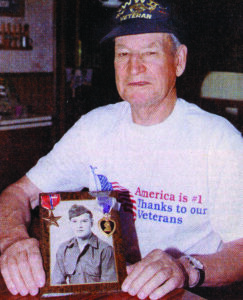
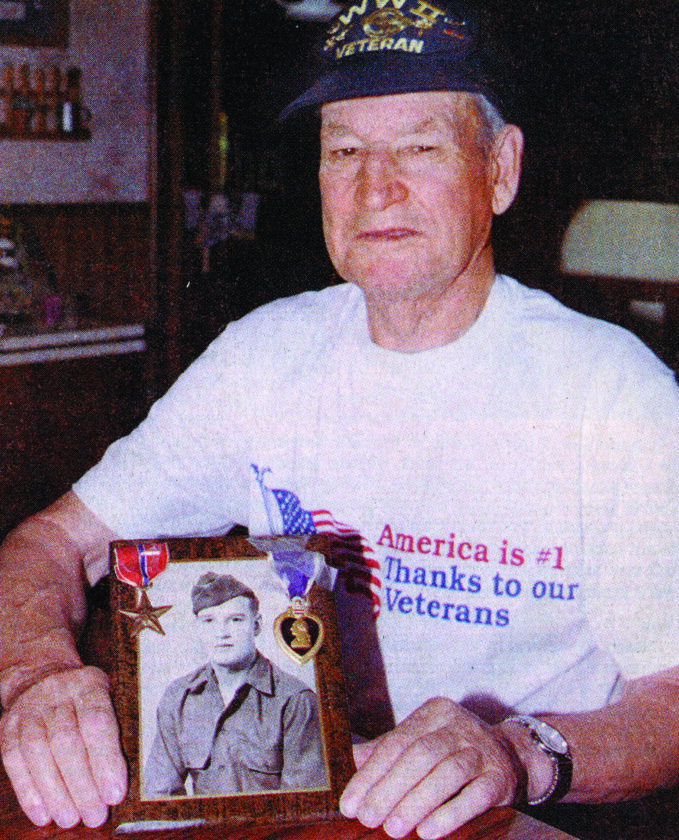
Certainly, Don O’Neill, a Marquette native, agreed with Larson’s sentiment. But if he were still here today, he may have said there was plenty of time to panic after the battle was over. O’Neill, like many other vets, suffered from post-traumatic stress disorder due to a near-death experience.
O’Neill, of the 16th Infantry Division, arrived on Omaha Beach at daybreak wearing a 40-pound pack of explosives on a boat with 30 to 40 other soldiers. He was hit in the back of the neck by shrapnel from a mortar and only came to when he hit the water, assisted by fellow soldier Charley Tonemacher.
He went on to have two more near-death experiences before being discharged.
Another Marquette native, Allan Olson, arrived on the very same beach just an hour later leading the 121st Division of Combat Engineers.
Olson said he lost 54% of his men in the first 24 hours of the invasion.
He got off the landing craft infantry with three of his men before it was hit by German artillery and landed on a mine.
“I turned around and saw many of my men … jumping over the side with their clothes on fire,” Olson said. “Many of them never got off.”
He said two of the men he was with were killed before getting through the minefield that waited for them behind enemy lines.
Olson was “miraculously” able to walk through, find an American brigadier general, a colonel and two sergeants trapped, take a German soldier prisoner and force him to lead the men safely back through the minefield.
He arrived back on the beach to chaos.
“We blew out the wall at Vierville,” he said.
It took nearly 2,200 pounds of TNT and hours of work to blow up the obstacle, finally clearing the beach in the early afternoon.
At an unknown time — perhaps when Olson was fighting on the sands of Omaha — Negaunee’s Maj. William Richards leading the 112th Engineer Combat Battalion.
Unfortunately, Richards was killed by enemy fire as he and his men fought to open a beach exit at Les Moulins.
Meanwhile, on Gold Beach, Marquette resident Darrell Hutchens stood on the deck of an anti-aircraft ship watching the devastation.
As part of the crew on the LST522, Hutchens and his crewmates weren’t permitted to leave the ship for days before the invasion.
Though he arrived eight hours after the first wave of attack at Gold Beach, the Allied soldiers hadn’t advanced more than a few miles up the beach.
“You could see the bombs, they were coming down thick,” Hutchens said.
The clearest memory for Hutchens was the “steady stream of wounded” that came back to the ship.
Amongst the blood and gore, the soldiers fought on.
When Sherwood Hallman, Sr., arrived the day after D-Day with the 29th Division’s 175th Infantry, the fighting was still going on the infamous Omaha Beach.
Hallman attacked a machine-gun nest and captured a dozen German soldiers, earning him a Medal of Honor, though he wouldn’t be able to enjoy it; he would die in battle in September of the same year.
The last time Hallman held his son, Sherwood Hallman, Jr., was when the youngster was just seven months old.
Three days after D-Day, William Sanderson of Dearborn arrived on Omaha Beach with the 246th Combat Engineering Battalion.
“We didn’t belong to anyone,” Sanderson said. “We went with whoever had a mission for us — Rangers, Airborne, whoever. We just did special missions like removing mines or building bridges so they could advance.”
On this day, Sanderson’s team was tasked with searching through the sand by hand for mines.
“Sensors weren’t as good then,” he said. “So we had to look through the sand without our bayonets.”
Sanderson said he was fatigued but didn’t get the chance to sleep for 36 hours straight.
When asked if he would ever go back to Normandy, or France, Sanderson said he wouldn’t go back even if the trip was free; a sentiment held by many of those who saw so much evil first-hand.
“That’s where my friends were killed,” he said. “I only saw death and destruction there. There’s no need for me to go back.”
As of today, it has been 80 years since these souls braved the blood-soaked sand of Normandy’s beaches and began to turn the tide in WWII.
Those who lived to tell the tale are the only reason we can see such a moment in detail. This year is perhaps one of the last few anniversaries of the June 6 invasion that the remaining veterans will see.
Front Page News
Millage recount confirms election results
Bruce Crossing man sentenced for child sexually abusive activity

Amid tax pressure and competition, marijuana may leave rural Michigan
Manistique man found deceased
MANISTIQUE — A 39-year-old man from Manistique has been located deceased, which was the cause of the temporary ...
The Island and Tourist Park