
Energy center: Rust-colored smoke stacks to stay, for now at developing BLP project
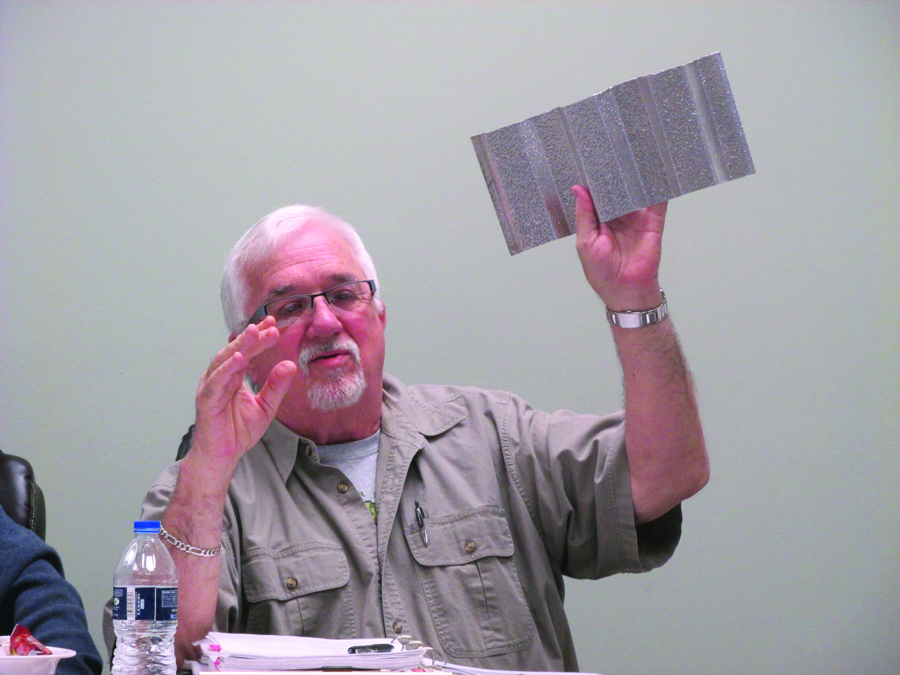
Jerry Irby, who is a member of the Marquette Board of Light and Power, is pictured at Tuesday’s meeting. (Journal photo by Mary Wardell)
-
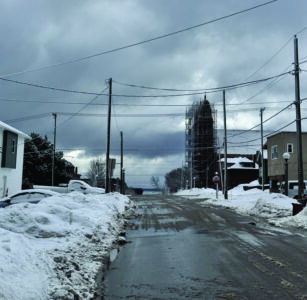
- The new energy center’s rust-colored smoke stacks are seen. (Journal photo by Mary Wardell)
-
- Jerry Irby, who is a member of the Marquette Board of Light and Power, is pictured at Tuesday’s meeting. (Journal photo by Mary Wardell)
The BLP board of directors considered a $287,000 budget increase to the more than $60 million project to coat the MEC’s three 100-foot-tall exhaust stacks with aluminum lagging on the lower 60 feet and aluminum colored paint on the upper 40 feet.
The coating was considered due to comments “from city commissioners and residents to ‘do something’ about the unattractive ‘rusty’ colored stacks,” according to BLP meeting documents.
The coating was considered in the original scope of work with manufacturer Wartsila, but would have delayed the delivery of the stacks and other equipment, according to BLP meeting documents. The stacks are made of weather-resistant Corten B steel, so a coating is not required to protect the stack from rusting.
“It’s not technically required to coat these stacks, and that’s why we made the decision a year ago not to coat them and not to delay delivery of the stacks,” said Sargent & Lundy Project Manager Ken Mixer.
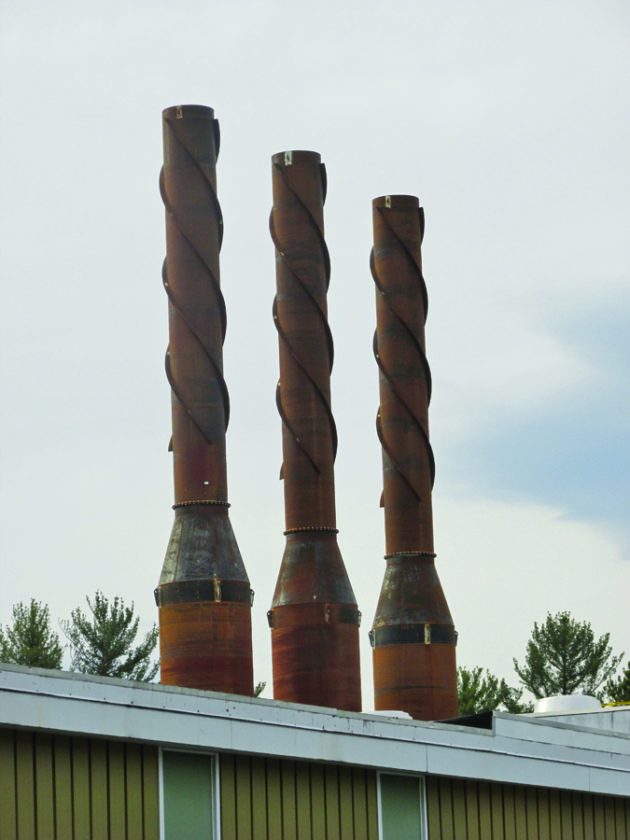
The new energy center’s rust-colored smoke stacks are seen. (Journal photo by Mary Wardell)
Chairman Tom Tourville said he’s not comfortable paying that much.
“You really have to ask yourself — are you willing to take out a loan for $287,000 to do this? Because that’s what we’re doing,” Tourville said. “It’s not like we have this extra cushion of extra money, it’s extra debt that we have the option of incurring or not.”
Anticipated maintenance on the coating would involve repainting the top 40 feet every 10 years, according to documents.
“That’s a maintenance thing that doesn’t warm my heart at all,” Tourville said.
Mixer said the coating could still be done after commercial operation begins, just at a greater cost.
Vice Chairman/Secretary Dave Puskala, echoing Tourville, said they should wait.
Board member Bob Niemi said white stacks wouldn’t look much better than rust-colored, and that black would look better.
BLP Consultant John Reynolds said that over time, the stacks will turn to a very dark brown, almost blackish color.
Tourville wrapped up the discussion, saying, “I don’t hear a motion, so we’ll let that fade away into a rusty sunset.”
Two change order items that were unanimously approved Tuesday had been left out of a larger change order at the board’s last meeting, so that further details could be reviewed.
The first change order was $122,000 for changes in the project scope, specifically for support steel framing for five large air handling units and six engine charge air units, the details of which were only known after bids were awarded.
The second change order was for nearly $242,000 related to construction delays incurred due to late equipment delivery. Liquidated damages are being pursued from Wartsila and another equipment manufacturer, according to BLP documents.
Mixer said the delays were partially due to adjustments between the time when specifications were sent out and when bids were awarded, plus a lot of other factors, like “stacking trades” to maintain a safe number of people at a site at a given time. They were initially looking at an eight-week delay, he said, but Wartsila paid to air freight the equipment.
“Overall, in general, we’re still meeting the commissioning and overall construction (timeline) of the project even with construction pushed out,” Mixer said.
Miron Project Executive Jason Rieth said the two main components to the cost included the three-week addition to the schedule and the difference in labor productivity between working in the winter versus the fall.
Reynolds added that Wartsila, being only a little late with pump skids, caused the BLP to lose its assembly line slot for their pre-fabricated pump house, causing a much bigger delay.
Mixer said getting back on schedule was a team effort.
“We couldn’t do it any faster getting the (pump house) design correct. … It’s a very complicated design,” Mixer said. “It certainly needed to be worked out in enough detail so we were satisfied we were getting what we need.”
Puskala said the $241,000 didn’t set well, but he understood.
“I mean, I get it, those three weeks added on, but it doesn’t sit well with me that we’re on the hook for that cost, that $241,000, from the biggest vendor that’s the bulk of the cost of this project,” Puskala said.
Mixer said they would have seen those costs up front if everything could have been predicted.
Tourville said he appreciated the supporting information and the great working relationship between the general contractor, subcontractors and Wartsila.
“I mean, yes, this is a bump in the road, but my God, I don’t want us to lose sight of the fact of how well everything’s been going,” Tourville said. “It’s been going tremendously, and I really appreciate that.”
The contingency fund for the $65 million project retains close to $5 million from its original $6 million, Reynolds said, without including the cost of coating the stacks.
Aside from a large expected charge to the fund for sales tax, no other major costs are expected, Mixer said.
Board member Dave Carlson was absent Tuesday.
Mary Wardell can be reached at 906-228-2500, ext. 248. Her email address is mwardell@miningjournal.net.
Front Page News

EPA move on microplastics, pharmaceuticals draws mixed response in Michigan

Jandrons Fine Jewelry: Three generations of women in business
April ice storm
Distributor responds to Bark River Knives closure

Arrest made in Chippewa County drug overdose death