
Juncos are fun birds to watch
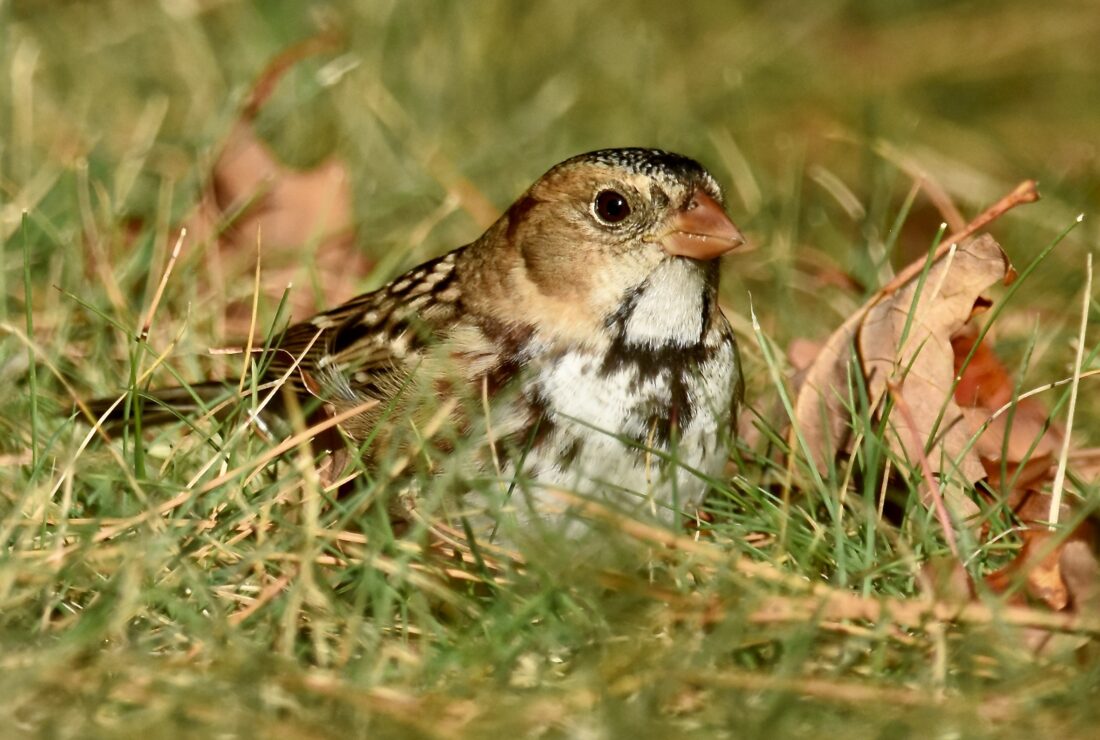
This is a juvenile Harris’s sparrow.. (Scot Stewart photo)
“The sparrows are preparing for winter, each one dressed in a plain brown coat, and singing a cheerful song.” — Charles Kuralt
In the Upper Peninsula, summer-autumn hybrids can be short-lived. The recent one here was just that sort. Three days of 70+degree days were so welcomed after a frankly cold summer, but reality returned quickly with colder than normal temperatures and even snowflakes, often seen the first ten days of October.
The drastic change in the weather following that short summery spell quickly brought Upper Peninsula residents back to earth and hundreds of sparrows and juncos too.
Ground feeding seed eaters, the two are among the last to push through to warmer places, enroute to the southern half of the U.S. for winter, away from snowier places in search of seeds and other easier to find foods.
Dark-eyed juncos were definitely the dominant species landing in Marquette last week. At Whitefish Point, only October 5 was notable for juncos, with 282 arriving and much smaller numbers on the days around last Thursday.
In Marquette though, Presque Isle and a number of feeder stations in town all reported more than one-hundred individuals foraging.
Juncos are extremely fun to watch. Some will fly into a site where other juncos are feeding approaching in a sharp, swerving pattern and seemingly just drop to the ground and begin looking for seeds. Others will gently fly in and perch in a nearby tree, assess the situation below, then dropping to the ground looking for food.
Juncos have white feathers on the outer edges of their tail, normally not seen until they fly off, or if they are agitated or alarmed. Then, as they hop around they will flash those outer white feathers.
Some suggest it may be a sign to predators they are alert and paying attention to different elements in their environment and may be a sign to other juncos to be on the watch for possible danger.
Juncos spend the winter almost entirely in mountainous parts of the Lower 48 and Canada and Alaska, but a few do nest in the higher elevation of Marquette County.
During the current wave, there have been some species of sparrows moving and foraging with the juncos in Marquette. Three are well-known. White-throated sparrows are summer residents here, with their “Oh Canada, Canada, Canada,” and “Sam Peabody, Peabody, Peabody,” calls coming from the conifers often near a lake edge. Two migrants traveling through too are white-crowned sparrows and American tree sparrows. Some of the juncos and tree sparrows may stick around through the early part of the winter, and even a white-throat might too, but since they forage on the ground, they will head to places where the ground is more snow free, or at least less than here.
One other sparrow also showed up this past week, several in fact — Harris’s sparrows, much to the delight of many birders. Harris’s is a larger, mostly grayish sparrow with a black cap and bib in spring and a bright brown fall sparrow with a faint black cap and big of a few black feathers. Bibs are usually unique so it is possible to distinguish between them, which is good, because they may travel in different smaller flocks of mostly white-crowned sparrows and show up in different parts of town at the same time.
Harris’s sparrows have one claim to fame that truly makes them unique. They are the only bird nesting only in Canada in summer. They spend winters in the southern Great Plains from Nebraska to Texas, but some do wander eastward in both spring and fall, possibly blown off course by storms or just following the other sparrows. They are impressive sparrows in all seasons and a delight to find in the U.P any time.
The week has had several other great birds, unfortunately ones most often seen near the end of fall migration and definitely ones indicating the season is winding down. Two American golden-plovers did show up at the mouth of the Dead River last Tuesday.
They are usually among the last of the shorebirds coming through and often during the first ten days of October the last of them come through the U.P.
The two species recently beginning their runs coming through and among the last to arrive do often stay here in the U.P through the early parts of the winter. Here in the central U.P. and at Whitefish Point significant numbers of diving ducks, like redheads and scaup have been coming through. One of the last to migrate is the long-tailed duck, also a fan favorite among birders.
On two separate days this past week more than 100 were counted at Whitefish Point. With their nearly foot-long tail feathers and harlequin-line black and white markings males are real standouts in the duck world. Diving ducks rarely stop at Whitefish Point but those passing over Marquette occasionally stop at the Lower Harbor to forage. They can dive as deep as 200 feet down in search of mollusks and other foods.
Some should be showing up soon near the breakwall.
The other late arrival is the snow bunting. The first few just arrived at both Whitefish and Marquette. Related to the longspurs, they are seed eaters that truly hug the ground to avoid detection especially when in more open areas. One was seen at the Dead River mouth in Marquette Wednesday. Other surprises this week included a rare to the area, a nearly all white Ross’s goose was seen in Marquette.
Fall’s a great time to be out!
Scot Stewart is naturalist at the MooseWood Nature Center, a writer and photographer.
Community

Caving Grounds: Marquette Hardcore
Ishpeming VFW bingo Sunday
ISHPEMING -- There will be Bingo at the Ishpeming VFW on Sunday, June 8th. Doors open at noon. Snack and beverages ...
Emanuel Church fundraiser Saturday
SKANDIA — Emanuel Lutheran Church will be holding a fundraiser Saturday to raise money for a new stove and oven ...
Marquette Fringe to host Midwinter Ball
By DREYMA BERONJA Journal Staff Writer MARQUETTE — Marquette Fringe is inviting the public to an ...

Honoring decades of dedicated volunteer service
Downtown New Years Eve festivities go ‘very well’
By ALEXANDRIA BOURNONVILLE Journal Staff Writer MARQUETTE — A safe and happy New Year’s celebration in ...