
What’s Flying: Trumpeter swans are stopping by
Trending
"In the Spring, I have counted 136 different kinds of weather inside of 24 hours." -- Mark Twain
This quote has been used before. Yet, this speaks more to spring in the Upper Peninsula than just about any other. Many places can see a quick change in their spring weather during the spring, but few can watch it change as often as does here in the U.P. This past week has proven the veracity of this with temperatures in the upper 30's, rain, sleet, snow and sunshine. It has been difficult to find time to talk about anything else besides the weather after working for hours chipping away at ice in the driveway and catching a breath. Just the same, spring is on its way.
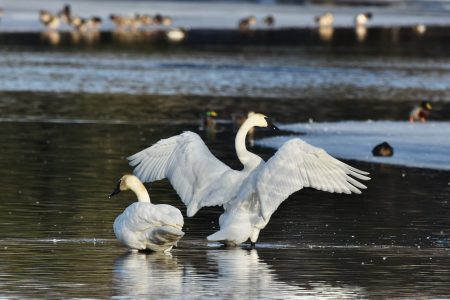
In early March trumpeter swans start to move from wintering sites with open water toward summer nesting territories, frequently stopping at areas with open water along the way.
This year seems to be continuing that tradition.
A trio of them appeared near the Chocolay Township Marina this past Monday and continued on into Tuesday morning when they were again reported on eBird, https://ebird.org/region/US-MI-103/activity. Twenty minutes after the eBird sighting reported the birds another report came in on the U.P.Birders listserve of a possible trio of trumpeters on the Dead River above the Tourist Park.
This site is a frequent stopover for trumpeters in spring and occasionally in fall. A pair is usually seen that appear quite tame and will approach individuals it they think they might be fed. Area residents are often alerted to their presence by their loud, trumpet-like calls. While there is no apparent evidence of them nesting in the winding backwaters of the Dead River around the BLP trails, but they have appeared there frequently.
Between 1991 and 1993, 44 trumpeters were reintroduced into Seney National Wildlife Refuge. They began nesting there in 1992 when two of the introduced birds successfully raised two young.
Since then the summer flock has grown and have, along with young from other introduced flocks, dispersed over a large area of the Upper Great Lakes including many smaller lakes and pond in the U.P. Some overwinter on stretches of the Manistique River in Schoolcraft County and some spend parts of the winter on Trout Lake in Alger County.
In March, swans will begin their return to Seney, even before the ice melts on the pools there, including around 10 breeding pairs and 70 or more immature birds in some summers.
Canada goose are also making their way back into the area, with at least one noisy bird flying around the lower parts of the Dead River and Presque Isle this week. There are a surprising number of common goldeneyes around Marquette, considering the iced over harbors of Lake Superior, but more are sure to arrive when the lake begins to reopen.
A smatter of mergansers, the goldeneyes and black ducks have joined the mallards in the open waters of the Dead and Chocolay Rivers, relying on some natural foods and seeds and corn at feeding stations along the rivers.
Singing cardinals and mourning doves are brightening up sunny mornings on the east side of Marquette. It is a welcome way to begin a brisk day. A few gulls are starting to make some noise around Picnic Rocks too. Up to 100 herring gulls are congregating in the Lower Harbor now too, and a good sign of spring is the return of ring-billed gulls at Picnic Rocks in late February or early March.
Common redpolls continue to go through plenty of 50-pound bags of thistle seed at area tube feeders across the U.P. While the flocks continue to be extremely entertaining, they have been plowing through the seed in now slowly diminishing flocks in most locations. They have been joined by some pine siskins, with a few house finches and American goldfinch also adding in the fray for food, especially just before the arrival of low-pressure systems and incoming storms. An occasional hoary redpoll has popped up occasionally -- one appeared at feeders at Presque Isle this past week, but they continue to be rare visitors here this winter.
A very early red-winged blackbird appeared during a storm recently in Chocolay Township -- the first reported in the area this spring. They too should be heading into the area in larger numbers soon.
A common grackle, an apparent winter holdover, has continued to be an irregular visitor at feeders on the Chocolay River in Harvey too. Reports of American robins are still dribbling in, so it does seem like have been a number of hardy birds able to weather the storms this winter.
Snowy owls, rough-legged hawks and northern shrikes all continue to be seen in the eastern U.P. triangle between Pickford, Rudyard and Sault Ste. Marie. All three have been regulars all winter there and have drawn scores of birders from the Midwest to see them. While the weather for many weekends has not be great for travel there, weekdays have provided plenty of sun and relatively good roads to search for them.
There have been a number of reports with images continuing of beautiful male snowy owls, nearly all white, hunting in the triangle, close to Rudyard, making the trip there even more memorable. They should be heading back north in the next three or four weeks, depending on the prevailing weather. So, pick your special weather and see what's around!
EDITOR'S NOTE: Scot Stewart is a teacher at Bothwell Middle School in Marquette and a freelance photographer.