
What’s Flying: Anticipation of true spring grows
Trending
"When spring came, even the false spring, there were no problems except where to be happiest." -- Ernest Hemmingway
Residents in the Upper Peninsula know all too well, spring thaws, showers, and other warm weather events in March do not mark the end of winter. The current thaw looks to be winding down already and the long-term forecast sadly does not look to show a new warm-up any time soon. A solid warm-up may not come around again until the second week of April according to some forecasts. Still, with spring migration of birds now underway, signs will continue to add to the anticipation of the new season.
This warm-up got some maple sap collection going. The first chipmunk reports of spring were reported at mid-week in both Dickinson and Marquette County. Another solid sign of spring was the start of the Whitefish Point Bird Observatory (WPBO) Spring Hawk Count https://dunkadoo.org/explore/whitefish-point-bird-observatory/hawk-count-spring-2022 last Tuesday. Counters on a platform on the sand dunes southwest of the lighthouse spend eight hours daily through mid-June counting passing hawks, cranes, vultures and eagles. All birds passing the point are actually recorded and reported in real time during the day. The daily reports offer an amazingly detailed look at spring migration in the eastern Upper Peninsula.
Because they are so detailed and timely, they provide great information for bird watching in the area where they live, and for those wishing to travel to the Point to see things like huge sandhill crane flocks, terrific movement of sharp-shinned hawks - more than a thousand can fly through the point on a good day, and get an idea when the great flight of eagles, including rarer golden eagles heads over the Point on their way to Canada for the summer. Three bald eagles and one golden eagle were already seen on the first day to start the count. The difference between incredible birding days and exceedingly quiet days is usually dictated by the weather and wind direction/speeds. The daily reports also include onsite weather and by following the daily count and weather reports and watching forecasts, birders can get a better idea on what days to visit, but at Whitefish Point there are no sure things. With time constraints and rising gas prices, birders will plant their trips more carefully, but Whitefish Point is a beautiful place and always a fun place to visit. One surprise for birders can be the abrupt difference in temperatures from inland and the point out in the middle of Lake Superior, sometimes 20 degrees or more.
Winter birding has continued though in the central U.P. Large flocks of common redpolls are still being reported at many feeding stations, especially in the Marquette area. They had been joined recently by a small number of pine siskins, but most of the siskins seem to have already moved on. A fair number of American goldfinches did hang around this winter, and they are now regaining more of their yellow summer plumage, brightening up the trees.
Pine grosbeaks are also dwindling, but a few were seen in a crab apple tree in north Marquette this past week and others have been reported in Iron Mountain and eastern Chippewa County. Bohemian waxwing have all but disappeared, but have been replaced by cedar waxwings. A flock of the smaller, yellowish waxwings was seen with the pine grosbeaks in Marquette. They will remain in the area to nest later in the year. They are among the last to actually nest in the U.P., sometimes waiting until later in June to start.
Red-winged blackbirds, crows and ring-billed gulls continue to work into the area. While the red-wings have come in single numbers, crows have made up one of the biggest factions of the birds counted in the first few days at Whitefish Point, and several large, noisy flocks have been seen and heard each day in Marquette. Several common grackles are also being seen in Marquette. On Wednesday a peregrine falcon was seen near the mouth of the Dead River. Once a nesting site for falcons, the Dead River lost its spot with the deconstruction of the power plant on the river. There was evidence peregrines nested in the city this past year and birders will be watching to see if they return.
The gull population is growing quickly. Hundreds of herring gulls are moving around the Marquette area, from Lake Superior in the morning to the county landfill, then back to Picnic Rocks in late afternoon. Several dozen ring-billed gulls have returned and are being seen at Picnic Rocks, where they will nest this summer. For birders with some patience and a spotting scope or a good pair of binoculars, a careful look at the flock of hundreds may reveal the sight of a rarer visitor gull in their midst. Several glaucous gulls, large, lighter-colored gulls, have been reported at Picnic Rocks already.
This is one of the best places to look for them because they are occasionally quite close to shore. Immature glaucous gulls are all creamy white, adults are similar to herring gulls but lack the black wing-tips. Iceland, greater black-backed, lesser black-back, Thayer's, and occasionally slaty-backed gulls have been seen in Marquette in early spring as these birds wander around the shores of the Great Lakes.
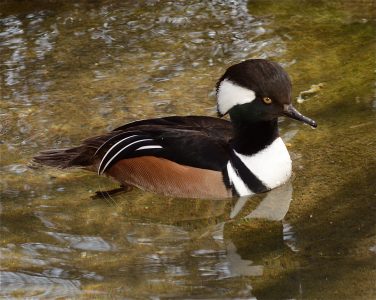
Canada geese are also joining the arrivals, joining the mallards, common goldeneyes, American black ducks, a couple buffleheads and at least one hooded merganser currently on the waters around Marquette. Every day brings new excitement, and despite the slow-moving seasons, the best of spring is coming!
EDITOR'S NOTE: Scot Stewart is a teacher at Bothwell Middle School in Marquette and a freelance photographer.