
What’s Flying: What will winds of November do?
Trending
"O wild West Wind, thou breath of Autumn's being.
Thou, from whose unseen presence the leaves dead
Are driven, like ghosts from an enchanter fleeing."
-- Percy Bysshe Shelley, "Ode to the West Wind"
Finally, at least for some time here and there, Nature is acting as it is supposed to behave here in the Upper Peninsula. For long-time residents, days of 50-degree temperatures, bare ground and even a few swimmers down at the beach these are not familiar signs of the season. Where is that crisp first morning of the season at 12 degrees F? Where is the snow deep enough to follow the movements of animals preparing for the austerity of winter? Why are there still black-eyed susans blooming along Lakeshore Boulevard and at Lambros Park? The week's snow is sure to be all but gone by the end of the weekend with temperatures coming back in the 50s.
It looks like another roller coaster end to the year.
And what is wildlife to make of the weather roller coaster that has returned again this autumn? Chipmunks are not in hyper-space madly collect the last remnants of food to store but seem to be working at about the same speed they did in August. Birds too are not following regular fall patterns.
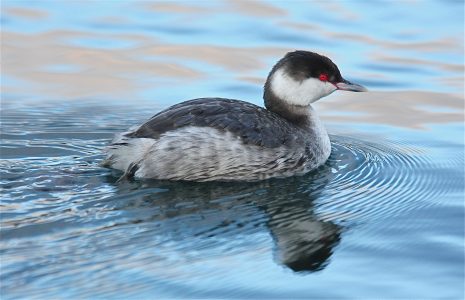
The unseasonable weather has apparently enticed some shorebirds from Canada and Alaska to take their time. Handfuls of dunlin and sanderlings still are dribbling down the east side of Lake Superior and past Whitefish Point. Diving ducks are swinging through but not quite at normal rates. Long-tail ducks have continued to stream through the eastern Upper Peninsula on their way to the Lower Great Lakes with more than 1,600 counted last Wednesday bring the total for the species there this fall to an impressive 20,300+ for the fall migration. Lots of red-breasted mergansers, buffleheads and common merganser have begun sailing past on their way to winter grounds in recent days Larger flocks of long-tails have been stopping in Marquette, joining common loons, both horned and red-necked grebes and some black scoters.
There are three species of North American scoters and all are mostly unfamiliar to outdoor enthusiasts. Scoters are mostly black diving ducks specializing on mollusks on the rocky bottoms of lakes and oceans. All three do make occasional stops in Marquette's Lower Harbor. Surf scoters are the "flashiest," with bright, thick spring bills with black, white, yellow, orange, and red trim. Black scoters have yellow, gray, and black bills and white-winged scoters' bills are pink, white and black. In fall the birds are more easily distinguished by the white marking on the heads. Surf scoters have two small white spots on each side of the head to go with the heavy bill. Black scoters have white across most of the cheeks below the eyes and white-winged scoters have two more prominent spots on each side of the head and have white markings on the wings all year.
With that all said all three are very difficult to distinguish from a distance and a spotting scope is recommended for identification. Even the counters at Whitefish Point lump surf and white-winged scoters together for a portion of their count. Most birders see them during migration. Their summer ranges are a bit different, but extend through parts of Canada and Alaska. Their winter ranges are along the Atlantic and Pacific Coasts when huge flocks may raft together. Some white-winged scoters overwinter on the Great Lakes and have seen numbers increase due to the introduction of zebra mussels.
Both black and white-winged scoters have counterparts in Eurasia, Recently, both saw splits in the populations identifying North American scoters as separate species. Because they are diving ducks and are rarely very close to shore, their calls are not frequently heard, but for the black scoter, that became one of distinguishing differences between the birds on different continents. In North America, the calls sound like someone blowing over the lip of a nearly full pop bottle, producing a high-pitched whistle.
The "Winter Finch Forecast" from Ontario, https://finchnetwork.org/winter-finch-forecast-2021-2022-by-tyler-hoar, has been out for several weeks and to this point in the season seems quite accurate. Tyler Hoar is a Canadian ornithologist who took over for Ron Pittaway as compiler of winter food status reports to make predictions on a variety of Canadian finches, waxwings, grosbeaks and nuthatches. By evaluating the productivity of mountain ash, boxelder, conifers and other food sources and checking on local birding reports, predictions are made on how and where these birds will move during the late fall and winter months.
This year's prediction reported strong numbers of common and hoary redpolls should head south from Ontario due to poor crops of white and yellow birch catkins. Some impressive numbers of redpolls have already been seen in the eastern U.P. and several hoary redpolls have been seen in the central U.P. with common redpolls.
Crossbills have already been reported in Ontario and parts of U.P. so there is hope more will be arriving to feed on seeds in spruce and tamarack cones, While they nest in boreal areas, like the Peshekee Grade and parts of the eastern U.P. they wander into more developed areas to feed. They are social birds and remain in flocks even when they nest. There are predictions for some pine grosbeaks here this winter too as they work their way through mountain ash crops to the north and a few of them have arrived in the area too. Looks like there will be some fine weather yet ahead to see what is blown in on November winds.
EDITOR'S NOTE: Scot Stewart is a teacher at Bothwell Middle School in Marquette and a freelance photographer.