
What’s Flying: Wildlife seeking needed water
Trending
"When the well's dry, we know the worth of water." -- Benjamin Franklin
Signs of a dry summer seem to be everywhere as the season continues to wind its way toward autumn. Large patches of bright yellow, drying bracken ferns abound along Fair Avenue in Marquette. Goldenrods on higher ground seem to dry up with in a day or two of blooming, cheating the bumblebees and wasps of the sweet meals they crave. Small ponds and lakes continue to shrink, and many of the former have dried up completely. Although the rainfall for the month in Negaunee Township is only 1.1 inches below the monthly average and the summer total only a couple inches behind, it seems worse in many spots. Even Isle Royale has succumbed to the searing heat with a lightning-initiated forest fire of its own covering more than 200 acres.
The need for water by wildlife has become apparent as many have sought it out wherever it can be found. Many birders have noticed more activity at their bird baths.
One couple in Alger County noted 12 species of warblers at their bird bath in a single day.
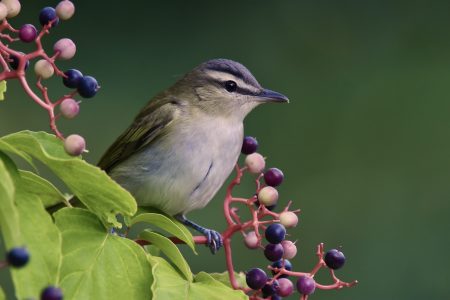
Some of the more interesting behaviors seen this summer are reactions by ruby-throated hummingbirds and red-eye vireos to gardeners watering flower beds in their yards. One group of hummingbirds has learned to visit Ohio beebalm plants during and immediately after watering to feed on the nectar and get a drink of water from the dripping plants. They can remain near larger beds of the plants during the day and feed at a few nectar tubes from each plant every hour or so, remembering which have been visited to avoid wasting time.
The tubes will refill in about four hours during their peak time if there is enough water in the plants to make the nectar.
The vireo behavior was even more remarkable. A group of at least eight was seen foraging for insects through bushes and a pin cherry tree in a yard and was apparently attracted to the sound of the water splashing on the flowers and a tree in a different part of the yard. They landed in the tree at the edge of the spray of water but remained there when the gentle stream was directed at two of them. Others dropped down into the spray too and remained there for several minutes before flying up higher into the tree to preen and dry off. It seemed the vireos appreciated the much-needed water and showed how critical the need for it may be increasing!
Changes continue in the birds in the Marquette area. Both red- and white-breasted nuthatches are returning to feeders in town, bringing their young to sure sources of food as the young learn to fend for themselves. Chickadees and blue jays have been coming back to feeders for several weeks too. Fruits in raspberries patches have been attracting groups of birds like the jays too.
Northern flickers have also been more apparent, feeding on anthills and calling as they track others in their family groups. Flicker numbers seemed to be lower in town this summer so some of those being seen now may be migrants heading south from Canada.
Because their diet is primarily ground insects, spiders, and other animals, nearly all the flickers here in the summer migrate south for the winter. Ironically, their official winter range includes all the lower 48 states except, the Sierra Nevada and Cascade Mountains, and the Upper Peninsula.
Last winter one or two did remain in north Marquette for most of the season, relying on suet and seed at a feeding station.
Great egrets continue to be seen in the northern U.P. Only one has been seen most recently in Marquette, but one has also been reported in Munising. Birders are anxious to see what the great egrets will do during the spring next year and if their summer range will continue to expand northward.
Many birds are also beginning to molt into fall or next year's plumage. Two of the most noticeable during the molt are blue jays and northern cardinals. As new feathers begin to emerge, they push the old feathers out. For most birds this process is a few feathers at a time. It takes longer but gives the birds some protection from the elements. There are a few jays and cardinals that lose nearly all their head feathers at the same time, giving them a surprising, vulturine look. While it does speed the process of getting new head feathers, it does leave them vulnerable to sunlight and temperature swings and gives them a bit ungainly to look at because it becomes apparent how small their heads actually are when not covered. A close look will reveal the new feather shafts emerging and the opening to their ears too. It will take them about a week to get back to normal.
Because cardinals molt only in the fall, they have another adaptation too. New red feathers on males are tipped with a touch of gray.
As the fall and winter pass, these tips slowly wear off and the males actually become a slightly brighter shade of crimson about the time courtship starts in spring, so for the females, they now look their best!
With the combination of migration, forest fires and smoke, and searches for water and better food supplies, the fall may offer some really interesting birding and reveal even more about how important resources are when they disappear.
EDITOR'S NOTE: Scot Stewart is a teacher at Bothwell Middle School in Marquette and a freelance photographer.