
Swimming around Marquette
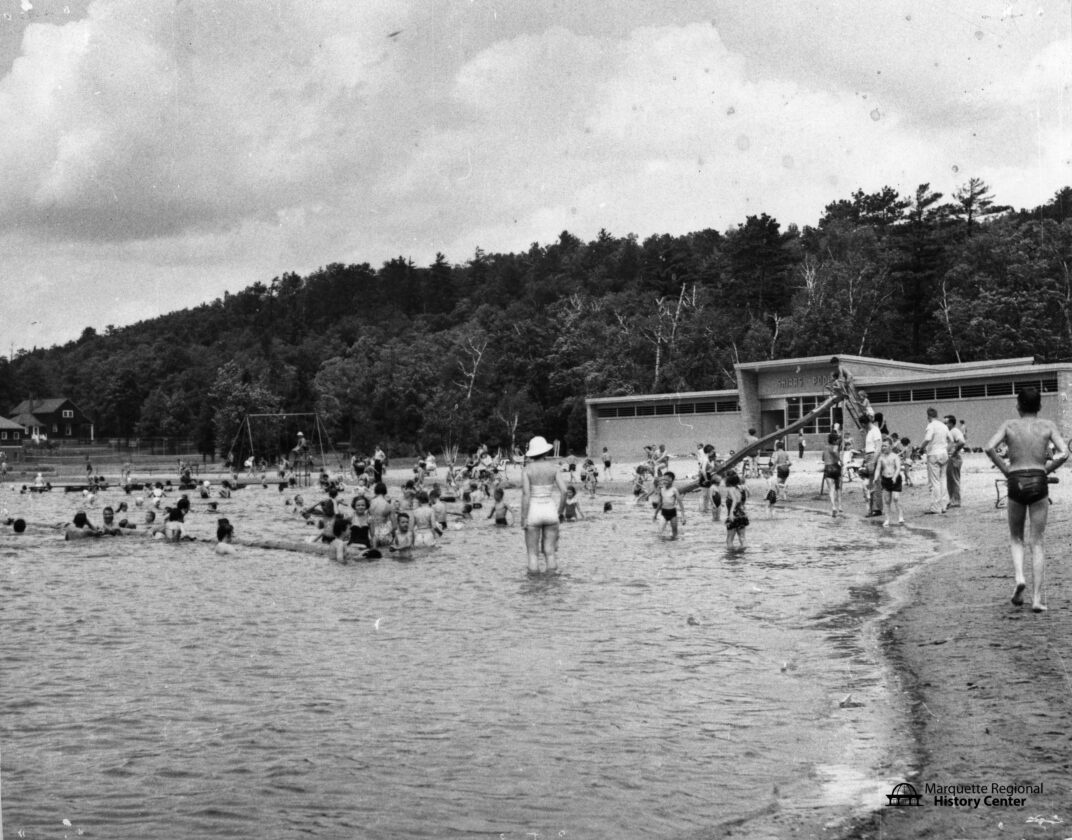
Pictured are swimmers at Shiras Pool around 1950. (Photo courtesy of the Marquette Regional History Center)
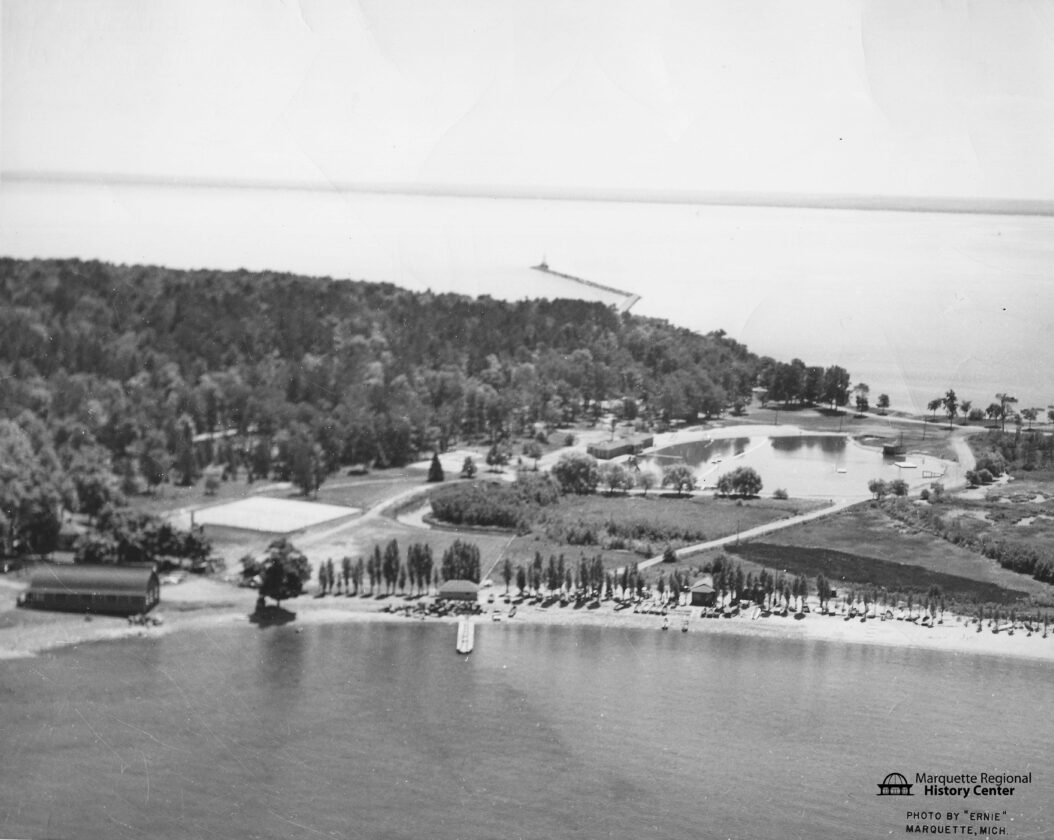
This is an aerial view of Shiras Pool before 1950. (Photo courtesy of the Marquette Regional History Center)
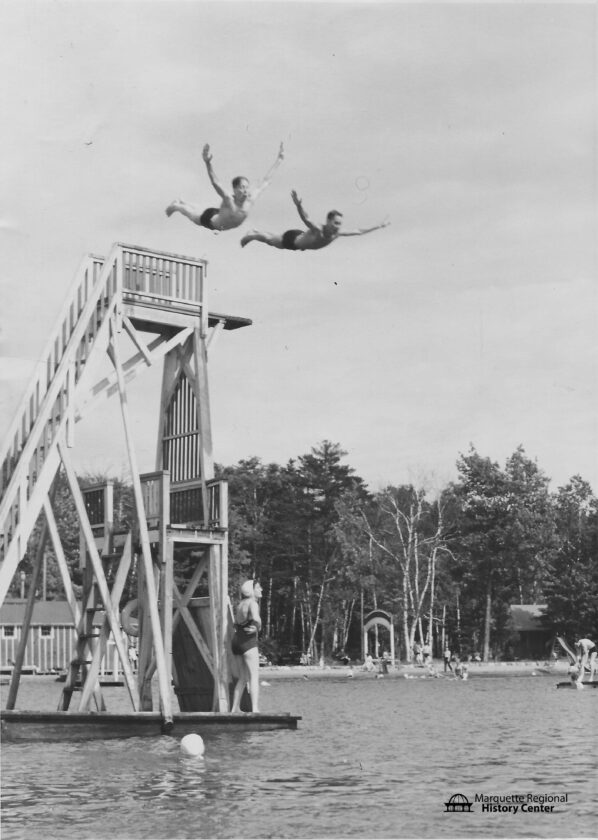
Divers at Shiras Pool are seen, probably in the 1950s. (Photo courtesy of the Marquette Regional History Center)
Pictured are swimmers at Shiras Pool around 1950. (Photo courtesy of the Marquette Regional History Center)
This is an aerial view of Shiras Pool before 1950. (Photo courtesy of the Marquette Regional History Center)
Divers at Shiras Pool are seen, probably in the 1950s. (Photo courtesy of the Marquette Regional History Center)
Trending
MARQUETTE -- Marquette is a watery place. Eighty miles of Lake Superior shoreline define the northern and eastern boundaries of the county. Inland lakes, left from glacial times, and swift streams from the highlands to the west weave together the land. The earliest people lived by the water since it was the source of food and transportation. When the Anishinaabe arrived, they were already skilled swimmers and would swim to fish, harvest aquatic prey, and move quickly across bays and inlets when canoes weren't available. Europeans had never seen people move so fast in the water, and from the Anishinaabe they learned the forward crawl.
In the 1800's, as Marquette was growing, swimmers enjoyed plunging into the cold water at Picnic Rocks, Lighthouse Rock, and adjacent beaches, as well as into the Dead River. In 1906, Peter White proposed an enclosed outdoor pool on Presque Isle and on July 4, 1921, the Shiras Pool finally opened. A thousand people crowded the Grand Opening of the pool that had been created by the removal of 17,000 cubic yards of muck, logs, and debris.
Wildly popular throughout the 1940's, Shiras Pool was closed in 1980 due to high cost of maintenance and cuts in Parks and Recreation funds. Residents kept pressuring officials to re-open and in 1987, after over $700,000 of upgrade, Shiras Pool reopened. The pool was now 37,000 square feet of concrete-lined pool with a 13-foot diving area, room for 2,100 swimmers, a barrier-free ramp, and a 159- foot slide. This was the only slide north of Brighton and the biggest concrete pool in the Midwest.
Unfortunately, goose poop and cracks in the concrete continued to require thousands of dollars to mitigate and repair. Shiras Pool was ultimately closed to the public and turned over to Moosewood Nature Center in 2008. The slide was sold and the pool is gradually returning to the frogs, dragonflies and pond weeds.
But people in Marquette kept swimming. Marquette Senior High School opened a pool in the early 1960's. In 1986, Shawn Robinson-Sobczak became the swim coach after having swum with the NMU Women's Swim team. In addition, Shawn coached the YMCA's Watercats Aquatic Club, and became the YMCA Aquatic Director in 2009. She continues to teach swimming and is now on her third generation of swimmers.
One of her Watercats, Amanda (Lancour) Adriano recalls getting a letter in 2004 inviting her and fellow swimmer David Clark, to compete in the 7th Annual Down Under International Games in Sydney, Australia. "I was 16 and hadn't been much farther away than Wisconsin." But the families raised the funds, and the swimmers, families, and coach went to the far side of the world where Amanda won two Bronze medals in back stroke and free style. Now, Amanda's children take lessons from Shawn.
Dr. Mike Grossman has been a swimmer since high school but started open-water swimming at age 49. A year later, in 2003, he partnered with Ann Constance, then Director of the UP Diabetes Outreach Network (UPDON) to coordinate the first Teal Lake Swim for Diabetes. Now in its 23rd year, it raised money to support UPDON and then later the Kids Camp for diabetic youngsters. The race started with 37 swimmers and now brings in 80-120 each year. Entry fees and pledges have brought in close to $20,000 dollars yearly.
The swim is a 2.24-mile crossing of Teal Lake starting at the beach. Each swimmer is accompanied by a kayak supporter and finishes with a run to the finish line at Al Quaal park. Dr. Grossman brought in Olympic swimmers to participate and speak. One was Gary Hall who had developed Type 1 Diabetes in 1999 before he won his Olympic gold in 2000 and 2004. When asked how he convinced these Olympians to come to Marquette, Mike said simply, "I asked them."
Many other pool swimmers cross over into open-water swimming as well. "I love swimming in Lake Superior," says Heidi Voigt, NMU head swim coach, who has taken her swimmers to cross the Straits of Mackinaw and participated with team members in the Teal Lake Swim for Diabetes. Amanda Adriano loves the big lake, but avoids the smaller ones: "Who knows what's on the bottom?!" "I've been submerged in Lake Superior every month of the year except February" says Shawn Robinson-Sobczak. Last year, Raj Vable, a new Marquette businessman and never-before open-water swimmer joined Dr. Grossman's Mackinaw Island Relay team around the Island. When asked about why he liked this long, cold, wild swim, he quoted Bonnie Tsui, author of Why We Swim, saying "It's like looking at heaven while talking to the Devil."
The devilish aspects of Lake Superior have concerned many of these swimmers. Lake water is very cold, even in summer; sudden storms can cause big waves, and riptides are common off the beaches and small islands. Shawn Robinson-Sobczak was present on the BlackRocks when a NMU freshman from Detroit jumped off the rocks and was immediately in distress in the frigid water. He was frantically climbing onto another swimmer when Shawn dove in and was able to break his grip with her lifeguarding skills and helped them both to shore.
Robinson-Sobczak regrets that MSHS no longer requires students to be able to swim 50 yards and tread water for two minutes to graduate. Heidi Voigt has noticed concerning trends: fewer swimming lessons offered locally because of fewer instructors and lack of pool time; a nationwide shortage of lifeguards; aging pools locally that are hugely expensive to replace. "This is a community that lives on the water. Everyone should know how to save themselves."
More swimming history will be on display at the Marquette Regional History Center at 5:30 p.m. April 22. Learn how a vintage collection of swim suite reflects the history of women's rights at the League of Women Voters' fundraising presentation, "Swimming Suffragettes: The Evolution and Revolution of Women's Bathing Suits." Tickets are available at the MRHC website and at the door.