
Step on the gas, part 1
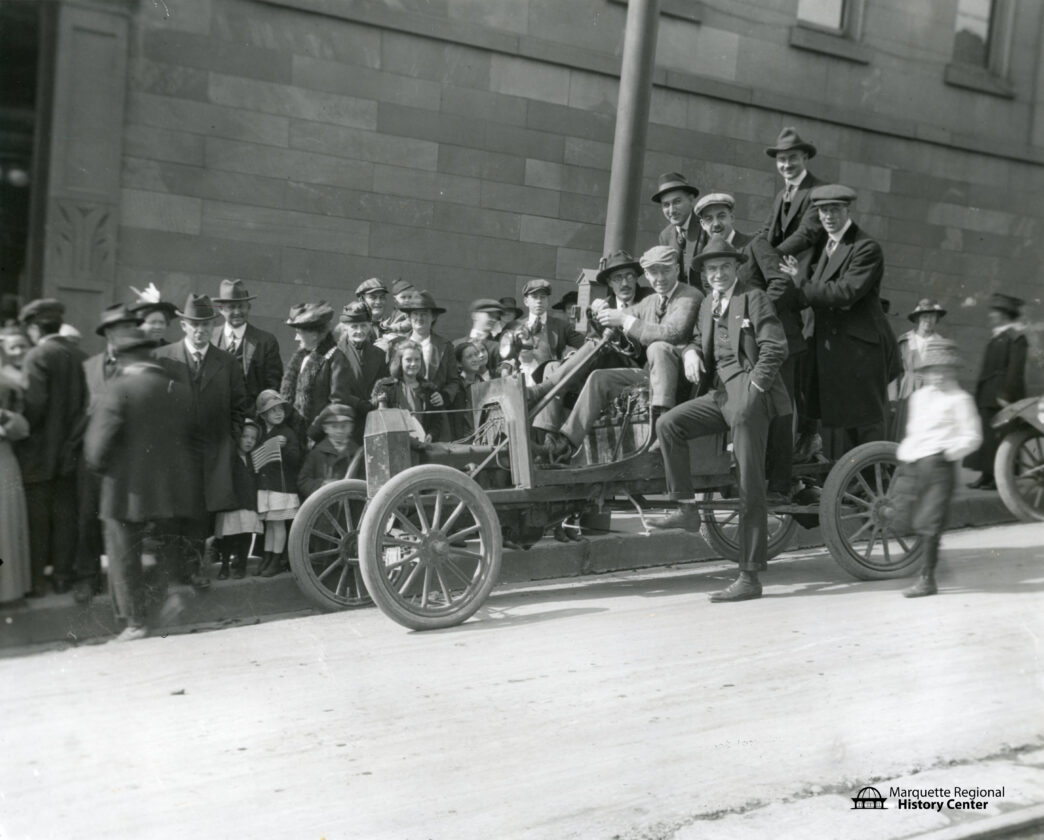
A crowd views an early car on Front Street in Marquette. (Photo courtesy of the Marquette Regional History Center)
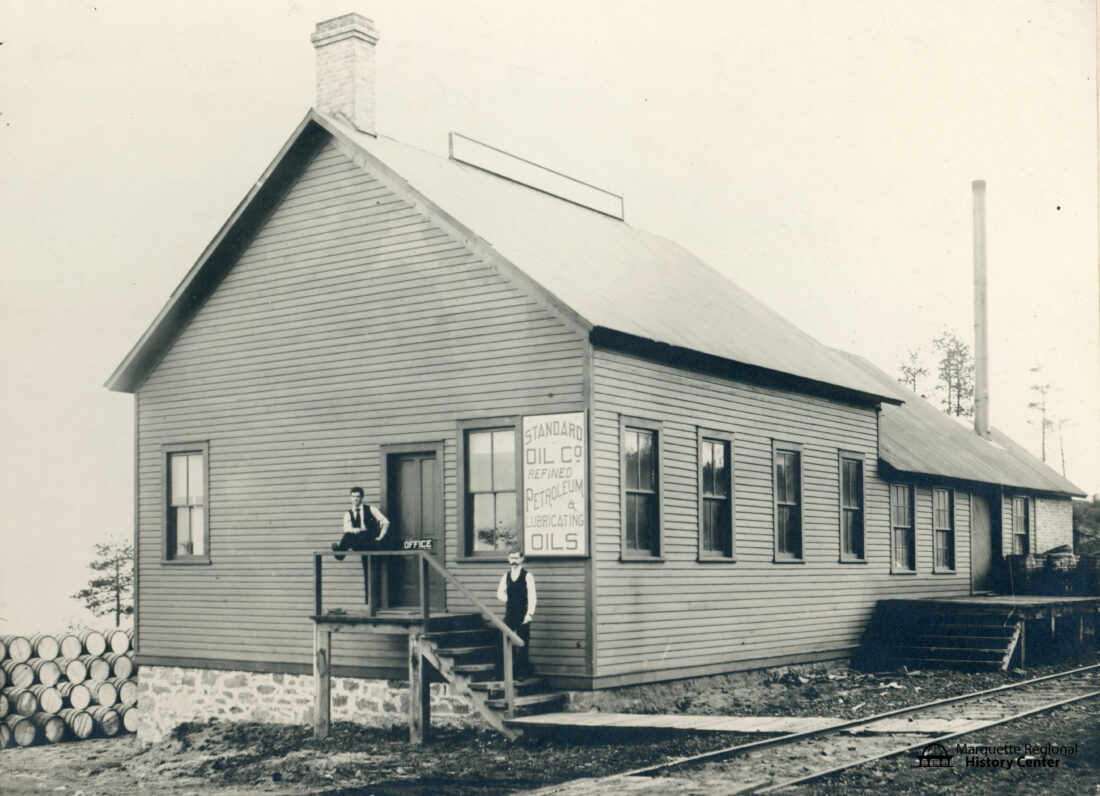
The Standard Oil Building at the corner of Lake and Hampton streets in Marquette is seen. (Photo courtesy of the Marquette Regional History Center)
A crowd views an early car on Front Street in Marquette. (Photo courtesy of the Marquette Regional History Center)
The Standard Oil Building at the corner of Lake and Hampton streets in Marquette is seen. (Photo courtesy of the Marquette Regional History Center)
Trending
MARQUETTE -- Summer is often a time for road trips. As electric vehicles become more common, owners need to plan their routes to consider the locations of car chargers, particularly in rural areas like the Upper Peninsula.
A little over three years ago, the Upper Peninsula Energy Task Force reported that there were just 14 public electric vehicle charging stations north of the Straits of Mackinac, accounting for just 2% of those in the state. Only two of those chargers were in Marquette County. Now, according to PlugShare.com, Marquette has 210 public chargers. With the shift in vehicle energy sources in the last few years, let's look back at a similar shift to gasoline.
The first horseless carriage in Marquette, a Winton, driven by H.S. Pickands and H.B. Tuttle, arrived in September 1899. The two estimated that the trip from Cleveland to Marquette would take six days. Their calculations did not account for dirt and gravel roads in poor condition, lots of flat tires, and a lack of access to stores selling gasoline. On the 15th day, Tuttle rode into town on a borrowed horse, looking for gasoline as they had run out 16 miles down the road, having last purchased fuel in Escanaba.
Gasoline was available at the Standard Oil plant on the lakeshore in south Marquette where it could be purchased in 5-gallon cans.
Used at the time to fuel stoves and lamps, gasoline was also utilized for cleaning and was the primary dry-cleaning solvent of the day. It would dissolve grease and oil, washing away stains much like water, but it stood less of a chance of dissolving the dyes in the fabric and otherwise ruining the material.
Newspapers even gave tips on using it for laundering clothes. "If you add salt to the gasoline in which you clean delicate fabrics, there will be no rings." And "when pressing [ironing] a garment that has been cleaned in gasoline, add about one-third part vinegar to the water in which you dampen the cloth you use over the fabric. This will remove the scent of gasoline and prevent circles forming."
Among the downsides- the clothes would be stiff and irritating to the skin, and there was also a significant risk of fires and explosions, testified to by regular newspaper stories about these tragedies. In one story from Michigamme, it was reported that a young woman washed her poodle in gasoline. All the dog's hair fell out but there was no mention of the final outcome for the poor creature.
As gasoline powered vehicles came into common use, fuel could initially be purchased at almost any general hardware store, blacksmith shops and even at pharmacies. The early 20th century saw an evolution of gasoline service stations that corresponded to consistent increases in the number of automobiles and disposable income, as well as generally cheap oil prices. The world's first purpose-built gas station was constructed in St. Louis, MO in 1905, followed by a second in Seattle, WA in 1907. The first 'drive-in' station operated by the Gulf Refining Co., opened in Pittsburgh, PA on December 1, 1913.
In 1910 there were approximately 400,000 cars in the United States consuming 750 million gallons of gasoline per year. Just nine years later, there were more than 7 million cars consuming almost 4 billion gallons per year. [These statistics don't consider other gasoline usage by tractors, stationary gas engines, industry or the arts.]
Even in 1917, there were already predictions that "at the present rate of consumption, the motor cars demand for gasoline can hardly be supplied for another twenty years." (Mining Journal, 7 February 1917). By 1925 the Federal Oil Conversation Board was looking for alternative fuels for "when gasoline gives out." They described America's resources as "rapidly diminishing."
Next week's article will discuss problems with early gasoline sales and initial attempts towards the use of other power sources and fuels.