
Trending
"The first step toward success is taken when you refuse to be a captive of the environment in which you first find yourself." – Mark Caine
The firsts are arriving. The explorers, the pioneers, the early settlers of the migrants are beginning to show up, despite snowstorms, tornadoes, and harsh weather all across the central U.S. How intriguing it would be to interview the first grebes, ducks, turkey vultures and other early migrants arriving on this still very white landscape and ask them about the forces, the thoughts, and the urges they felt to get here first. Getting here first is definitely an advantage to birds seeking out the best summer territories to settle in for the nesting seasons.
Like summer campers, there comes a level of comfort associated with knowing the "good places" and wanted to get there before everyone else for an enjoyable stay without the distresses, challenges, or inconveniences of second best. That said, enduring weather conditions incompatible with living with those choices can be darn near life threatening sometimes.
For the aquatic birds reaching the Upper Peninsula this past week, the conditions are more conducive to everyday challenges. A few grebes are starting to show up and now many Canada geese, greater scaup, and redheads are also appearing on the open waters of Lake Superior and the Dead River. They join a small flock of trumpet swans now hanging out at various points on the Dead River for over two weeks. Some hopes are continuing to grow that a pair of the swans may remain on the river this spring to nest.
There have been at least two visiting the oxbow areas above the Tourist Park each spring for several years now, but they all seem to have disappeared as the nesting season began. That stretch of the river may providing a staging area where there is ample food in spring (and throughout the entire year) for the swans until ponds nearby finally open up and provide a site they need to peacefully raise their young. They do become a bit territorial and would change the general complexion of avian life along the river for ducks and geese.
In Gladstone, at Saunders/Wilderness Point nine trumpeter swans appeared several weeks ago for an extended stay. When Lake Michigan levels were lower a number of years ago, there was an established, small population of mute swans on the shallow shoreline area between Escanaba and Gladstone, easily seen along U.S. 41 corridor. The two species do have different preferred summer habitats, but it is interesting to see them in Gladstone. Bufflehead, 65 common goldeneyes, 16 red-breasted and 32 common mergansers were seen at the Point one week ago.
Another "early' bird, a single sandhill crane, was also at Saunders Point last week. Although cranes, unlike great blue herons, prefer foraging on solid ground, they will work the edges of water where the ground is not frozen to find food until snow melts and invertebrates, plant roots, and other foods are accessible.
Many of these early cranes will probably continue northward to Canada. In a few weeks, thousands of cranes will cross the U.P., many continuing across Lake Superior at Whitefish Point, where Canada can be seen across bay.
More than a dozen common grackles and a few red-winged blackbirds have also rolled in and headed for the edges of the open water of the Chocolay and Dead Rivers. They are some of the first songbirds to return in noticeable numbers. The red-wings have long been common birds along the edges of ponds, rivers, and lakes in the Upper Peninsula, even in towns. The grackles have been common in rural areas, but over the past five years or so have really become more common in the city of Marquette, nesting in quiet pockets of land, usually near water or wetlands and finding their way to front lawns as the forage for insects and other invertebrates.
According to Cornell's All About Birds page https://www.allaboutbirds.org/guide/Common_Grackle/overview#, common grackles have an extremely varied diet. Besides insects, they are the number one threat to corn crops, can catch and eat mice and small birds, saw through acorns with their specialized beaks, steal worms from robins, pick leeches off turtle legs, and wade into shallow water to grab small fish! It is easy to see they are highly adaptable and are able to figure out life in new habitats.
Looking to hummingbirds provides some insight into the continuing challenges of the weather so far this spring. Two weeks ago, they had made in far enough north to be seen on the southern edge of Tennessee. The latest sightings have them only across the state northbound into a few parts of Kentucky. Through the next week there temperatures are only looking to make it into the mid-sixties, so migration will not see too many leaps and bounds yet.
There are still plenty of signs of spring showing up across the area. Gray squirrels and rock pigeons are showing clear signs of romantic interest for each other. Eastern chipmunks are popping out of their slumber and are vacuuming up all the sunflower seeds they can find around feeders. Best may be the sharp changes in the plumage of male American goldfinches. Although their black forehead patches are just starting to show, they are showing all plenty of bright, lemon-yellow feathers across their heads and chests. Looks like more roller coaster weather ahead but it is Spring!
EDITOR'S NOTE: Scot Stewart is a teacher at Bothwell Middle School in Marquette and a freelance photographer.
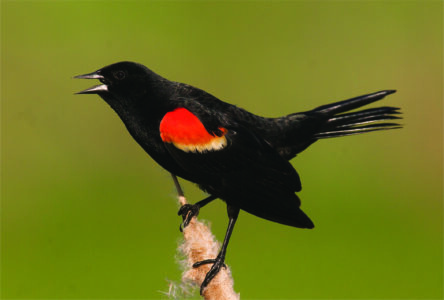
A red-winged blackbird is shown. (Scot Stewart photo)