
On pins and needles
A look at acupuncture
Trending
MARQUETTE -- We seem to live in a unique moment in time, a time where the vast majority of people think about their health constantly. With the pandemic still dominating the discourse of social media and the nightly news, it's a topic you can't really get away from.
It feels as though everybody has their own opinion on the best way to stay healthy or has a suggestion for the latest and greatest medical marvel which will keep you healthy and happy until a ripe old age. It can be confusing to try and keep yourself educated on what works and what doesn't and in the age of misinformation, that can be quite difficult.
With all of the quack cures and misleading information out there, the suggestion of an alternative type of medicine can make your skin crawl and understandably so, but one of the treatments that is growing in popularity worldwide is also one of the oldest--acupuncture.
As acupuncture is rooted in traditional Eastern, namely Chinese, medicine, it is often treated with skepticism in the west, which leads to many misconceptions about the practice. Some based in the efficacy of the treatment, others in how it is administered. According to the National Institute of Health, combining acupuncture with usual care in a wide variety of ailments, such as back pain, migraines and knee pain has a much better outcome than just usual care alone. Organizations as diverse as the World Health Organization and the United States military recognize acupuncture as a valid and worthwhile treatment for a wide variety of ailments.
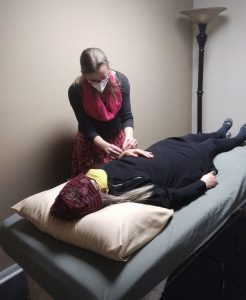
"One of the biggest misconceptions when it comes to acupuncture comes from people who are afraid of needles," said Marquette acupuncture practitioner Carolyn Provencher. "These needles are really, really tiny. I can fit 20-25 of these needles into a typical needle that your doctor uses. They have the thickness of a strand of hair. Even people who are really anxious around needles find acupuncture quite relaxing. It's often very surprising to them."
While it is best known to help with structural pain, like you would find with back and knee pain, there are other issues that some claim acupuncture can help with. A study published in the Public Library of Science medical journal found that combining acupuncture with counseling showed an improved outlook in test subjects who were struggling with depression compared to those who did counseling alone.
"It can help with many things, from skin, to digestion, to physical and emotional health," Provencher said. "As with any kind of medicine, some things work better than others. Like, if you're having a heart attack or a broken bone, you're not going to come to me. Though it really can help with a wide variety of ailments."
Another misconception that people have with acupuncture is that it's an all-or-nothing proposition. That eastern medical practices like acupuncture or yoga are incompatible with traditional western medical practices. That isn't the case. Just because you get acupuncture doesn't mean that you should stop seeing your primary care physician. The evidence shows that practices like acupuncture can work in tandem with medical practices that you may be more familiar with. Just because it won't cure your cancer, doesn't mean it won't help with the side effects.
While there are still questions about the efficacy of acupuncture for many other ailments and issues, there is enough evidence out there to show that there is a place for this ancient Chinese practice along modern, Western medicine and that acupuncture should not be so easily dismissed.
To contact Carolyn Provencher, visit her website at www.carolynprovencher.com.