
Making your holiday leftovers appetizing
‘Northern Now’ series focuses on food
Trending
MARQUETTE -- Turkey sandwiches as holiday food leftovers usually pass the late-night refrigerator raid test, but maybe people want to get a little more creative with all that uneaten food.
To give them a few ideas, holiday cooking was the subject of the latest digital event in the "Northern Now" series given Wednesday by the Northern Michigan University Alumni Association for alumni and friends.
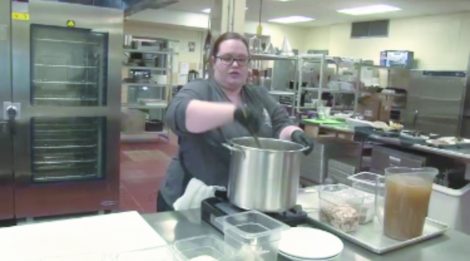
Demonstrating a few leftover recipes were Alden Griffus, a 2010 NMU graduate and the executive chef at NMU Dining Services, and Derek Estes, NMU catering manager and a 2019 NMU graduate.
"I know sometimes you're going to the fridge -- after about the eighth or 10th time, looking at those leftovers, and you look at your plate and you're thinking, 'Do I really want to eat this?' or 'Do I want to throw it against the wall?' You get really kind of burnt out," Griffus said.
Griffus demonstrated turkey and noodles – a dish that can provide comfort food later in the winter.
"It also freezes great, which is wonderful because if you don't want to look at turkey for a while, you can make this, throw it together, throw it in your freezer and pull it on out on a cold winter's night in late January when you're like, 'You know what? A nice bowl of soup would be really good right now.'"
A homemade stock, she pointed out, has no preservatives as is the case with stock found in groceries stores, making it more flavorful.
Stock, she said, includes "aromatics" such as carrots, celery, onions and thyme.
"Bay leaf is really important in stock, and I always put an extra bay leaf in mine," Griffus said.
Stock is cooked with cold water at a "really low" temperature, she noted.
"The reason that's so important is that we want the flavors to be extracted from your vegetables and your bones slowly, and when you bring that cold water up slowly, what it does is it brings more flavor out of your bones before the proteins that are still left on your carcass start to set from the heat," Griffus said.
She also made egg noodles, which for her have to be made from scratch.
Here are Griffus' turkey recipes:
Turkey stock ingredients:
– 5 pounds bones (bones from carved turkey; it's OK to have a little meat left on there)
– 1 gallon water, cold
– one-half pound carrot, rough chop
– one-half pound celery, rough chop
– 1 pound yellow onion, rough chop
– 1 bay leaf
– 1 sprig thyme, or half a teaspoon dried thyme
– 1 tablespoon peppercorn
– 5 (ish) parsley stems
1. Place the turkey carcass in a large stock pot with all the other ingredients. It's helpful to break the carcass up, but not necessary.
2. Cover with cold water, about 1 gallon. Be sure to cover the entire carcass, which might be more than one gallon.
3. Put on low heat, and gently bring the stock to poaching temperature, about 185-200 degrees. If you are looking into the pot, you should see movement of particles, but no bubbles.
4. Allow your stock to cook this way for 4-6 hours.
5. At the end of the cook time, taste your stock. It should taste like it needs salt. That's because it does, but don't salt it. Instead, let the stock sit in your mouth for a few seconds. The flavors will come out, as the stock sits on your tongue. If it tastes a little weak, strain the stock, return it to the heat and reduce it further. This will concentrate the flavor and give you better soup.
6. If your stock has the right flavor, strain it and cool it. Cooling your stock completely before you use it allows you to scoop the fat off the top, making a better soup with no greasy residue on top.
Egg noodles ingredients:
– 2 cups all-purpose flour, plus more for rolling
– Generous pinch of salt
– 4 large eggs
1. Combine flour and salt and place on a clean surface, making a mound with a well in the center.
2. Lightly beat the eggs and pour in the well in the flour.
3. Using a fork, start to slowly mix the flour and eggs together, pulling a little flour into the eggs in the middle. (The trickiest part of this is making sure not to break the flour dam before the dough forms. If it does, it doesn't affect the noodle quality, it just has mess making potential.)
4. Once a dough forms, knead the dough until smooth and doesn't easily stick to your hands or table.
5. Wrap the dough and let stand for 30 minutes. This is important, because the gluten needs time to relax.
6. Once the dough has rested, divide the dough into workable dough balls.
7. Roll each dough ball out on a well-floured surface. If you like a more dumpling-like noodle, then keep it closer to a quarter-inch thick.
8. Once the dough is rolled out to the desired thickness, sprinkle the top with flour and loosely roll the dough. Gently cut the dough across the roll to make the desired width of noodle.
9. Repeat this with rest of the dough, being sure to flour the cut noodles well so they don't stick together.
Turkey noodle soup ingredients:
– 2 tablespoons oil
– 2 cups diced carrots
– 2 cups diced celery
– 2 cups diced onion
– 1 gallon turkey stock (depending how much it reduced)
– 4 cups diced leftover turkey
– 1 pound egg noodles
– Salt and pepper, to taste
1. In a large stock pot, sauté vegetables on medium heat in the oil until onions turn translucent.
2. Add stock and turkey. Bring to a simmer.
3. Season the soup with salt and pepper.
4. Add noodles and cook until noodles are tender.
5. Taste and season again; the noodles will steal some of your previous seasoning.
Estes prepared what some people might consider a less traditional holiday leftover dish: roast beef chipotle tacos.
He said jalapenos or other peppers can be substituted for the chipotle.
"You can use whatever pepper you want," Estes said. "It's your dish."
His recipe included avocados mixed with cilantro and horseradish.
As with a typical informative cooking demonstration, Estes provided a few tips along the way.
"It's always important to season and taste as you go," he said.
The "Northern Now" series takes place on the second Wednesday of each month. Learn more at nmu.edu/alumni.