
What’s Flying: Birds shine bright in depths of winter

STEWART
“No animal, according to the rules of animal etiquette, is ever expected to do anything strenuous, or heroic, or even moderately active during the off-season of winter.” — Kenneth Grahame
There are actually a few requirements of all animals during the stresses of winter — to find enough to eat each day and stay out of the teeth of the storm. Both have been a challenge recently especially coming out of the eye of the bomb cyclone that passed over much of the central U.S. last week. Drifts created by the 50+ mph winds packed snow very tightly reducing accessibility of food for a number of ground feeding birds like cardinals and some finches. Those same winds took down hundreds of trees, including dozens of large pine and spruce trees in Marquette County, reducing cover and some winter homes for cavity users like owls, woodpeckers, chickadees, and nuthatches.
Some bird feeding stations saw a significant uptick in visitors at both suet and black-oil sunflower feeders as a result of the local changes in the nearby woods. High winds not only took down large branches and many trees, but also cones of hemlock, spruce, and tamarack, plus seeds from birches and some ash-leaf maple trees, reducing seed crops available to some birds. In some spots on Presque Isle the ground was covered with recently fallen cones and seeds.
Some straggling birds are still hanging around despite the severe conditions weather wise. In Cedarville, Mackinac County, a hermit thrush has been surprising birders, hanging out at a suet feeder. Except for a few robins, and the vagrant Townsend’s thrushes, most all the other thrushes were south of the Upper Peninsula by early November. Hermit thrushes are extremely rare birds here in winter.
Speaking of the other thrushes, they are still here too. A flock of six robins was seen feeding in a mountain ash tree on the east side of Marquette last week and single individuals have popped up occasionally at other sites. A Townsend’s solitaire is also still being seen in Marquette too. Recently sightings have come from the crab apple trees at Mattson’s Park and in a winterberry bush on the east side of town.
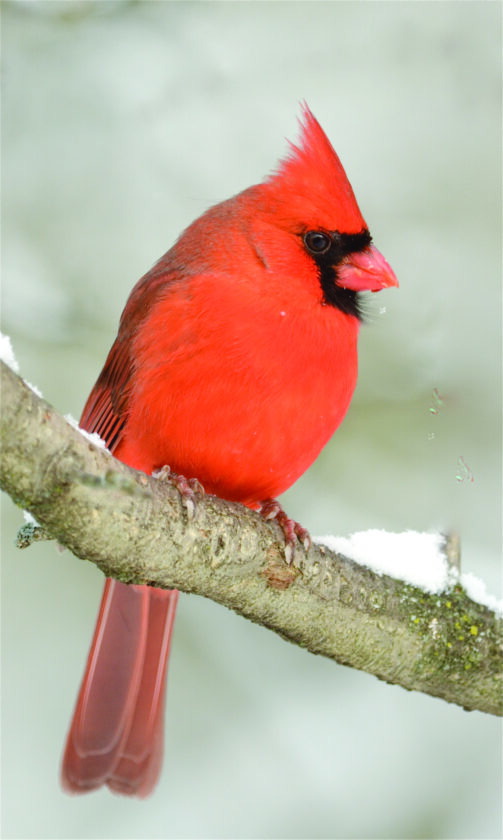
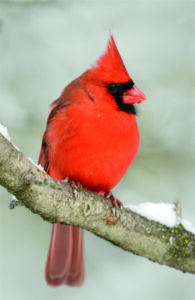
A northern cardinal looks on. (Scot Stewart photo)
A common grackle was seen on the east side of Marquette on Dec. 19, the day before the Christmas Bird Count. Another, possibly the same one, was seen last Monday and Tuesday at the same location, feeding on black-oil sunflower seeds and suet. It was a big year for the species in the Marquette area, with many staying well into fall this year.
Marquette’s city design also creates some unusual habitats for some species of birds and mammals. Some parts of small creeks running through town pass through underground piping systems, keeping them warmer.
One unnamed creek emerges behind apartments on Presque Isle Avenue and flows out to the Dead River north of Hawley Street. In has become a favored spot for mallard ducks, smaller songbirds looking for a drink, and even short-tailed weasels hunting for animals along the creek.
Recently a green-winged teal has been seen swimming and feeding with the mallards. Many of these ducks do wander during the day out to Lake Superior and the Dead River, but this narrow creek seems to provide some food, warmer temperatures, and a good amount of shelter due to the heavy cover of weeds and aquatic vegetation in and along the waterway.
Green-winged ducks are the smallest of the dabbling ducks. They don’t dive but dip their heads underwater to pick at aquatic vegetation and small invertebrates. Males have cinnamon colored heads with bright green stripes over their eyes. Females are drab brown, tan, and gray ducks with black bills and distinct green striped patches on their wings called speculums.
Snowy owls are back on birders’ lists this week. Two were reported in the Pickford/Rudyard area, a favored place to find them during many U.P. winters. Open fields there provide good hunting grounds for this tundra species and feed placed out for livestock in the area attracts rodents the owls hunt. A single snowy owl was seen on the Picnic Rocks this past Tuesday. Snowy owls were seen there frequently there this past fall as well as several other spots along the Lake Superior shoreline but later may have developed a different set of roosting locations to avoid crows and other birds that harass owls during daylight hours.
Pine siskins are beginning to find their way to a number of new feeders in the Marquette area, especially feeders where the goldfinches have dominated. Of some note, some birders in Escanaba are noticing some of their first goldfinches of the winter. Many have been enjoying fair numbers of dark-eye juncos there too, birds all but gone from the Marquette area.
A number of birds are beginning to show a bit more brightness in their colors. Some American goldfinch males are exhibiting a bit more yellow in their breast feathers and male house finches are beginning to become a little flashier as their vermillion chests brighten.
-
- A northern cardinal looks on. (Scot Stewart photo)
-

- STEWART
The songs of a few cardinals have been heard in Marquette on a few quiet mornings. They are one of the few species where both males and females sing and those songs are definitely welcome after a fearsome winter night! The males will begin to get a little brighter as the winter goes on. They only molt once a year, in the fall, but have darker tips to their red feathers. As it gets closer to spring, these tips wear down creating a brighter red look for the mating season. It’s a wild time to enjoy all that continues on!
Friday: Outdoors
What’s Flying: Lots of opportunities and time for seeing unusual birds

Outdoors North: Nature offers lasting happiness
DNR weekly fishing report
Little Bay de Noc: Yellow perch fishing in the head of the bay was fair, with anglers catching some large fish; ...
Scarification: The simple seed-starting trick that helps tough-coated seeds sprout faster
What’s Flying: Still mornings provide a feast for the eyes