
Apple, Google block apps that flag ICE sightings
Trending
Apple and Google blocked downloads of phone apps that flag sightings of U.S. immigration agents, just hours after the Trump administration demanded that one particularly popular iPhone app be taken down.
U.S. Attorney General Pam Bondi said such tracking puts Immigration and Customs Enforcement officers at risk. But users and developers of the apps say it’s their First Amendment right to capture what ICE is doing in their neighborhoods -- and maintain that most users turn to these platforms in an effort to protect their own safety as President Donald Trump steps up aggressive immigration enforcement across the country.
ICEBlock, the most widely used of the ICE-tracking apps in Apple’s app store, is among the apps that have been taken down. Bondi said her office reached out to Apple on Thursday “demanding that they remove ICEBlock” and claiming that it “is designed to put ICE agents at risk just for doing their jobs.”
Apple soon complied, sending an email Thursday to the app’s creator, Joshua Aaron, that said it would block further downloads of the app because new information “provided to Apple by law enforcement” showed the app broke the app store rules.
According to the email, which Aaron shared with The Associated Press, Apple said the app violated the company’s policies “because its purpose is to provide location information about law enforcement officers that can be used to harm such officers individually or as a group.”
In a Friday interview, Aaron decried the company for bending to what he described as “an authoritarian regime.” And immigration rights advocates like Kica Matos, president of the National Immigration Law Center, added that these actions marked “a disturbing example of how tech companies are capitulating to Trump.”
“These apps are a lifeline for communities living in uncertainty and fear of when ICE might show up to tear their families apart,” Matos said in a statement.
Downloads of apps like ICEBlock have surged since Trump took office for his second term earlier this year. Aaron said he launched the app in April as a way to help immigrant communities protect themselves from surprise raids or potential harassment. It had more than 1 million users, he said.
While not specifying details on the total number of platforms removed, Apple confirmed to the AP on Friday that they removed “similar apps” due to potential safety risks that were raised by law enforcement. Google followed their move, saying that several similar apps violated their policies for Android platforms.
While some advocates don’t find all of these apps particularly useful -- pointing to potential misinformation and false alarms -- they echoed criticism of moves to suppress them.
“What really worries me is the kind of precedent that this sets” where the government can “basically dictate what kinds of apps people have on their phones,” said civil rights attorney Alejandra Caraballo, who works at Harvard University’s Cyberlaw Clinic.
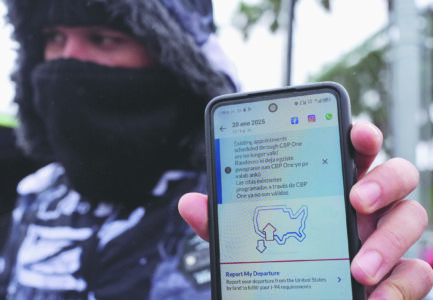
A migrant seeking asylum holds up the CBP One app showing his appointment was canceled after President Donald Trump was sworn into office on Jan. 20 in Matamoros, Mexico. (AP file photo)