
Bloodhounds excel at helping police find missing people
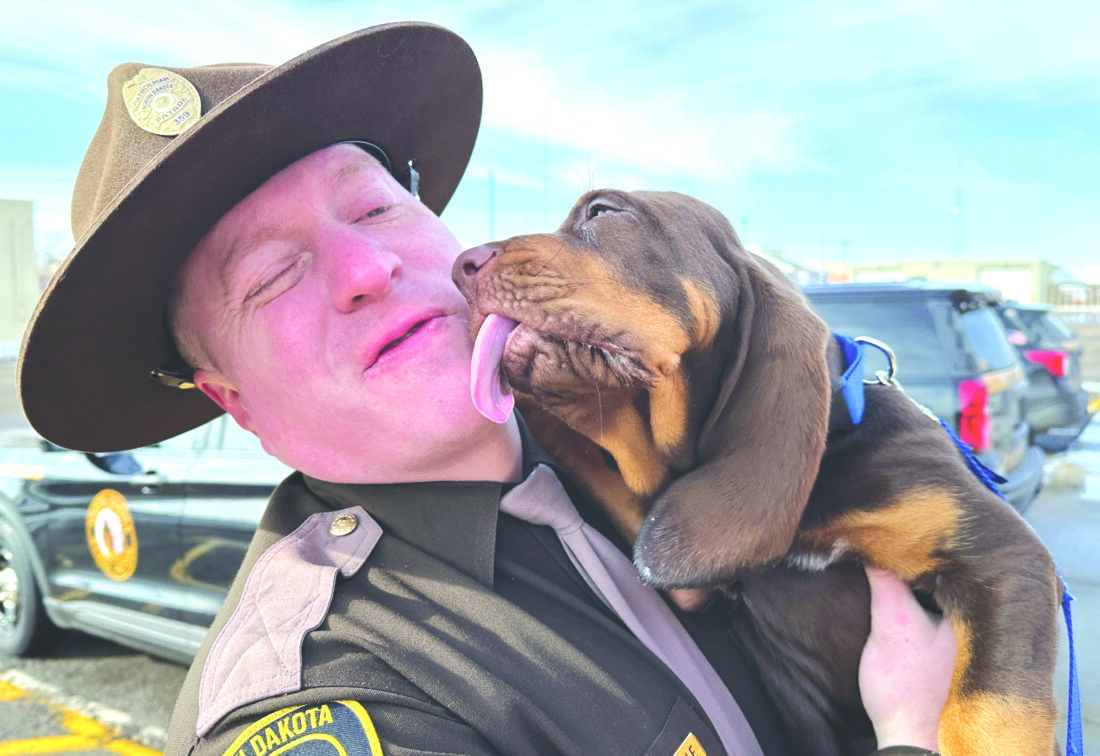
Beau, a bloodhound puppy, licks the face of his handler, North Dakota Highway Patrol Trooper Dustin Pattengale, on Feb. 27 outside the highway patrol office in Fargo, N.D. (AP photo)
FARGO, N.D. — The North Dakota Highway Patrol’s newest recruit has floppy ears, four legs and an amazing knack for finding people.
Beau, a 12-week-old puppy, is joining a band of bloodhounds who are in demand for difficult cases across the upper Midwest.
They trail missing children, people with dementia and criminal suspects. The agency uses drones and aircraft to aid searches, but bloodhounds remain an age-old, low-tech solution.
“These dogs are just specifically bred to search for people,” said Trooper Steven Mayer, who handles Bleu, one of the dogs.
The nose knows
Bloodhounds are used from Maine to Florida to Texas to Arizona to California, said Danny Jones, executive director of the U.S. Police Canine Association. Drones and helicopters can work ahead of a dog, but the bloodhound is hard to beat.
“To actually get a direction and start moving in a direction, you’re going to need a dog on the ground to start that trail, and that’s the difference between the technology and actually having a dog such as a bloodhound on the ground,” Jones said.
Bloodhounds have about 300 million scent receptors in their nose, vastly more than humans and more than other dogs, Mayer said.
Their big, floppy ears and folds of skin help gather odor for the dog to trail people, sometimes after a week or more, he said. The dogs have scented from a wall someone touched, the dirt a person stumbled in and vomit on a car door.
Kept busy
Highway Patrol began using bloodhounds about 14 years ago, moving away from dual-purpose dogs to singular-purpose drug dogs and trailing dogs. The state force receives about 70 calls a year for their services, including one to Montana last year to help find a man suspected in the killing of four people at an Anaconda bar.
Two pairs of handlers and dogs drove 10 hours to help. They got fairly close to the suspect, who was in the location where the dogs were indicating on, Mayer said. Other requests have come from South Dakota and Utah.
Beau was born in Texas but has since moved to North Dakota’s largest city of Fargo. His early training is mostly potty and kennel training and basic commands, as well as socializing him to different places, people and environments, said Trooper Dustin Pattengale, Beau’s handler. He won’t be ready for a full or certified trail until he is about 9 months old.
“The basic training is just introducing him to scent articles and then ramping up the training to where he goes further and further and encompasses different trails, different types of environment,” Pattengale said.
New tool in Omaha
In addition to searches, North Dakota has helped agencies in other ways. Last year, Mayer went to Omaha, Nebraska, for a week to help the city police department train its first bloodhound, Willow.
Omaha used to call in the closest bloodhounds, from the Chicago area, for searches, Omaha Police Sgt. Scott Warner said. The value was clear and Willow arrived early last year.
He hopes Willow becomes an asset for the region. Omaha plans to have multiple dogs and handlers someday, he said.
Dropping everything
Mayer and his wife have traveled the world to help train dogs, making trips to Hungary, Italy, South Africa and Wales, with plans later this year to go to Slovenia and Austria. They charge nothing.
Handlers are a special breed of people, Mayer said.
“They drop everything at the drop of a hat and they’ll leave their family, their friends, they’ll leave Easter dinner to go find a stranger that they’ve never met before,” he said.
North Dakota’s dogs are something of a social media sensation for the Highway Patrol. Beau’s name was picked in a Facebook vote. Recent videos depict him chewing a toy bear and another bloodhound, Lorace, gallivanting in new boots.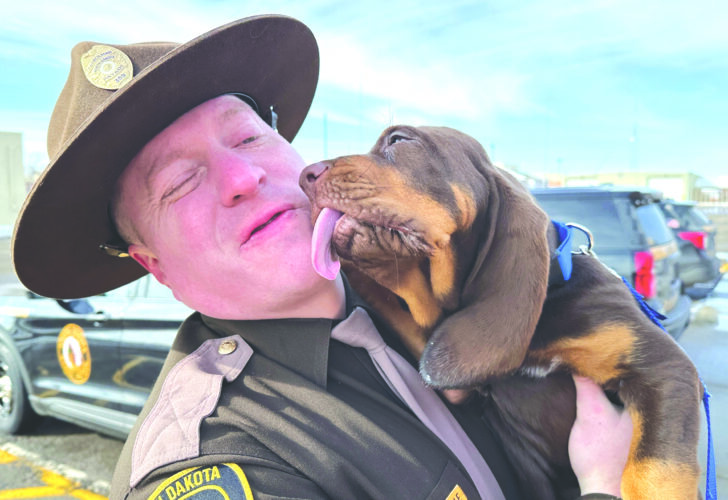
Morning UP
Bloodhounds excel at helping police find missing people
Study: Spacecraft impact changed asteroid’s orbit

The long and winding roads to Alaska, part 2
NASA revamps Artemis moon program to look more like Apollo
Blizzards a real danger for those caught unprepared