Sauna an essential part of being Finnish
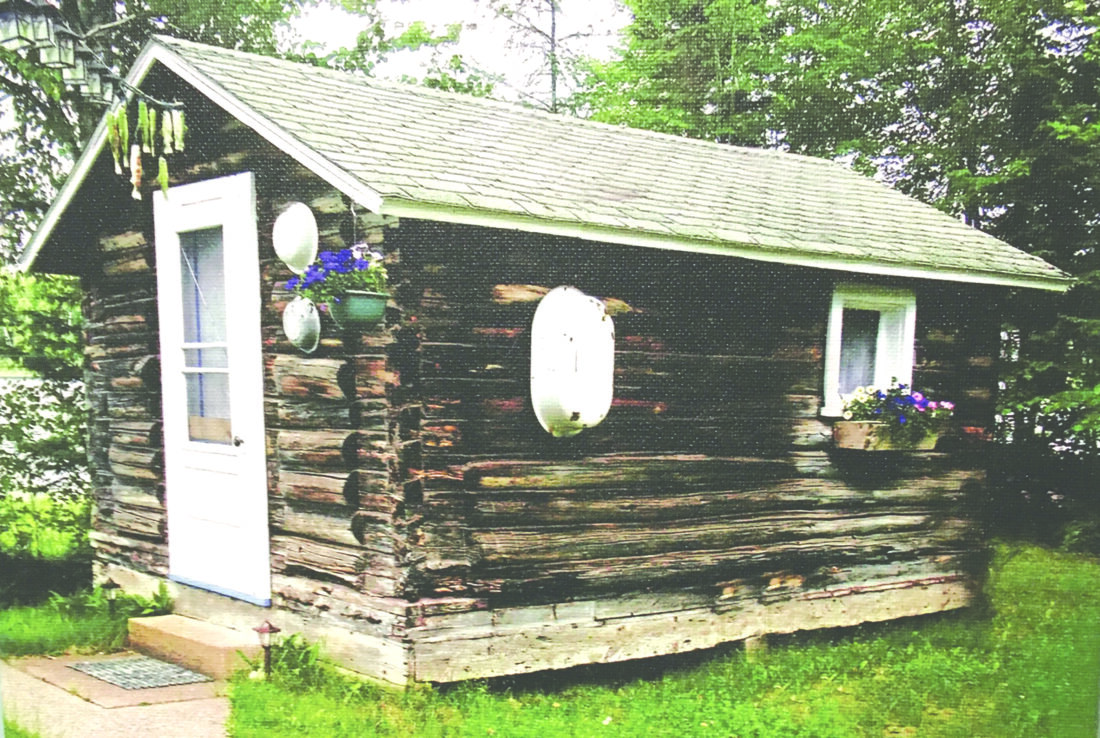
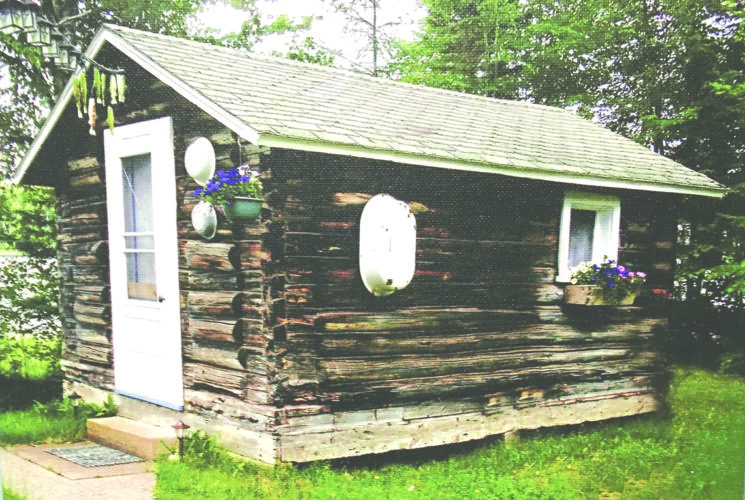
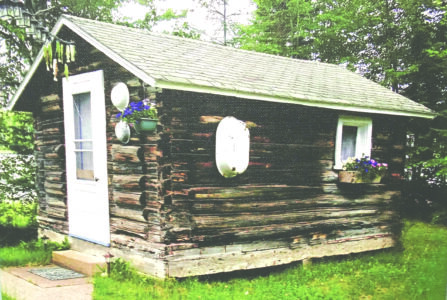
This is a sauna built by the author’s father, John Larson, in 1933 in Suomi Location, his first attempt at log work. It still stands today, but has been moved to a camp near Gwinn. (Photo courtesy Virginia Paulson)
 National Sauna Week will take place next week, Feb. 15-21.
No visitor to Finland can stay very long in the country without hearing talk about a sauna. They will see the word “sauna” written on large buildings, and traveling through the countryside, they will see near every house and by the lake, a small wooden building where smoke is rising from the chimney.
This is the original sauna which has not changed in hundreds of years. The sauna is the traditional Finnish bath. The word “sauna” refers to the bathhouse itself, but because the word “saunoa” is not translatable, a person will say, “I’m going to take a sauna.” Or “I’m going sauna.”
The best way to find out about a sauna is to experience it for yourself. But everything about the sauna cannot be learned in one visit. The traditional sauna is a family institution, and the little wooden building is more important and essential to the Finn than the bathroom with the hot and cold running water.
In the sauna, they sought remedy for pain and sickness. The sauna was not a luxury, it was a necessity. The Finns do not have to be convinced about the value of a sauna. They believe in the sauna. The two religions of Finland are the church and the sauna.
The simplest form of the sauna is one room built of logs with a large stove of sorts, piled high with rocks, and not just any rocks will do. They must be dense and without flaws; and they must be shaped to allow the heat to circulate through them.
The builders of family saunas take pride in looking for their own rocks. They can be found on the shores of ponds or streams or in bays. Larger in size than a clenched fist.
The stones are heated to temperatures as high as 280 degrees F, but the ideal temperature is between 190 to 200. Saturday is traditionally sauna day in Finland. Early in the day, the firebox is stoked and lit, and toward evening the Finn goes to sauna and it is not just a means to get clean but a place of relaxation. The Finn invites guests to his sauna and also offers coffee and pulla.
When a Finn builds a new home, he builds the sauna first. The picture shown here is the work of my father, John Larson. His dream was to build a log home, which he did, but this sauna was his first attempt at log work.
This sauna was built in 1933 at Suomi Location, and used by the family and later moved to a camp on a lake near Gwinn and still used today.
Whenever Finnish athletes compete in the Olympic Games, they request that a sauna is available in the Olympic village.
The Finnish soldier felt indebted to the sauna for his endurance and stamina. Service regulations prescribed a sauna once a week. Underground saunas were built wherever possible. The Finnish army developed a portable sauna housed in a tent.
The use of the sauna has spread to other countries. Today, there are a variety of saunas and many people have electric saunas in their homes.
Gyms have made them available for their clients. Some are not used for soap-and-water bathing as the old style sauna.
Modern saunas in Finland also provide running water in a washroom adjacent to the hot room. If you are able, celebrate National Sauna Week.
Virginia Paulson has been a trustee with the Negaunee Historical Society for more than two decades, previously having been on the Negaunee Public Schools board of education for 23 years and MARESA board for 17 years.
Morning UP
Genetics may speed restoration of iconic American chestnut
Recent thaw allows water birds roam free again
Sauna an essential part of being Finnish
Redford character in ‘Downhill Racer’ still resonates with US ski racers
Now best time to plan on backyard garden