
DNR: Survey shows stable wolf population
But one prominent U.P. outdoors group has different opinion
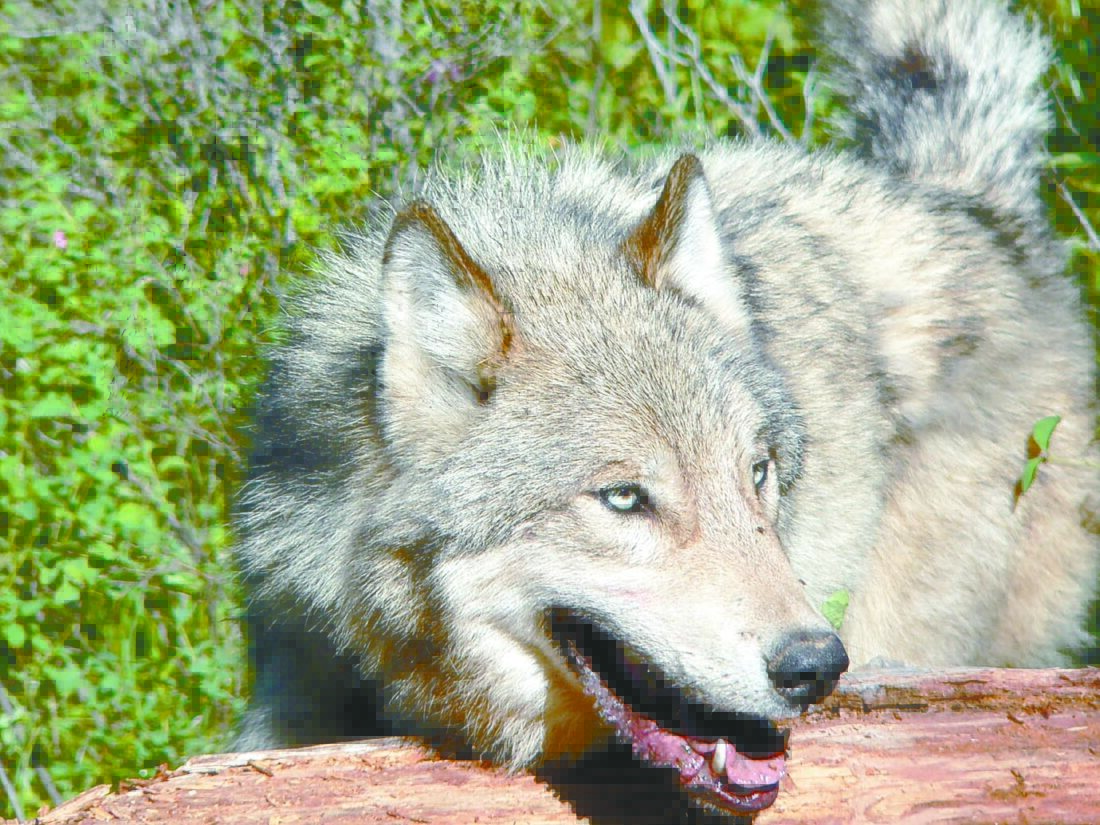
A gray wolf is seen at an Upper Peninsula location. (Journal file photo)
MARQUETTE — The latest Michigan Department of Natural Resources survey estimates 762 wolves in the Upper Peninsula, showing a consistent population for the past 14 years.
This winter’s wolf population survey estimate from the DNR found a minimum of 762 wolves in the U.P. This year’s estimate showed an increase of 131 animals compared to the 2022 estimate of 631; however, the results demonstrate a continued trend of statistical stability in Michigan’s wolf population.
“This year’s survey findings are statistically consistent with our wolf population surveys for the past 14 years,” said Brian Roell, the DNR’s large carnivore specialist. “When a wild population reaches this stable point, it is typical to see slight variations from year to year, indicating that gray wolves may have reached their biological carrying capacity in the Upper Peninsula.”
In other words, Michigan’s U.P. wolf population has achieved an equilibrium between availability of habitat and the number of wolves that habitat can support
However, the Straits Area Sportsman Club disagrees, calling the survey results controversial.
In a written statement, the club noted “critics argue that the survey relies heavily on variables, assumptions and visual track observations, potentially leading to underestimating the actual population size. Unlike most wildlife population surveys, which utilize population estimate models to account for unobserved animals, the DNR’s wolf survey employs a minimum count approach, disregarding important factors such as spring litters and lone wolves, which by itself can constitute up to 25% of the population.
“Members of the sportsmen community have expressed frustration over the lack of transparency regarding survey methodology and data interpretation,” the statement details. “Despite requests for more detailed information on survey locations and estimated numbers, stakeholders have been met with limited disclosure from the DNR.”
The club statement said compounding concerns are the declining populations of deer, beaver and snowshoe hare across the U.P., alongside a stagnant growth rate in the moose population. Many attribute these trends to an unchecked wolf population, which they believe disproportionately impacts local ecosystems.
“Our Facebook page ‘U.P. Wolves Only’ showcases nearly 3,000 recent pictures of wolf activity, including packs exceeding 10 animals, indicating a robust wolf population,” noted a spokesperson from the sportsmen community. “It’s evident that the current survey methodology fails to capture the true extent of wolf numbers in our region.”
The survey, completed last winter, found the population distributed among 158 packs in the U.P., with an average of 4.8 wolves per pack. This year’s survey represents the highest population estimate since 2012, when the department began doing the semiannual survey. The survey is conducted during the winter because it relies in part on identifying wolf tracks in the snow.
Prior to the winter of 2007, the DNR sought to count wolves throughout the entire U.P. However, as the wolf population increased, this peninsula-wide survey method became more difficult and time-consuming, especially the process of distinguishing among adjacent packs.
As a result, the department developed and evaluated a different sampling method to reduce the search area and allow additional time to accurately count wolves in neighboring territories. The new approach uses a geographic stratification –essentially breaking up regions into small pieces and ensuring those regions have representative samples –and produces an unbiased, precise minimum estimate of wolf abundance in Michigan’s U.P. during midwinter when wolves are at their lowest point in their yearly population cycle, according to the DNR.
The DNR is evaluating two other techniques for estimating wolf abundance in the U.P. One relies on a track survey similar to the department’s current method. The other uses trail cameras spread across the U.P.
If successful, these additional techniques may have advantages over the current methodology, mainly by decreasing staff time. The camera model would have the added benefit of producing estimates at times of the year other than winter.