
Appeals court halts athletes’ extra year in college, but not much else
Trending
DENVER -- The NCAA notched an important win in federal court Friday over its much-disputed five-year eligibility rule, though it fell short of shutting down the last-minute shuffling threatening to upend college sports rosters with football season fast approaching.
A 2-1 decision by a panel of the U.S. 10th Circuit Court of Appeals halted, for now, a judge’s order that would have granted thousands of athletes an extra season of eligibility. But it did nothing to resolve dozens of other lawsuits and court orders piling up across the country that allow players in the same situation to join teams for the upcoming season.
Virtually all these lawsuits involve players who graduated from high school in 2022, whose college eligibility ended last season and who were not included in the NCAA’s controversial new rule -- less than two months old -- that grants most Division I athletes five years of eligibility over five years but doesn’t take effect until next season.
“There’s a reason we saw so many state-court lawsuits filed” after the now-paused federal court ruling that came down July 31, said Sam Ehrlich, a former lawyer who now works at Boise State and operates the College Sports Litigation Tracker. “It was a ‘just in case.’ They did it just in case what we just saw happen actually happened.”
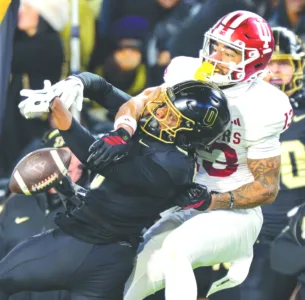
Among the many athletes watching this unfold and wondering where it winds up are defensive linemen Kellan Wyatt and Stephan Daley, both members of the national championship team at Indiana last season who decided to return after the lower-court decision. So are former Ole Miss starters Dae’Quan Wright, Zxavian Harris and Wydett Williams, who won a ruling from a Louisiana state court giving them another season of eligibility even though they had signed with NFL teams this summer.
While some players hope to land back at their schools, whatever the impact on the rosters, how that works isn’t at all clear in many cases. The judge in the case involving the Ole Miss players, for example, gave them a week to enter the transfer portal, which for football players is only open in January.
In appealing the state court cases, the NCAA is expected to invoke parts of Friday’s ruling, which agreed with NCAA arguments that it was likely to win the case when it’s heard in full -- probably several months from now -- and that the NCAA would suffer more harm than the players if the court didn’t pause the order.
The NCAA can also take heart in an Ohio appeals court that paused a similar injunction involving Xavier basketball Filip Borovicanin and others.
But other than those two cases, Ehrlich said, judges across the country “are unanimous that the NCAA is in the wrong” on the five-year eligibility issue when it comes to the Class of 2022.
Indiana linebacker Kellan Wyatt, right, breaks up a pass intended for Purdue wide receiver Nitro Tuggle on Nov. 28 in West Lafayette, Ind. (AP file photo)