Ex-reality TV star Holmes repeats as Iditarod champ
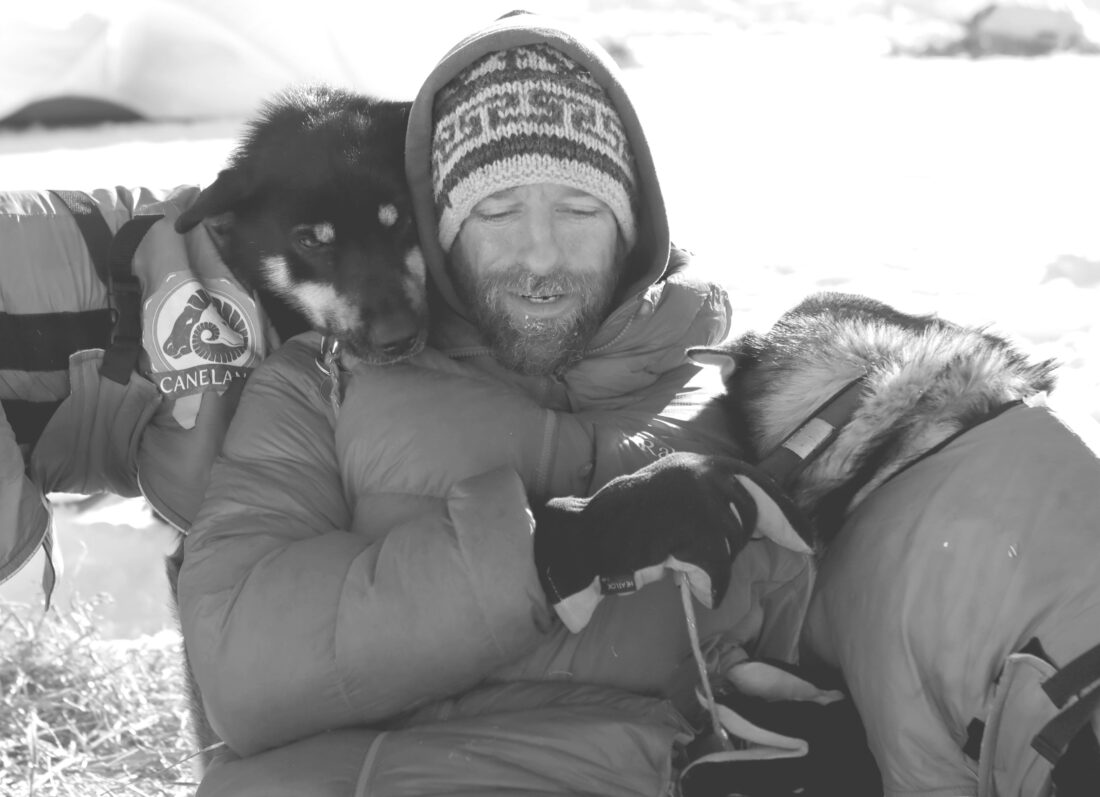
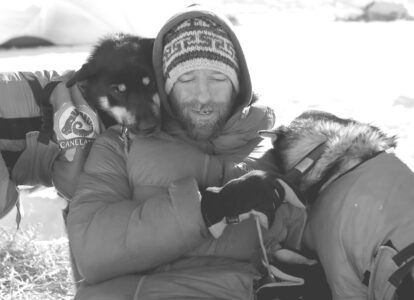
Musher Jessie Holmes takes a break from cooking his dogs a meal to nuzzle with two wheel dogs at the Ophir checkpoint during the Iditarod Trail Sled Dog Race, in March 2021 in Alaska. (Zachariah Hughes/Anchorage Daily News via AP, pool, file)
NOME, Alaska (AP) — Former reality TV star Jessie Holmes cruised to a repeat victory in the Iditarod, the roughly 1,000-mile sled dog race in Alaska.
Holmes guided his dog team across the finish line Tuesday night in the old Gold Rush town of Nome, a Bering Sea coastal community, after traveling for 9 days, 7 hours and 32 minutes. He pumped both fists in the air as the crowd cheered for him and his team of 12 dogs, who devoured some meat after finishing.
“I’ve been chasing greatness ever since the last time I was here,” Holmes said, noting that he had been thinking of others who followed up initial wins with a second, third or fourth. “So we’re just going to keep chasing those footsteps, trying to push ourselves every day to be better.”
Last year, Zeus, one of Holmes’ lead dogs, was a 2-year-old finishing his first Iditarod after leading a couple of runs. But this year, Holmes said, Zeus led every run except one. Holmes had been keeping back older lead dog Polar, so he wouldn’t have to do so much work, but put him in after the last checkpoint before Nome.
“Man, when I put Polar up there he puffed his chest out, he got his strut on and he said, ‘Let’s go!’ It was amazing,” Holmes said.
Next year, Holmes said he will be aiming for a third win and to break the record for the southern route, their favorite.
The race started March 8 in Willow, a day after the ceremonial start was held in Anchorage. The course took dog teams and their mushers over two mountain ranges, along the frozen Yukon River and across the unpredictable Bering Sea ice.
Holmes, a former cast member on the National Geographic reality show “Life Below Zero,” is the third competitor in the 54-year history of the Iditarod Trail Sled Dog Race to repeat the year after winning for the first time. The others were Susan Butcher in 1986-1987 and Lance Mackey in 2007-2008. Both went on to win four titles.
Holmes told The Associated Press before the Iditarod that this year’s race was the most important of his career.
“That’s hard to put that on yourself because you got to live with that pressure every day,” Holmes said. “And if I do not make it, it is going to absolutely crush me.”
He will pocket about $80,000 for this year’s win, up from the $57,000-plus he took home last year. This year’s purse was boosted by financial support from Norwegian billionaire Kjell Rokke, who participated in a newly created, noncompetitive amateur category. Rokke reached Nome on Monday, under rules that allowed him to have outside support from a former Iditarod champ, flexible rest periods and to swap out dogs.
National Sports
Ex-Packer Tretter named NFLPA exec director
Green Bay to add Harlan’s name on Lambeau facade
Ex-reality TV star Holmes repeats as Iditarod champ

Skubal free agency could be clouded by lockout

Spartans in tough East Region with Duke, UConn