
Ukrainian slider DQ’d for wearing banned helmet
Trending
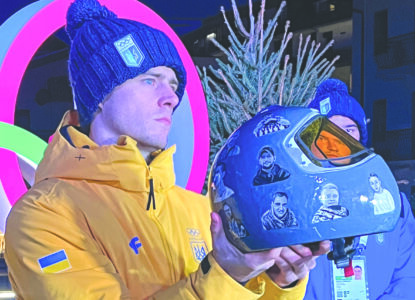
CORTINA D’AMPEZZO, Italy -- Ukrainian skeleton athlete Vladyslav Heraskevych, a likely medal contender at the Milan Cortina Games, was barred from racing Thursday after refusing a last-minute plea from the International Olympic Committee to not use a helmet that honors more than 20 athletes and coaches killed since Russia invaded his country four years ago.
The decision came roughly 45 minutes before the start of the competition and ended a three-day saga where Heraskevych knew he was risking being pulled from the Games by wearing the helmet, one that the IOC says breaks rules against making statements on the field of play.
The International Bobsled and Skeleton Federation said his decision to wear the helmet was “inconsistent with the Olympic Charter and Guidelines on Athlete Expression.” He wore the helmet in training, but the IOC asked him to wear a different helmet in races. It offered concessions, such as wearing a black armband or letting him display the helmet once he was off the ice.
“I believe, deeply, the IBSF and IOC understand that I’m not violating any rules,” Heraskevych said. “Also, I would say (it’s) painful that it really looks like discrimination because many athletes already were expressing themselves. … They didn’t face the same things. So, suddenly, just the Ukrainian athlete in this Olympic Games will be disqualified for the helmet.”
IOC President Kirsty Coventry, who was slated to be in Cortina d’Ampezzo to see Alpine skiing, went to the sliding center instead. She was waiting at the top of the track when Heraskevych arrived and they met privately. After about 10 minutes, Coventry was unable to change Heraskevych’s mind.
“We didn’t find common ground in this regard,” Heraskevych said.
Tears rolled down Coventry’s face after the meeting. The Olympic champion swimmer said she wanted a different outcome, and the IOC said its decision was made with regret.
“As you’ve all seen over the last few days, we’ve allowed for Vladyslav to use his helmet in training,” Coventry said. “No one, no one -- especially me -- is disagreeing with the messaging. The messaging is a powerful message. It’s a message of remembrance. It’s a message of memory and no one is disagreeing with that. The challenge that we are facing is that we wanted to ask or come up with a solution for just the field of play.”
Coventry and Heraskevych agreed that the helmet images aren’t clearly seen during races, since sliders zip down the icy chute at around 75 mph. That, the IOC hoped, was the window to a compromise. Heraskevych would not budge.
“Sadly, we’ve not been able to come to that solution,” Coventry said. “I really wanted to see him race today. It’s been an emotional morning.”
Heraskevych filed an appeal with the Court of Arbitration for Sport, but the race went on without him. The first two runs were Thursday; the last two are today. Heraskevych and his attorneys asked CAS for a response by today, though it’s not clear how his situation could be remedied at this point.
Regardless of what CAS says, if anything, his chance to race in these Games is gone. The IOC let him keep his credential, meaning he can remain at the Olympics as an athlete -- just not a competing one.
About a dozen Russian athletes are being allowed to compete at the Olympics as neutral individuals along with seven Belarusians; they are not allowed to compete under their national flag or anthem. Heraskevych has spoken out about why he believes they shouldn’t be at the Olympics and said the IOC’s decision “plays along with Russian propaganda.”
___
AP journalists Julia Frankel, Vasilisa Stepanenko and Graham Dunbar contributed to this report.
___
AP Olympics: https://apnews.com/hub/milan-cortina-2026-winter-olympics
Ukraine’s Vladyslav Heraskevych holds up his crash helmet during a press conference following a skeleton training session at the 2026 Winter Olympics in Cortina d’Ampezzo, Italy, on Tuesday. (AP photo)