Ex-NFL commish Tagliabue dies at 84
NEW YORK — Paul Tagliabue, who helped bring labor peace and riches to the NFL during his 17 years as commissioner but was criticized for not taking stronger action on concussions, died Sunday from heart failure. He was 84.
NFL spokesman Brian McCarthy said Tagliabue’s family informed the league of his death in Chevy Chase, Maryland.
Tagliabue, who had developed Parkinson’s disease, was commissioner after Pete Rozelle from 1989 to 2006. He was elected to the Pro Football Hall of Fame as part of a special centennial class in 2020. Current Commissioner Roger Goodell succeeded Tagliabue.
“Paul was the ultimate steward of the game — tall in stature, humble in presence and decisive in his loyalty to the NFL,” Goodell said in a statement. “I am forever grateful and proud to have Paul as my friend and mentor. I cherished the innumerable hours we spent together where he helped shape me as an executive but also as a man, husband and father.”
News of Tagliabue’s death came shortly before seven games kicked off Sunday at 1 p.m. EST. Several teams held moments of silence throughout the day for Tagliabue and Marshawn Kneeland, the Dallas Cowboys defensive tackle who died on Thursday.
Tagliabue oversaw the construction of myriad new stadiums and negotiated television contracts that added billions of dollars to the league’s bank account. Under him, there were no labor stoppages.
During his time, Los Angeles lost two teams and Cleveland another, migrating to Baltimore before being replaced by an expansion franchise. Los Angeles eventually regained two teams.
Tagliabue implemented a policy on substance abuse that was considered the strongest in all major sports. He also established the “Rooney Rule,” in which all teams with coaching vacancies must interview minority candidates. It has since been expanded to include front-office and league executive positions.
When he took office in 1989, the NFL had just hired its first Black head coach of the modern era. By the time Tagliabue stepped down in 2006, there were seven minority head coaches in the league.
In one of his pivotal moments, Tagliabue called off NFL games the weekend after the terrorist attacks of Sept. 11, 2001. It was one of the few times the public compared him favorably to Rozelle, who proceeded with the games two days after President John Kennedy was assassinated on Nov. 22, 1963. A key presidential aide had advised Rozelle that the NFL should play, a decision that was one of the commissioner’s great regrets.
Tagliabue certainly had his detractors, notably over concussions. The issue has plagued the NFL for decades, though team owners had a major role in the lack of progress in dealing with head trauma.
In 2017, Tagliabue apologized for remarks he made decades ago about concussions in football, acknowledging he didn’t have the proper data at the time in 1994. He called concussions “one of those pack-journalism issues” and contended the number of concussions “is relatively small; the problem is the journalist issue.”
___
AP NFL: https://apnews.com/hub/nfl
National Sports
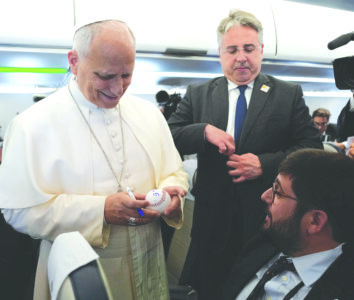
Pope gifted ’05 World Series baseball from catcher
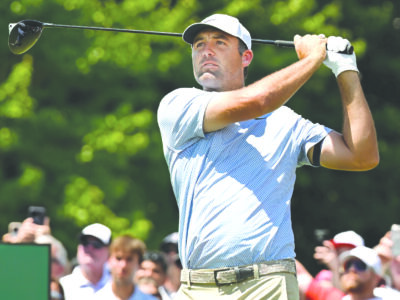
Scheffler just misses 2nd career 59 Friday at Travelers

Giannis’ old, new teams square off in NBA Summer League

Bucks bank on lottery draft picks to open rebuild

Blackhawks among NHL teams busy trading just before start of draft