
Women’s pro hockey league to increase salary cap, add 2 teams
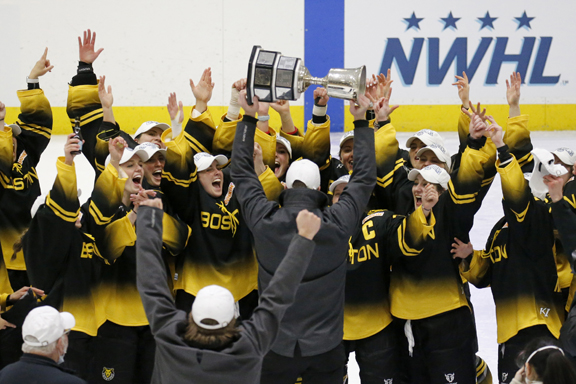
Boston Pride players cheer as coach Paul Mara hoists the NWHL Isobel Cup trophy after the team’s win over the Minnesota Whitecaps in the championship game in Boston on March 27. (AP file photo)
The Premier Hockey Federation is more than doubling each teams’ salary cap to $750,000 and adding two expansion franchises next season in a bid to capitalize on the wave of attention women’s hockey traditionally enjoys following the Winter Olympics.
The PHF’s announcement on Tuesday of its board of governors’ commitment to invest more than $25 million over the next three years is also considered a major step in attempting to thaw its relationship with U.S. and Canadian national team players, who have balked at joining North America’s lone professional women’s hockey league.
“It’s an amazing investment by the ownership, and it really reaffirms the strength of their commitment to being a difference-maker in women’s hockey,” PHF Commissioner Ty Tumminia told The Associated Press.
“It’s important for us to advance to our next season and be crystal clear about the direction we’re headed, and what framework will be so that all athletes can make an informed decision about their careers,” Tumminia added, noting the timing of the announcement comes two weeks before the Winter Games open in Beijing.
The six-team PHF is moving forward with plans to establish a team in Montreal and, without disclosing where, adding another expansion franchise in the U.S.
The boost in the cap from $300,000 this season will lead to an average salary of $37,500 based on a 20-player minimum roster or $30,000 for a league-maximum 25-player roster. There will be no limits placed on a player’s salary as long as the team’s overall payroll remains under the cap.
The cash influx will also lead to the PHF providing full health-care benefits to its players, improving facilities and increasing the number of practices.
“This is the time to double-down,” PHF board of governors chairman John Boynton said. “We think this is a giant step forward of making it possible for the best women’s hockey players to earn a living playing the game they love.”
National Sports
Brewers rally in 8th to drop Rays, 8-2

Bucks not getting healthier in another loss
UConn women again come to Final Four undefeated

‘Fail Mary’ victimizing Packers recalled as NFL replacement refs possible

Sanchez, Bauers power Brewers past Tampa Bay