
Reflections on a half-century of reporting
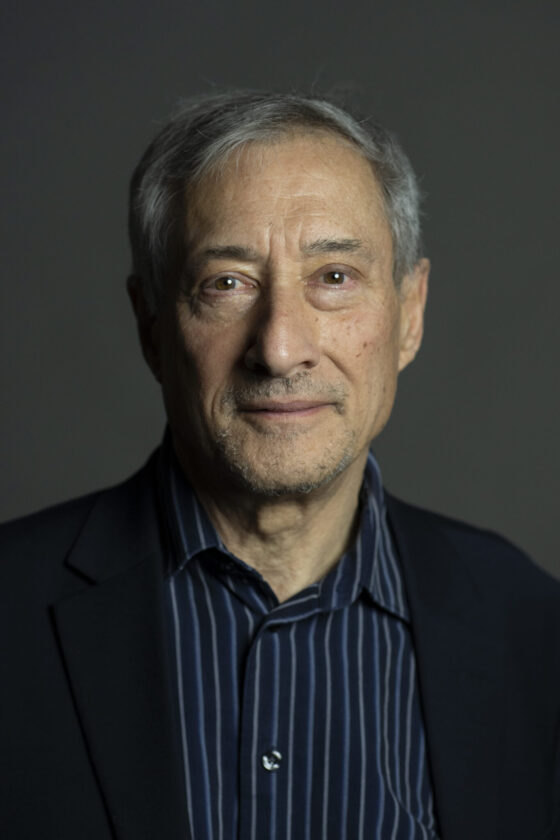
Eric Freedman
LANSING — It was 50 years ago this month when I took a big gamble.
With a fresh law degree, student debt, a new Volkswagen Rabbit with a car loan — and a 3-week-old baby — I gave up a safe congressional staff job I enjoyed, took a 13% pay cut and became a newspaper reporter.
No regrets.
It might sound naïve, it might sound outdated, it might sound blind to America’s political and economic climate today, but I still believe in the mission of independent journalism.
The phrases may sound cliched, but I still contend that it’s the job of the press to speak truth to power, to comfort the afflicted and afflict the comfortable, to be a lens of the truth, to shine a spotlight on the misdeeds of powerful institutions in government, politics, the private sector and the nonprofit world.
And believe in doing it ethically, with fairness, balance and accuracy.
As Bilbo Baggins of “The Hobbit” and “Lord of the Rings” observed, true tales are meant to be told.
I’ve reported about countless government officials, public employees, judges, political leaders and business leaders. The overwhelming majority of them were honest and committed to a greater good.
But some were crooks, bribe-takers, bribe-payers, cheaters, liars and frauds — and we journalists unwrapped their wrongdoing and exposed them.
It is a privilege to be able to do that in these troublous times when constraints on press freedom are tightening in the U.S. amid a disturbing downward trend in public support for the news media.
For example, a recent American Communities Project/Ipsos survey found that “very few Americans actually know a working journalist. Journalists ranked at the bottom of a long list of professionals and/or groups that people know well. Second, most people believe the mainstream media are more interested in making money than telling the truth.”
As my Michigan State University journalism colleague Dante Chinni, who heads the nonprofit American Communities Project, wrote, “Ultimately, those attitudes matter because the fights between the [Trump] administration and the press seem likely to intensify, and as they do, journalists may find it harder to garner support for their work in the court of public opinion.”
A new Pew Research Center report found that 57% of Americans “express low confidence in journalists to act in the best interests of the public. This includes 40% who say they have not too much confidence and 17% who say they have none at all.”
“By comparison, 43% of adults say they have a great deal or a fair amount of confidence in journalists,” the Pew report said.
And with shrinking and disappearing local news outlets across the nation, it’s no surprise that Civic Information Needs Census reported that “Americans find it harder to stay informed about their neighborhoods, towns and cities than about national and international news.”
I think those disappointing survey results reflect, in part, the nonstop politically motivated bashing of individual journalists, their news organizations and journalism itself at the highest levels of government, as well as an eagerness by some of the powerful to thwart the First Amendment’s pledge of freedom of the press and freedom of expression.
It is the First Amendment that made it possible for me to write literally millions of words and edit literally millions of others on topics ranging from corrupt legislators and environmental hazards to historic Great Lakes shipwrecks and the wolves and moose of Isle Royale National Park.
Now I spend much of my time guiding and editing talented, motivated students who write for Capital News Service — our statewide public affairs reporting practicum — and Great Lakes Echo — our regional environmental news outlet.
Many of my students may go on to careers unrelated to journalism, but the journalistic skills of interviewing, organizing information, observation, analytical thinking, scrutinizing documents, crunching data and creativity will serve them well no matter what direction they head in.
I also continue to report. That’s because, even after all these decades, I’m still not tired of interviewing people, observing events, exploring behind the scenes and telling the public stories that matter, inform and entertain.
I’ve also been privileged to train, interview, collaborate with and teach hundreds of journalists, students and press rights defenders on five continents — including countries with only a pretense of press freedom. Many of them are heroes who persevere at great personal risk in the pursuit of our mission.
And for all its flaws and vulnerabilities, I believe American journalism still has important lessons and skills to offer to journalists there.
As my sixth decade in the profession begins, I’m privileged to continue doing journalism while teaching — to both preach and practice what the First Amendment envisions.
As for my big gamble 50 years ago: No regrets.
EDITOR’S NOTE: Eric Freedman is a journalism professor at Michigan State University and director of Capital News Service.
Editorial
Reflections on a half-century of reporting
The president that plays by no rules
Michigan AG: AI scams, fraud a growing threat
For National Consumer Protection Week, Michigan Attorney General Dana Nessel again is warning about fraudsters’ ...
An illegal war that could become the new normal
The killing of Iran’s supreme leader, Ayatollah Ali Khamenei, by a U.S.-Israeli strike is a targeted ...
Board of Peace serves private interests more than public good
In Gaza, aid still trickles in at levels relief agencies say are far below what is required. Temporary shelters are ...
Boosting literacy the goal of March is Reading Month
Boosting literacy the goal of March is Reading Month EDITORIAL MAR 2, 2026 Michigan’s younger students appear ...