
Trending
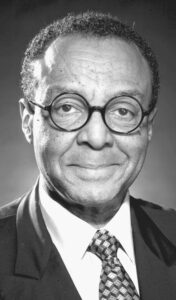
Clarence Page
I hear that question a lot since the news broke that our nation's current secretary of defense has actively blocked or delayed the promotions of dozens of senior military officers -- with women and people of color disproportionately affected.
The Pentagon's recent track record on promotions is in keeping with broader efforts by the Trump administration to push back DEI (diversity, equity and inclusion) policies in government, academia and the private sector.
It also comes at a time when the Trump administration has made symbolic moves -- such as attempting to rebrand Hegseth as the "Secretary of War" -- as well as actual warfare in an attempt to project an alt-right air of manliness.
It's as if a military with Black officers, female officers and -- Heaven forfend! -- transgender officers could not possibly defend American interests across the globe.
In March, the New York Times reported that Hegseth took the "exceedingly rare" step of striking two Black and two female officers from the list of candidates put forward for promotion to the rank of one-star generals.
Hegseth had been pressuring Army Secretary Daniel P. Driscoll to remove the names, but Driscoll had refused. As anonymous military sources told the Times, Hegseth's chief of staff, Ricky Buria, upbraided Driscoll for selecting a Black woman to command the Military District of Washington, especially because President Donald Trump would not want to have to stand next to a Black woman at Arlington National Cemetery. Buria denied the account.
But the numbers speak for themselves.
"Since taking office," the Times reported in June, "Hegseth has fired or sidelined nearly three dozen senior military officers as part of a broader campaign designed to purge the Pentagon of leaders he has disparaged as 'foolish,' 'reckless' and 'woke.'"
Whether Trump and Hegseth know it -- or care -- this subject of race relations in the ranks at home and in the field reopens a lot of old wounds that have troubled military life in the past.
After President Harry Truman integrated our military in 1948, the Army tried the color-blind approach. As my first company commander told us in basic training camp in the Vietnam War era, "The army doesn't see you as any color but army green."
However, as my generation dealt with a deeply unpopular war overseas and riots in the streets back home, Gen. Walter T. Kerwin, the army's deputy chief of staff for personnel, made this observation in 1970: "In the past year racial discord has surfaced as one of the most serious problems facing Army leadership."
Concerted efforts were made to ease racial tensions and diversify the numbers of available jobs and people to fill them.
Even I, of all people, was encouraged to audition as an announcer on Army radio, a position made famous by Robin Williams in "Good Morning, Vietnam." But despite my buddies' reassurances that I had "a face made for radio," I guess the Army wasn't that desperate. I flunked the audition.
Yet, today, young Pete Hegseth blames diversity hiring for the fact that evil-doers around the world don't take the U.S. military seriously. He has repeatedly lambasted the notion that "diversity is our strength," calling it the "dumbest phrase in military history."
He also has overseen the erasure of Defense Department histories of nonwhite service members, although his office at least partly disputes that complaint, and he has sought to restore tributes to Confederate soldiers and commanders who, let us not forget, took up arms against their country in defense of the institution of slavery.
Among those purged or forced to retire have been a chairman of the Joint Chiefs of Staff, the chief of naval operations and the head of the Defense Health Agency.
This has raised alarms on Capitol Hill and elsewhere. Some of my colleagues who cover the Pentagon report an environment of fear where military leaders are hesitant to question internal policies for fear of being sidelined, as sometimes happened in the Vietnam era.
Rep. Patrick Ryan, a New York Democrat, has pushed to require Hegseth to formally justify every promotion withdrawal. Sen. Tim Kaine, a Virginia Democrat, has also blasted the shadowy trend of pushing out highly qualified leaders.
Decorated retired four-star Gen. Stanley McChrystal memorably weighed in last year on CBS' "Face the Nation" to downplay Hegseth's alarm over DEI as a "distraction" that's "not helpful."
And let's be honest, right now the Trump administration needs all the help it can get to unwind its recent military and diplomatic misadventures.
An impartial observer might say it was exceedingly foolish to alienate our NATO allies by trying to claim U.S. suzerainty over Greenland. It was reckless to start a war with Iran without considering its ability to shut down the Strait of Hormuz, putting the world economy in peril. Trump, Hegseth and Co. made those decisions all by themselves, without the help of woke military officers.
Some are calling Trump's war with Iran America's biggest strategic setback since the Vietnam War. We'll see how it plays out. But at this point it has cost us $29 billion in direct spending, and the bill may exceed $200 billion when all the costs are accounted for.
For as long as most of us have been alive, the United States has possessed the most powerful military the world has ever seen. But the Pax Americana, such as it ever was, was always undergirded by America's resolve to uphold not only its own interests but also the ideals of freedom, equality and justice.
We may not always live up to these ideals, but I fear we will be lost if we ever abandon them.
E-mail Clarence Page at clarence47page@gmail.com. Distributed by Tribune Content Agency.